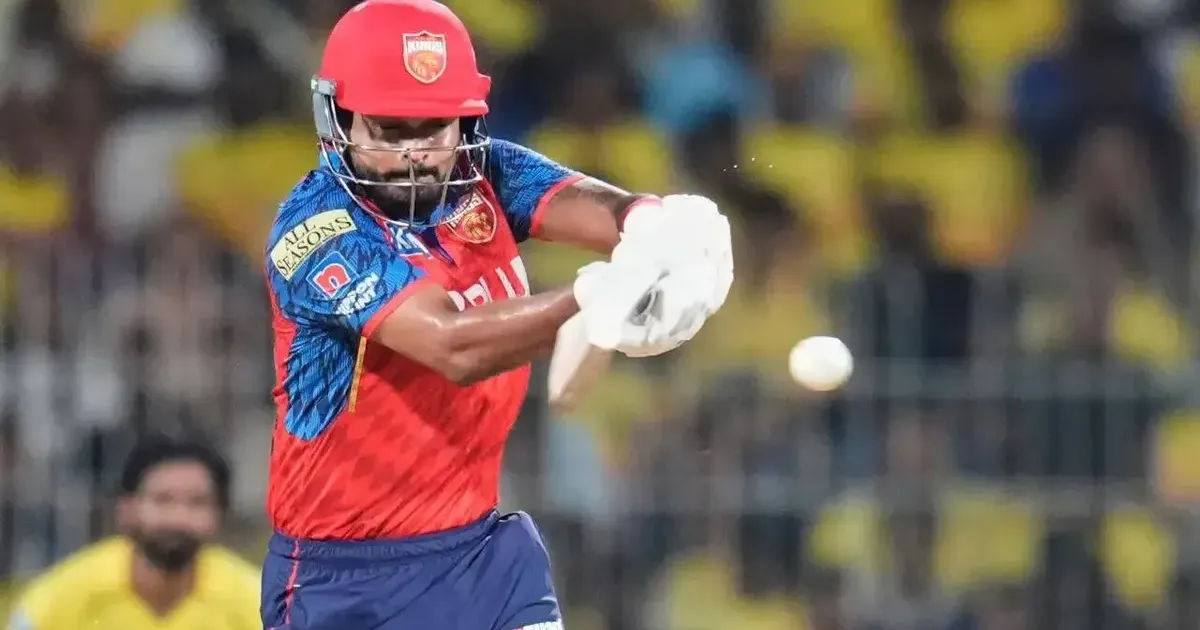
Shreyas Iyer led Punjab Kings to a five-wicket victory over Chennai Super Kings at the MA Chidambaram Stadium on April 3, 2026. Chasing a formidable target of 210 runs, the Punjab top order displayed a clinical efficiency that dismantled the host team's defensive structures. Victory for the visitors propelled them to the summit of the Indian Premier League standings while inflicting a second consecutive defeat on the Chennai franchise. Execution across the batting lineup remained consistent from the first over until the winning runs were struck in the nineteenth over.
Chennai captain Ruturaj Gaikwad saw his side falter despite a meaningful individual performance from young batter Ayush Mhatre. Mhatre anchored the first innings with a disciplined yet aggressive 73, providing the foundation for a 209-run total. Technical precision characterized Mhatre's approach, finding gaps in the field with a regularity that frustrated the Punjab bowling attack. Most spectators at the venue anticipated that a total exceeding 200 would provide a sufficient buffer for the Chennai bowlers. Data from previous seasons at this ground suggested that defending such a high score is standard for a team with experienced spin options.
Ayush Mhatre Sets High Target for Chennai Super Kings
Ayush Mhatre became the primary protagonist for the home side during the early stages of the afternoon. Scoring 73 runs, Mhatre balanced traditional stroke play with modern power hitting, helping keep the scoreboard moving at over ten runs per over. Support came from the middle order, ensuring that Chennai reached 209 for 5 by the conclusion of their 20 overs. Momentum appeared to favor the yellow jerseys as they walked off the field at the innings break. Professional scouts noted that Mhatre handled the short-ball barrage from the Punjab pacers with a composure rarely seen in younger prospects.
Batting conditions remained favorable throughout the day, offering little assistance to those looking for lateral movement. Chennai benefited from these flat conditions initially, racking up boundaries during the powerplay to set a high tempo. Scoring rates remained high even as the field spread, with Mhatre taking calculated risks against the slower deliveries. Analysts pointed to the consistency of the strike rotation as a factor in keeping the Punjab bowlers under constant pressure. Every bowling change attempted by Iyer met with a counter-response from the Chennai batsmen.
Punjab Kings Top Order Secures Successful Run Chase
Shreyas Iyer anchored the response for Punjab Kings with a composed 50 that balanced aggression and situational awareness. Iyer reached his half-century in a display of tactical batting that targeted specific areas of the ground where the wind provided an advantage. Reliable contributions from Prabhsimran Singh, who scored 43, and Priyansh Arya, who added 39, ensured the required run rate never became unmanageable. Pressure shifted back to the Chennai fielding unit as the opening pair established a rapid scoring rhythm from the outset. Punjab reached the target in 18.4 overs, finishing with five wickets in hand.
Prabhsimran Singh took early charge of the chase by attacking the new ball with unconventional shot selection. Arya complemented this approach by finding the boundary through the cover region, forcing Gaikwad to alter his field placements early in the innings. Rapid accumulation of runs in the first six overs reduced the pressure on the middle order, allowing Iyer to play a more calculated role. Success for the Punjab batting unit came down to their ability to negate the threat of the new ball. Punjab never allowed the required rate to climb above 11 runs per over during the middle phase of the chase.
Ruturaj Gaikwad identified the lack of impact from his specialist spinners as the decisive factor in the loss. Wrist spinners Noor Ahmad and Rahul Chahar failed to provide the breakthroughs necessary to stall the Punjab momentum in the middle overs. Accuracy eluded both bowlers, leading to a high frequency of short-pitched deliveries that the Punjab batsmen exploited. Gaikwad expressed his dissatisfaction with the execution of the tactical plan during the post-match briefing. Losing control of the middle period allowed the visitors to dictate the terms of the engagement.
"We felt we had three seamers going in, and obviously we have two good wrist spinners bowling in tandem, especially in the middle after the powerplay. But I think, you know, slight off day for both of them. So, I think, that is what cost us. Sometimes we executed really well. Sometimes we just didn't execute at the right time."
Punjab Chase Shows IPL Scoring Volatility
Chennai's collapse at home is not a fluke but a symptom of a dated defensive philosophy that over-relies on the ghost of past spin dominance. While Gaikwad publicly blames individual execution, the reality is that the league has evolved beyond the traditional slow-burn tactics of the MA Chidambaram Stadium. Modern power hitters like Prabhsimran Singh and Priyansh Arya no longer fear the mystery of wrist spin; they hunt it. The failure of Noor Ahmad and Rahul Chahar suggests that the technical gap between international-tier spin and domestic-tier batting has closed to the point of irrelevance. Punjab Kings demonstrated that a well-structured chase can neutralize even the most storied home-field advantage through sheer territorial aggression.
Shreyas Iyer has successfully rebranded Punjab from a chaotic underdog into a disciplined, data-driven machine. By prioritizing a top order that maintains high strike rates regardless of the target, Punjab has removed the psychological burden of the scoreboard. Chennai remains trapped in a cycle of nostalgic loyalty to a bowling blueprint that requires perfect conditions to function. If Gaikwad does not pivot toward a more versatile pace attack, the Super Kings risk becoming an expensive relic in an increasingly high-velocity tournament. This match was a funeral for the idea that 200 runs provides safety in the modern game. Adapt or perish.