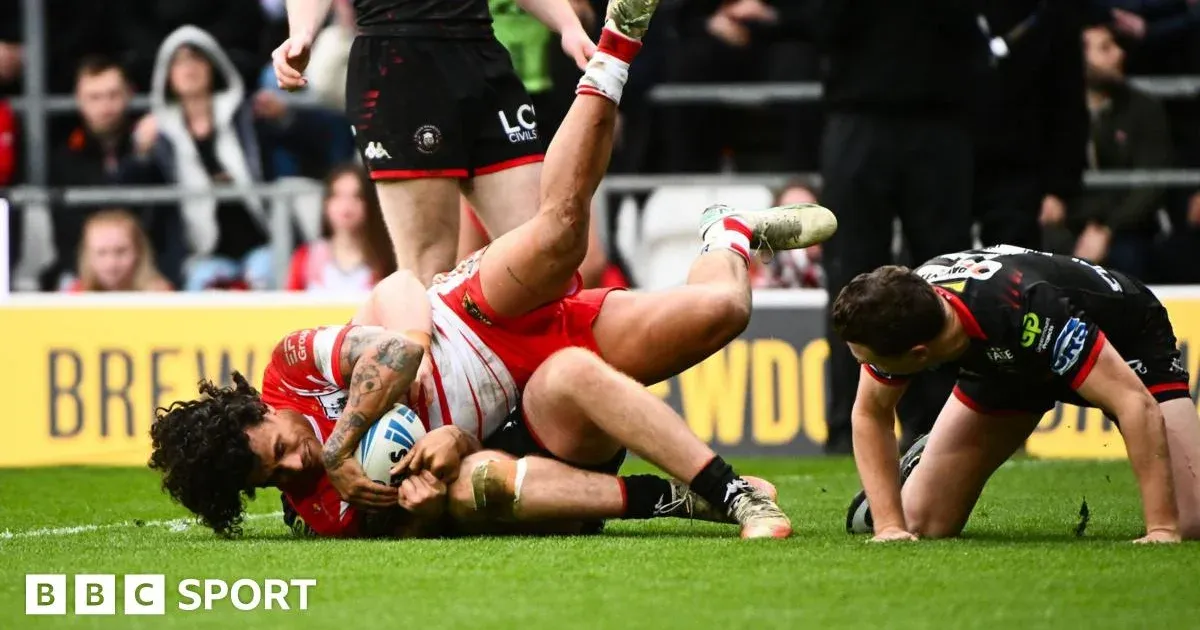
Bill Leyland propelled St Helens to a 34-24 victory over Wigan Warriors, delivering a performance that defied the expectations of a league-leading opponent. The result quickly became more than a rivalry upset. The April 3, 2026, derby gave the short-term signing a stage few rugby league players receive. Wigan entered the contest as heavy favorites, buoyed by their top-table status and Saints' recent 52-10 humiliation at the hands of Hull KR. Personnel shortages plagued the home side before kickoff, with 12 regular starters sidelined by injury or suspension. Agnatius Paasi added to those woes, limping from the field just four minutes into the match.
Resilience in the makeshift Saints lineup challenged the tactical dominance usually associated with Matt Peet's squad. Wigan struggled to capitalize on their numerical and experience advantages throughout the first half. Pressure built as the 367th meeting between these historic rivals unfolded under the scrutiny of a packed stadium. Experts predicted a blowout, yet the scoreline stayed within reach for the underdogs. St Helens management navigated the early loss of Paasi by rotating their limited bench options with precision.
Supporters witnessed a transformation in momentum during the second half. Injuries forced head coach Paul Wellens to rely on depth players who rarely see significant minutes in high-stakes derbies. Meeting number 367 proved that statistical probability holds little weight when local bragging rights are at stake. Statistics from previous encounters favored Wigan, but the physical reality on the turf favored the desperate hosts. On-loan assets became the focal point of the Saints' offensive strategy as the clock ticked toward the final whistle.
Injury Crisis Tests St Helens Depth
Losing Agnatius Paasi so early in the match could have signaled the end of the St Helens resistance. Forward rotations became strained, forcing second-rowers to play extended spells in the middle of the park. The Saints roster's on-field health was the only metric that mattered to the 18,000 fans in attendance. Defeat seemed inevitable when Wigan launched a series of clinical attacks midway through the second half. Redemption, however, arrived from an unlikely source.
Late arrivals in the squad often struggle to find rhythm in the complex structures of the Super League. Bill Leyland, joining on a short-term loan, showcased no such hesitation. The hooker injected a level of urgency that the Wigan markers could not contain. Coaching staff at Wigan appeared visibly frustrated as their defensive lines began to fray under sustained pressure from the Saints' youthful pack. Hull KR's demolition of St Helens just seven days prior seemed like a distant memory as the hosts regained their composure.
Fans roared as the deficit narrowed in the final twenty minutes. The 130-year-old rivalry demanded a climax worthy of its heritage. Super League leaders Wigan looked vulnerable for the first time in the current campaign. Bill Leyland exploited a gap near the ruck to cross for his first try, narrowing the gap to two points. Successive sets of six placed the Warriors under immense physical strain. Tactical discipline abandoned the visitors as they conceded a flurry of penalties in their own half.
Bill Leyland Breaks Wigan Defensive Lines
Points followed the pressure as St Helens surged ahead. Leyland’s second try, a darting effort from close range, sent the Totally Wicked Stadium into a frenzy. Results in the derby often hinge on such individual brilliance. Hookers in the modern game must possess the vision to identify fatigued defenders, and Leyland executed this role to perfection. Defensive lapses from Wigan veterans allowed the on-loan star to dictate the tempo of the final ten minutes. St Helens held a ten-point lead as the siren approached.
Minutes remained when Wigan attempted a desperate long-range play to salvage the game. Crowds stood in anticipation of a final twist, but the Saints' goal-line defense held firm. Victory in this context is about more than league points. Professional pride was at stake for a club that had been written off by every major sporting outlet in the North of England. Experience proved less valuable than the raw energy of the Saints' replacements.
"The derby rarely fails to disappoint, but just when you think this 130-year-old rivalry cannot get any more unbelievable, this happens," a match report from The Guardian stated.
Wigan Warriors left the field in silence. Despite their superior position in the table, the loss exposed a lack of adaptability when faced with a chaotic, injury-ravaged opponent. Local media outlets immediately began questioning the depth of the Wigan bench. The atmosphere inside the stadium remained electric long after the players had retired to the dressing rooms. St Helens secured their biggest win of the year through sheer willpower.
Players like Leyland demonstrate the value of the loan market during an injury crisis. While some commentators argue for tighter restrictions on temporary transfers, this result highlights how they can preserve the competitiveness of the league. Match officials recorded a final score of 34-24, a result that will echo through the standings. Wigan's lead at the top of the table is now under direct threat from chasing teams. St Helens moved back into the playoff conversation with this unexpected haul of points.
Pressure now shifts to the Wigan coaching department to address the defensive frailties exposed by Leyland. Matt Peet must integrate his returning stars without disrupting the team's overall cohesion. St Helens must find a way to maintain this intensity once their regular starters return to the lineup. Consistency persists as the primary challenge for a squad that has fluctuated between a 52-point loss and a derby win in a single week. Every game in the Easter programme carries the risk of season-defining injuries.
Analysis of the tackle counts showed a substantial workload for the Saints' remaining forwards. Every member of the pack exceeded their seasonal average for defensive involvements. This match is a data point that suggests heart often outweighs tactical rigidity. Wigan possessed more territory but failed to convert it into important points when it mattered most. The match concluded at 34-24.
Leyland Tries Swing Super League Momentum
Can a single loan signing dismantle the structural integrity of a league leader? The answer provided at the Totally Wicked Stadium was a decisive yes, though the implications for the Super League are far more troubling than a simple derby loss. Wigan Warriors showed a level of complacency that borders on professional negligence. They allowed a team missing a dozen starters to dictate the physical terms of the engagement. This was not a tactical masterclass by Paul Wellens but a total psychological collapse by the visitors.
If the Warriors cannot handle a makeshift hooker on a short-term loan, they have no hope of navigating the rigorous pressures of a Grand Final. The reliance on established structures has made them predictable. St Helens, by contrast, embraced the chaos of their own misfortune. They used their injury crisis as a shield, playing with a reckless abandon that Wigan's disciplined system could not compute. Bill Leyland is now the most valuable commodity in the loan market, and his parent club would be foolish not to recall him immediately. The power balance in the North has not shifted, but the myth of Wigan’s invincibility has been shattered. Complacency is the silent killer of dynasties.