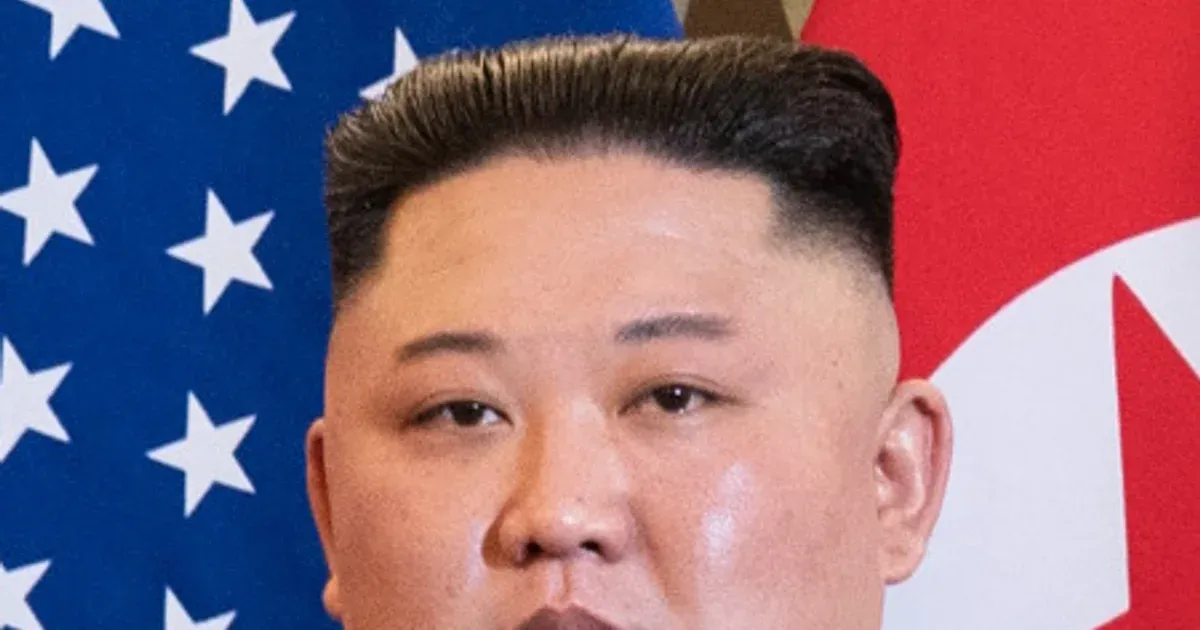
North Korea’s succession story is becoming more public and more urgent. Kim Jong Un moved to elevate his daughter’s profile as a possible heir while Seoul intelligence officials watched signs of a fourth-generation transition. Dynastic messaging in Pyongyang is rarely accidental. Analysts are therefore reading each public appearance as part of a longer campaign to normalize the next family figure. On April 6, 2026, reports said North Korean state structures had increased Kim Ju Ae’s appearances and applied honorifics once reserved for supreme leadership.
Analysts tracking state-run media broadcasts observed a marked increase in the frequency and intensity of her public appearances alongside high-ranking military officials. These developments indicate a departure from the historical secrecy that surrounded the early life of the current leader.
Intelligence officials informed South Korean lawmakers that the level of protocol surrounding the child has reached a status equivalent to a designated successor. State media outlets recently began using the term "hyangdo," which translates to "guide," when referring to her and her father together. In the lexicon of the Workers' Party, this specific word is used only for those who are destined to lead the revolutionary cause to its conclusion. Previous generations of the Kim dynasty did not reveal their successors until they reached adulthood.
Kim Ju Ae, who is believed to be approximately 12 or 13 years old, is now being positioned as a central foundation of the nation's nuclear identity. Her presence at major missile tests suggests her future authority is closely linked to the country's strategic weapons programs.
Intelligence Reports Confirm Accelerated Succession Schedule
South Korean monitoring stations have documented over 20 separate public events where the daughter was given a leading role in official state protocols. During a military parade earlier this year, she was seen standing in the center of the dais, a position usually occupied only by the supreme leader. Military commanders of the highest rank were photographed bowing to her, a gesture that shows her rising status within the Korean People's Army. Pyongyang has historically used such visual cues to prepare the domestic population for leadership changes.
Intelligence analysts suggest the regime is trying to normalize her presence before any potential health crisis affects the current leader. Direct observations of Kim Jong Un suggest he continues to struggle with cardiovascular issues and heavy tobacco use.
Reports from the Workers' Party internal documents suggest that mid-level cadres are being instructed to study the "greatness" of the successor. While the North Korean public remains under strict information control, the visibility of a child in such a serious role is an attempt to cultivate a new form of loyalty. Earlier succession periods were characterized by a sudden reveal following the death of the predecessor. Instead, this current strategy focuses on gradual exposure to build a long-term cult of personality. Most observers believe this transparency is designed to prevent the kind of internal power struggles that occurred after the death of Kim Il Sung. The regime appears to be prioritizing bloodline continuity over all other political considerations.
Evolution of Kim Ju Ae Public Appearances
State television broadcasts have shifted their focus from her father's individual actions to the duo's shared inspections of critical infrastructure. Recent footage showed her inspecting a greenhouse farm and a military training facility with a pair of high-end binoculars. Such images are carefully curated to portray her as an apprentice who is actively learning the art of governance. Earlier appearances focused purely on her role as a "beloved daughter" at civilian events. Simultaneously, the language used by announcers has moved from affectionate descriptors to titles that emphasize her political and military authority. The National Intelligence Service noted that her clothing has also become more formal, often mimicking the style of the supreme leader's own garments.
"North Korea has recently increased the level of protocol for Kim Ju Ae, suggesting the regime is solidifying her status as the successor," the National Intelligence Service reported to South Korean lawmakers.
Military officials have been forced to adjust their public behavior in the presence of the young girl. Senior generals now stand at attention when she enters a room, a level of deference that was not even afforded to Kim Jong Un when he was a young man. Evidence suggests that her aunt, Kim Yo Jong, may be playing a role in orchestrating this transition despite her own high-ranking status. Some experts believe the elevation of the daughter is a move to keep Kim Yo Jong in a subordinate position.
The internal dynamics of the Kim family remain a primary focus for intelligence agencies across Asia. Every photograph released by the Korean Central News Agency is analyzed for subtle changes in the hierarchy of the standing line.
Mount Paektu Bloodline and Gender Dynamics in Pyongyang
North Korea remains a deeply patriarchal society where women have rarely held top executive power outside of the immediate family circle. Despite this cultural barrier, the "Mount Paektu Bloodline" takes precedence over gender in the eyes of the state's ideological frameworks. Analysts argue that by introducing his daughter so early, Kim Jong Un is attempting to break the gender ceiling before any opposition can form. Earlier attempts to involve women in high-level diplomacy, such as the rise of Choe Son Hui, paved the way for this transition. The regime relies on the myth of the divine bloodline to justify its hereditary rule. Because the daughter carries this lineage, her gender is presented as secondary to her ancestry.
Political scientists in Seoul suggest that the timing of this succession planning is tied to the regime's desire for long-term stability. Internal stability depends on a clear and undisputed line of descent to prevent military coups. While some older members of the elite may harbor private reservations about a female leader, the threat of the security services keeps dissent at bay. Records of past purges serve as a deterrent for anyone who might question the supreme leader's choice of heir. Recent reshuffles in the central committee have placed loyalists in positions that directly support the succession process. The consolidation of power is now happening across both the civilian and military branches of the government.
Geopolitical Implications of a Fourth Generation Kim
Foreign policy experts in Washington and London are closely monitoring the impact of this transition on future nuclear negotiations. A leadership change that emphasizes continuity suggests that North Korea will not abandon its atomic ambitions. The daughter's frequent presence at missile launch sites sends a message that the nuclear program is a multi-generational project. Resulting pressure on South Korea and Japan has led to increased defense spending and closer tripartite cooperation with the United States. Pyongyang uses the girl's image to project a sense of permanence to the international community. Diplomacy remains stalled as the regime focuses on internal consolidation and domestic propaganda.
Intelligence circles are also considering the role of the North Korean people's perception of this young heir. Unlike her father, who was educated in Switzerland and was still a mystery for years, she is growing up in the public eye. This exposure could make her more vulnerable to criticism or more effective as a leader depending on the state of the economy. Documents from defectors suggest that the younger generation in North Korea is more aware of the outside world than their parents were.
The regime must balance the traditional cult of personality with the changing realities of a modernizing information environment. Every military exercise involving the daughter is a calculated move to reinforce her authority before she ever takes the throne.
Succession Signal in Pyongyang
Does the elevation of a teenager to the apex of a nuclear-armed state indicate regime stability or a frantic attempt to patch a sinking ship? Conventional wisdom suggests Kim Jong Un is merely being a prudent dynastic planner, yet the sheer speed of this acceleration smells of deep internal anxiety. By placing a pre-teen girl at the center of ballistic missile tests, the regime is effectively using a child as a human shield for its own legitimacy. This is not the behavior of a confident, healthy leader. It is the action of a man who knows his own clock is ticking and fears the vultures within his own military elite will circle the moment he falters.
The risk of this strategy is deep because it leans entirely on the mysticism of the bloodline to override the institutional weight of a male-dominated military. If the economy continues to stagnate under the weight of sanctions, the novelty of a female successor will wear thin among the generals who actually hold the guns. Kim is betting that he can social-engineer an entire nation into accepting a schoolgirl as a nuclear commander before his own health gives out. This projection of continuity is a thin veil for a system that is one heart attack away from a chaotic power vacuum. Pyongyang is not building a future; it is desperately clinging to the past. Bloodline isn't enough.