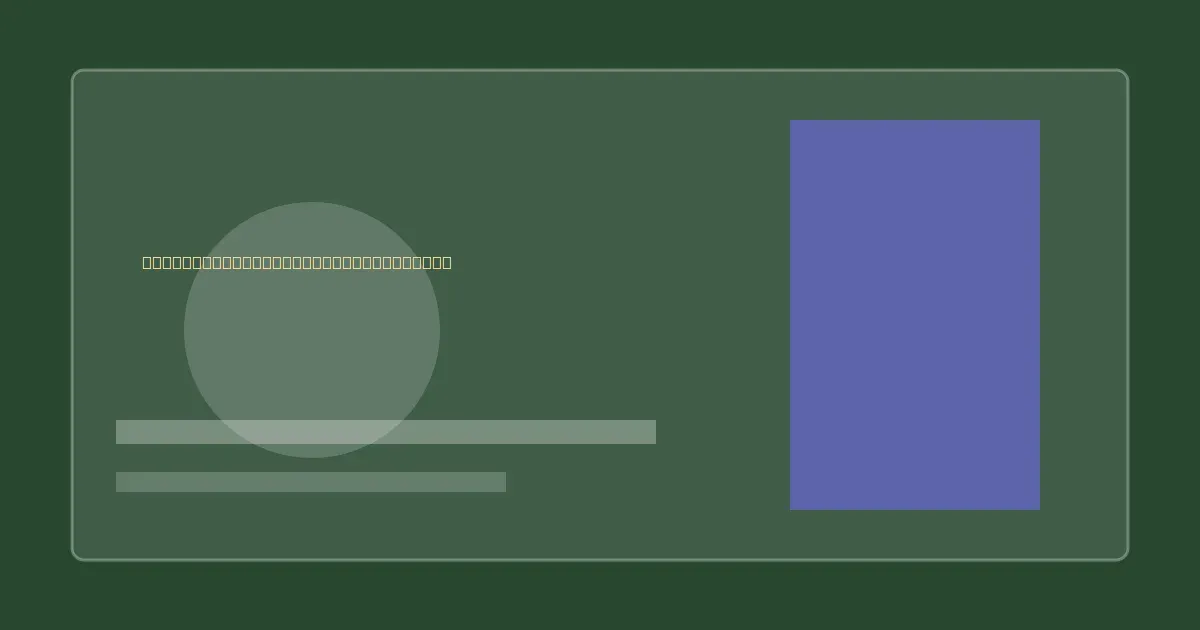
A puzzle built from missing letters can reveal how much reading depends on expectation rather than perfect information. The latest Alex Bellos challenge asked readers to identify familiar phrases from geometric letter shapes. The reading effect matters because small letter disruptions reveal how much recognition depends on shape rather than exact sequence. That makes the puzzle a useful window into ordinary visual processing. It also explains why readers can decode broken words faster than expected. On March 30, 2026, the exercise turned a recreational puzzle into a small lesson about visual cognition. Information density determines whether a string of symbols persists as a mystery or becomes a clear message. Vowels often provide the structural skeleton of words, yet the brain frequently skips them when scanning for meaning. Readers familiar with memes from the early 2000s will recognize the phenomenon. Cambridge University research popularized the idea that letter order matters less than the first and last letters of a word.
Bellos takes this concept further by removing the letters entirely, leaving only the external silhouette or the outline of the word. Guardian Science readers often engage with these puzzles to test the limits of their own cognitive flexibility. Experts in linguistics argue that the human eye does not read every single letter sequentially. Eye-tracking studies show that readers perform jumps called saccades across the text. During these jumps, the brain fills in the gaps using prior knowledge and structural cues.
Word Shape Recognition and Reading Speed
Historical theories of reading prioritized the word shape model, which suggests we recognize the outline of a whole word. Modern neuroscience indicates that we process both individual letters and overall shapes simultaneously. Alex Bellos focuses his latest series on the extreme end of this spectrum where only the outline survives. Words like the or and have distinct geometric profiles that the brain recognizes in milliseconds. Familiarity with common sayings provides the context necessary to translate a series of boxes into recognizable prose.
Reading is not just about identifying individual letters, but about the interaction of shapes and the expectations set by context. Reading speed increases when the brain can predict the next word in a sequence. Linguistic patterns in the English language are highly repetitive. A sentence starting with a specific consonant cluster followed by predictable boxes almost certainly translates to a common greeting. Bellos exploits these linguistic probabilities to make his puzzles solvable despite the lack of literal text. Pattern recognition acts as a cognitive filter that screens out noise and highlights essential data.
Visual mechanics play a silent role in how we digest information on a page. Ascenders like the stems of d or k and descenders like the tails of p or y create a unique topography for every word. This topography allows the brain to identify words even when they are blurred or partially obscured. Psychologists in the mid-twentieth century discovered that readers could identify words faster when they were presented in their natural lowercase shapes rather than in all capital letters.
Contextual Priming in Cognitive Linguistics
Contextual priming occurs when an initial stimulus influences the response to a subsequent stimulus. If a reader knows the topic is literature, the silhouette of a famous title becomes immediately apparent. Guardian Science puzzles rely on this mental scaffolding to bridge the gap between abstract shapes and concrete language. Without a thematic anchor, the human mind struggles to assign meaning to arbitrary geometric figures. Brain imaging studies at major institutions suggest that the left hemisphere processes the specific phonetics while the right hemisphere handles the holistic shape. Cognitive efficiency relies on the seamless communication between these two regions. When vowels are missing, the brain shifts more resources to the right hemisphere for shape-based guessing. This shift explains why some readers find these puzzles intuitive while others see only a wall of boxes.
Linguistic redundancy acts as a safety net for communication. English contains a high degree of extra information that can be stripped away without losing the core meaning. Shorthand systems used by court reporters or stenographers have used this principle for centuries. Bellos effectively turns a professional efficiency into a recreational challenge. His puzzles prove that the brain is a predictive engine that builds reality from fragments.
Evolution of Typoglycemia Research
Research into text compression and readability dates back to the 1970s when psychologists first mapped eye movements. These early studies laid the groundwork for modern digital interfaces and fonts designed for maximum clarity. Bellos frequently references these milestones in his explorations of mathematical and linguistic logic. The ability to read a compressed sentence is a byproduct of thousands of hours of reading practice. Experts call this orthographic processing, a skill that automates the recognition of complex visual patterns.
Experience transforms a chaotic array of symbols into a structured stream of consciousness. Some researchers suggest that people with high levels of literacy are actually better at reading vowel-less text because their internal dictionaries are more steady. A larger vocabulary provides more templates for the brain to match against the geometric boxes. The puzzle is a benchmark for how deeply an individual has internalized the structures of the English language.
Phonological awareness usually precedes the ability to recognize word shapes in early childhood development. As readers become more skilled, they rely less on sounding out words and more on visual snapshots. This transition from phonetic decoding to visual recognition is what allows adults to read hundreds of words per minute. The Guardian puzzles force the brain to revert to a more primitive form of visual analysis. Solving them requires a balance of logic and raw visual intuition.
Digital Communication and Textual Compression. Text messaging and internet slang have accelerated the trend of vowel deletion in daily life. Words like txt or gr8 represent a shift toward high-speed, low-fidelity communication. 70 percent of digital messages now contain some form of abbreviated or symbolic language. Bellos observes that these puzzles are not just games but reflections of how we communicate in a bandwidth-constrained environment.
Critics of digital shorthand argue that it degrades deep literacy and attention spans. Supporters suggest it demonstrates the incredible adaptability of the human mind. Bellos maintains a neutral stance, focusing instead on the recreational joy of the puzzle itself. His work suggests that as long as the geometric integrity and context stay intact, the specific letters are almost optional. Reading is a constructive act where the observer provides half the meaning. Internal libraries do the heavy lifting when the page provides only the framework. Decoding a box-based sentence is an exercise in mental archaeology. Every solved puzzle reinforces the idea that human perception is a proactive process. Efficiency is the primary driver of linguistic evolution. Language continues to shed unnecessary components as society demands faster exchanges of information.
Could the eventual death of the vowel be a sign of cognitive advancement instead of cultural decay? We treat the alphabet as a sacred, static entity, yet the rapid adoption of vowel-light communication suggests our brains are naturally gravitating toward more efficient data packets. Alex Bellos highlights a reality that many traditionalists refuse to acknowledge: the human mind is essentially a predictive engine that finds the alphabet increasingly redundant. If we can communicate with boxes and consonants, the vowel is merely a decorative relic of an oral tradition that no longer dictates the speed of modern thought.
We are essentially watching the slow-motion collapse of orthographic formality in favor of raw semantic speed. It is not a tragedy for literature, but a victory for neural efficiency. Future generations will likely look back at our insistence on full-vowel spelling as a quaint, inefficient habit of a slower age. The puzzle is not whether you can read the sentence, but whether you realize the sentence no longer needs you to read it in full. Efficiency wins every time.