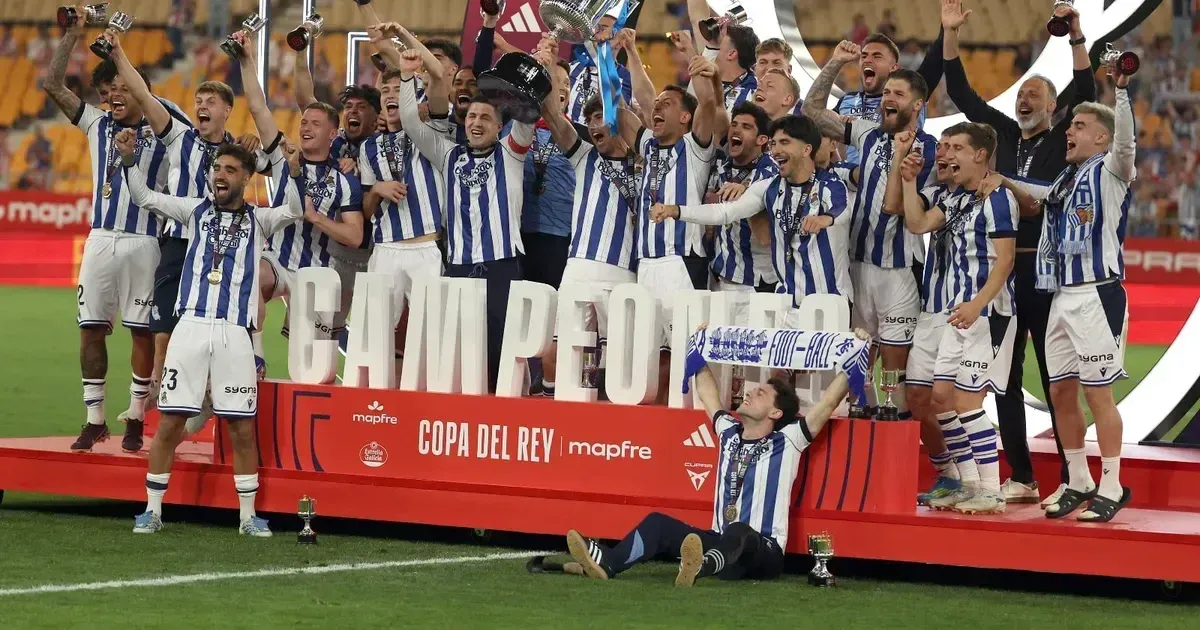
Unai Marrero secured Real Sociedad's fourth Copa del Rey title by saving two penalties in a frantic shootout victory over Atlético Madrid. Seville hosted the encounter under a punishing sun that drained the stamina of both squads over 120 minutes of high-intensity football. The match concluded 2-2 at the end of extra time, a scoreline that mirrored the legendary 1987 final where the Basque side also emerged victorious. The final was played on April 19, 2026. Success in the penalty phase eventually rested on the shoulders of Marrero, whose intuition denied some of the most clinical strikers in the Spanish league.
Atlético Madrid entered the fray as slight favorites but struggled to contain the tactical fluidity introduced by the San Sebastián outfit. Goals from both sides during regulation play created a volatile atmosphere in the stands, with momentum swinging wildly between the capital city giants and the northern underdogs. Fatigue became a real factor as temperatures in Andalusia remained high throughout the evening. Players collapsed from cramps during the final minutes of extra time, leaving the decision to the volatile lottery of the penalty spot.
Pellegrino Matarazzo Revolutionizes San Sebastián Squad
Pellegrino Matarazzo, the American tactician who took charge of the team just four months ago, stood on the touchline with a look of quiet intensity as the shootout began. His appointment was initially met with skepticism by local commentators who questioned if an outsider could grasp the unique cultural identity of the club. Matarazzo silenced those critics by implementing a high-press system that rejuvenated a roster previously seen as aging or stagnant. His decision to start Marrero in goal for the final was the most debated move of his short tenure.
Matarazzo looked visibly moved during his post-match media appearance in the bowels of the stadium. His voice wavered when discussing the collective effort required to overcome a side managed by Diego Simeone. The victory places the American in an elite category of managers who have delivered silverware to the Anoeta Stadium. Fans now view his leadership as the catalyst for a new era in Basque football.
"It is hard to say anything. It is the daily work and the conviction we all have for this club. All involved. It has been an incredible path, but my feeling is that it is only the beginning," Pellegrino Matarazzo said.
Conviction within the dressing room grew steadily after Matarazzo arrived in December. He shifted the focus toward youth development while maintaining the defensive discipline that is a hallmark of northern Spanish teams. Pablo Marín, a product of the club's prestigious youth academy, personified this philosophy by stepping up to take the final, decisive penalty. The young midfielder showed composure that belied his age, slotting the ball past the reaching arms of the Atlético goalkeeper.
Unai Marrero Secures Goalkeeping Legacy in Seville
Marrero faced a difficult task as he lined up against a strike force led by Julián Álvarez and Alexander Sørloth. Both forwards had found success during the regular season but found their efforts thwarted by the reflexes of the young Spaniard. Marrero stopped the first two attempts from the spot, diving low to his right to deny Sørloth and then leaping to his left to block Alvarez. These two saves immediately shifted the psychological weight of the contest onto the Atlético shooters.
Musso, the goalkeeper for Atlético Madrid, attempted to claw back the advantage by guessing correctly on a strike from Óskarsson. This save briefly reignited hope for the Madrid supporters, who had traveled in enormous numbers to the southern city. Pressure mounted as the shootout moved into the fourth and fifth rounds. Every successful conversion drew roars from the crowd that echoed through the streets surrounding the stadium. Marrero stayed rooted to his line until the final kick, maintaining a level of focus that observers compared to club legend Luis Arconada.
Historical Parallels and the 1987 Copa Connection
Football historians immediately noted the statistical similarities between this victory and the club's triumph in 1987. Both matches ended in a 2-2 draw and required penalties to separate the finalists. Real Sociedad now officially recognizes four Copa del Rey titles in its history, a tally that includes the 1909 victory won under the name Club Ciclista de San Sebastián. This earlier victory is the foundational moment for the modern organization, which has now secured trophies in three different centuries.
Recent years have seen the club achieve consistent success, including a cup victory in the 2020/21 season. Adding another trophy so soon solidifies their status as the primary disruptors to the dominance of Real Madrid and Barcelona. The trophy will now travel back to San Sebastián, where a parade is expected to draw tens of thousands of supporters. Local authorities have already begun preparing the city center for the arrival of the team.
Tactical Breakdown of the Atlético Madrid Draw
Diego Simeone opted for a conservative structure that relied on counter-attacks to exploit the gaps left by Matarazzo's aggressive wing-backs. This approach yielded results early in the match, but the heat eventually neutralized the explosive speed of the Atlético wingers. Possession favored the Basque side for much of the second half and extra time. Statistics showed that the winners completed over 150 more passes than their opponents, evidence of the technical proficiency Matarazzo has drilled into the squad.
Errors in the final third prevented the match from being decided before the 120-minute mark. Both teams missed clear opportunities in the dying stages of the game as physical exhaustion took its toll. Atlético Madrid players appeared devastated at the final whistle, having come within inches of a title that would have salvaged a difficult season. The loss forces the Madrid hierarchy to evaluate the current direction of the team as they fall short of silverware once again.
Cup Final Aftermath
The sudden ascent of Pellegrino Matarazzo may signal a permanent shift in the hierarchy of Spanish coaching. The arrival of an American manager into the hyper-localist environment of Basque football was a gamble that defied every conventional wisdom in La Liga. For decades, the San Sebastián club relied on a specific lineage of tactical thought, yet Matarazzo dismantled that insularity in just four months. His success proves that modern data-driven coaching can override the traditionalist barriers that often stagnate European football.
Skeptics will point to the penalty shootout as a fluke of fortune, but the underlying metrics tell a different story. Real Sociedad dominated the ball and forced Atlético Madrid into a reactive posture that Diego Simeone usually masters. By out-passing and out-pressing the most disciplined defensive unit in Spain, Matarazzo won a trophy and provided a blueprint for how mid-tier clubs can methodically dismantle the elite through tactical aggression rather than financial spending. The victory is not an anomaly; it is a warning.
The club has found a way to merge academy-grown loyalty with an uncompromising, modern tactical identity that makes them the most dangerous project in Spain. Real Sociedad has moved beyond participation in the shadow of the giants. The club is the new standard.