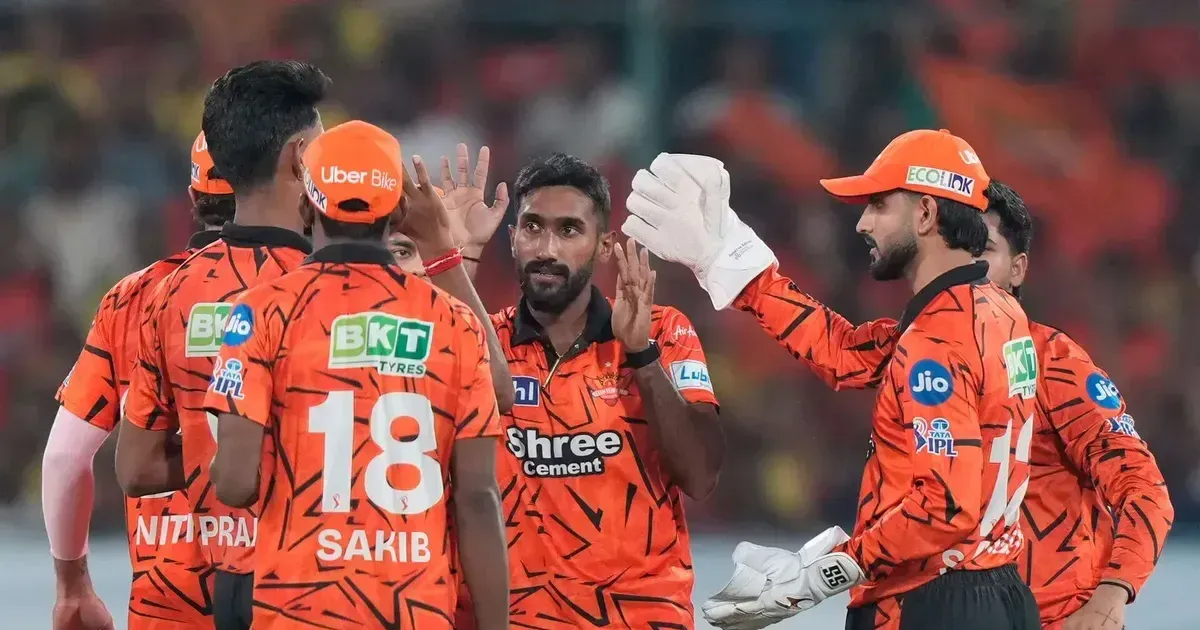
Sunrisers Hyderabad's victory over Chennai turned a tight IPL finish into a depth test for both sides. On April 18, 2026, Sunrisers Hyderabad stifled the Chennai Super Kings in a high-stakes encounter at the Rajiv Gandhi International Stadium. Sunrisers Hyderabad engineered a 10-run victory through a combination of early-innings aggression and late-innings defensive composure. Scoring began with an explosive display from Abhishek Sharma, who dismantled the opening bowling attack with precision. Sharma tallied 59 runs, matching the contribution of Heinrich Klaasen, who also posted 59 to anchor the middle order. Together, these performances propelled the home side to a powerful total of 194 for 9.
Chennai Super Kings struggled to find a consistent rhythm against a disciplined Hyderabad attack that prioritized length variation. While the target appeared reachable during the powerplay, the visitors encountered a sharp slowdown during the middle overs. Ruturaj Gaikwad later identified this stagnation as the primary catalyst for their defeat. The captain noted that a specific phase following the tenth over, where the team managed only four runs, stripped the chase of its necessary velocity. This momentum vacuum forced the lower order into high-risk shots against an increasingly confident bowling unit.
Sunrisers Hyderabad Batting Blitz
Aggression defined the early portion of the Sunrisers Hyderabad innings as Abhishek Sharma targeted the narrow boundaries. Sharma used the pace of the pitch to find gaps in the off-side field, forcing Chennai Super Kings into early tactical shifts. His 59 runs came at a strike rate that placed immense pressure on the visiting captain to rotate his bowlers ahead of schedule. Anshul Kamboj became the most resilient responder for the bowling side, maintaining a consistent line despite the onslaught. Kamboj earned praise from his captain for his clarity in execution under the lights in Hyderabad.
Heinrich Klaasen mirrored the success of his teammate by exploiting the spin options introduced in the twelfth over. Klaasen found particular success against deliveries angled into his pads, clearing the rope on three occasions. His ability to maintain a high scoring rate while wickets fell at the other end ensured the total remained competitive. Sunrisers Hyderabad eventually reached 194 for 9, a score that Gaikwad admitted was lower than the 220-run mark he had initially feared. The home side lost three wickets in the final two overs, preventing a late-game surge that could have pushed the total beyond 210.
Chennai Super Kings Middle Order Struggle
Chasing 195 required a clinical efficiency that the Chennai Super Kings top order initially seemed to possess. Openers provided a platform that kept the required run rate manageable for the first eight overs of the reply. The atmosphere changed when the field spread and Sunrisers Hyderabad introduced their primary spin threats. Scoring became a laborious task as the pitch began to show signs of variable bounce, complicating timing for the incoming batsmen. Chennai Super Kings found themselves trapped in a sequence of dot balls that mounted pressure on the settled hitters.
“I was looking at a score around 220-230. Restricting them to 194 felt good, but scoring just four runs after 10 overs proved costly,” Ruturaj Gaikwad said.
Gaikwad, meanwhile, struggled to reconcile the strong start with the sudden evaporation of scoring opportunities. The captain watched from the non-striker's end as the required rate climbed toward twelve runs per over. Despite the mid-game slump, the visitors stayed within striking distance thanks to a late-innings cameo that narrowed the gap. Chennai Super Kings reached 184 for 8 by the conclusion of the twentieth over, falling short of the target but securing a statistical silver lining. Statistical records show that the narrow margin of defeat allowed the side to actually gain one spot in the IPL standings despite the loss.
Malinga and Kumar Death Bowling Clinic
Eshan Malinga and Shivang Kumar took control of the final three overs to seal the outcome for the home fans. Malinga used a series of tailing yorkers that restricted the reach of the Chennai Super Kings power hitters. He conceded only seven runs in the eighteenth over, a feat that forced the batsmen into desperate measures during the subsequent six balls. Kumar followed this performance by mixing slower-ball bouncers with wide-line deliveries that were difficult to redirect. The pair took critical wickets at the death, ensuring that the visitors could not find the three boundaries required in the final stretch.
Pressure at the death remains the ultimate filter of quality in the Indian Premier League.
Sunrisers Hyderabad bowlers stayed disciplined even as the crowd noise reached deafening levels in the closing moments. Every dot ball delivered by Shivang Kumar increased the tension for the Chennai dugout, where coaches gestured for more aggressive footwork. The resilience of the bowling attack has surprised many analysts who questioned the depth of the Hyderabad roster earlier in the season. Malinga and Kumar proved that execution often outweighs raw pace when the margin for error is measured in millimeters. The victory reinforces the Rajiv Gandhi International Stadium as a difficult environment for chasing teams in the current 2026 campaign.
Statistical anomalies often define the mid-season scramble for playoff positioning.
Net run rate calculations propelled Chennai Super Kings up the table even though they left the stadium without points. This shift occurred because of the relative performance of other teams in the league during the same window of play. Sunrisers Hyderabad, by contrast, strengthened their claim for a top-four position by defending a total that many perceived as par for the conditions. The tactical battle between Gaikwad and the SRH leadership group highlights the importance of the middle-over strategy. Both teams now look toward their upcoming fixtures with a clearer understanding of their technical vulnerabilities in high-pressure chases.
Hyderabad Win Tests Chennai Depth
A champion side must score when conditions are favorable and survive when the shadows lengthen across the pitch. The Chennai Super Kings found themselves on the wrong side of this equation on April 18, 2026. While the scoreboard reflects a narrow 10-run margin, the underlying reality is a total collapse of tactical intent during the middle overs. Gaikwad can point to the bowlers for restricting SRH to 194, but he must look in the mirror when assessing why the chase flatlined so dramatically. Scoring only four runs in a critical phase of a T20 match is not an accident; it is a failure of leadership and adaptability.
Sunrisers Hyderabad, by contrast, displayed a ruthless understanding of their own home conditions. The use of Eshan Malinga and Shivang Kumar at the death was not just a defensive move but a psychological strike. They dared the CSK veterans to find the boundary and watched them fail. This victory should serve as a warning to every other franchise in the league. If you cannot dominate the middle ten overs against this SRH attack, you will not win in Hyderabad. The points table move for CSK is a fluke of math that masks a deeper rot in their current batting order. Strategy beats talent every time. SRH proved it. CSK ignored it.