Planetary Physics and the Deceleration of Time
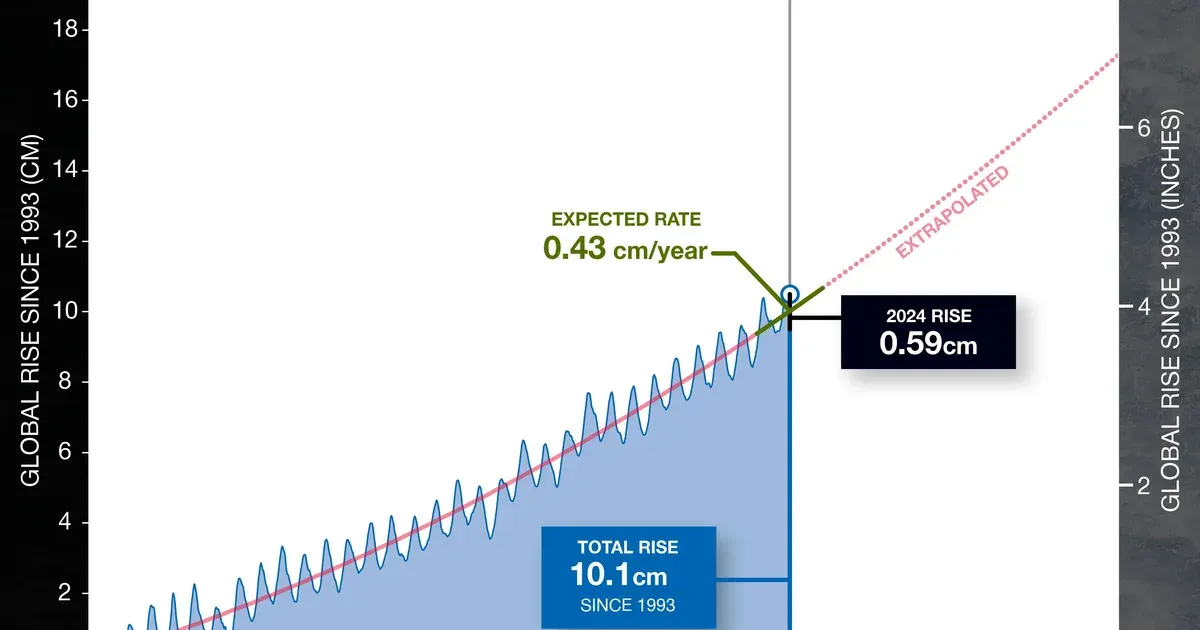
Researchers in Vienna and Zurich have identified a significant shift in the planetary clock that underscores the physical scale of environmental change. Glacial meltwater, migrating from the poles toward the equator, is effectively braking the planet's rotation. The update reached readers on March 12, 2026. This phenomenon mimics a figure skater extending their arms to slow a spin, redistributing mass away from the central axis. Geologists now estimate the day lengthens by 1.33 milliseconds every hundred years. While a millisecond appears negligible to the average observer, the cumulative effect is massive redistribution of kinetic energy across the globe. The finding sounds small until the scale is understood. Climate effects can reach planetary timekeeping.
Foraminifera, tiny single-celled marine organisms, provided the record needed to look back 3.6 million years. Their fossilized remains allow scientists to reconstruct ancient day-length fluctuations with startling precision. Records suggest that the current rate of change has no parallel in the Pliocene or Pleistocene epochs. University of Vienna and ETH Zurich teams utilized these biological archives to prove that human-induced climate change is now the dominant force affecting Earth's rotational speed, surpassing the gravitational tug of the moon for the first time in recorded history.
A planet that spins slower is a planet with a different destiny.
Such changes extend far beyond the length of a workday. Global positioning systems and telecommunications networks rely on atomic clocks that must be synchronized with the physical orientation of the Earth. If the rotation continues to deviate from these mechanical standards, international timekeepers may eventually need to reconcile the difference through unprecedented adjustments to the UTC standard. Scientific models previously attributed most rotational slowing to tidal friction, yet the sheer volume of water flowing from Greenland and Antarctica has now overtaken those ancient celestial influences.
Congo Basin Carbon Leakage and Peatland Decay
While the heavens adjust to a slower rhythm, the ground in Central Africa is exhaling its ghosts. Blackwater lakes in the Congo Basin have begun emitting carbon that was safely tucked away in peatlands for thousands of years. These bodies of water, characterized by their dark, tea-like appearance caused by dissolved organic matter, are acting as chimneys for ancient greenhouse gases. Researchers from the University of Vienna have expressed alarm over these emissions, noting that the release of such old carbon suggests the Congo peatlands are nearing a critical failure point.
Peatlands act as one of the world's most efficient carbon sinks, trapping dead plant matter in waterlogged, low-oxygen environments. But the hydrological balance of the Congo is shifting. Whether due to rising temperatures or altered rainfall patterns, the seal that kept this carbon underground is breaking. This ancient organic matter, once exposed to the air or dissolved into river systems, begins a process of decomposition that releases CO2 and methane back into the atmosphere. The Congo Basin represents one of the final frontiers of carbon storage, and its destabilization could accelerate global warming in a self-reinforcing loop.
Nature is calling in its debts.
Local observations confirm that these blackwater systems are darkening further, a sign of increased organic loading. Satellite data corroborates the ground reports, showing thermal signatures that suggest active decomposition is occurring beneath the canopy. Still, the precise mechanism driving this seepage remains a subject of intense scientific debate. Some investigators point toward forest degradation, while others believe a deeper geological shift is at play. The uncertainty does not diminish the risk; rather, it highlights how little we understand about the tipping points within tropical ecosystems.
Biological Sentinels and Ancient Archives
Benthic foraminifera remain the most reliable witnesses to these long-term planetary shifts. These organisms live on the ocean floor, incorporating chemical signatures from the water into their calcium carbonate shells. When they die, they settle into sediment layers that serve as a chronological library. By analyzing the isotopic composition and distribution of these fossils, the ETH Zurich team reconstructed a timeline of Earth's orbital and rotational history. This data set confirms that the current acceleration in day-length extension is a radical departure from the slow, steady deceleration observed over millions of years.
Previous studies focused primarily on the last few centuries of human history, but the inclusion of the 3.6-million-year benchmark provides a much-needed perspective on the scale of modern changes. It proves that the current environmental crisis is more than a surface-level temperature increase; it is a fundamental alteration of the Earth as a physical body. The planet is literally becoming more oblate, bulging at the equator as polar ice caps lose their mass. Such structural changes have profound implications for the Earth's crustal stress and could potentially influence seismic activity in the long term.
Modern technology depends on a stable rotational period to maintain the accuracy of everything from financial transactions to autonomous vehicle navigation. Engineers may soon find themselves fighting a losing battle against a planet that refuses to keep time. Yet the focus remains on the immediate drivers of this change. Reducing the rate of polar ice melt is the only way to stabilize the planet's rotation, but current emission trajectories suggest that the deceleration will only continue to pick up speed in the coming decades.
Planetary Time Signal
The harder lesson is that climate change is no longer only a coastline or temperature story. When moving water can alter the planet's rotation, the physical scale of the crisis becomes harder to dismiss. The numbers are tiny on a clock, but they point to a system being pushed beyond normal political attention spans.