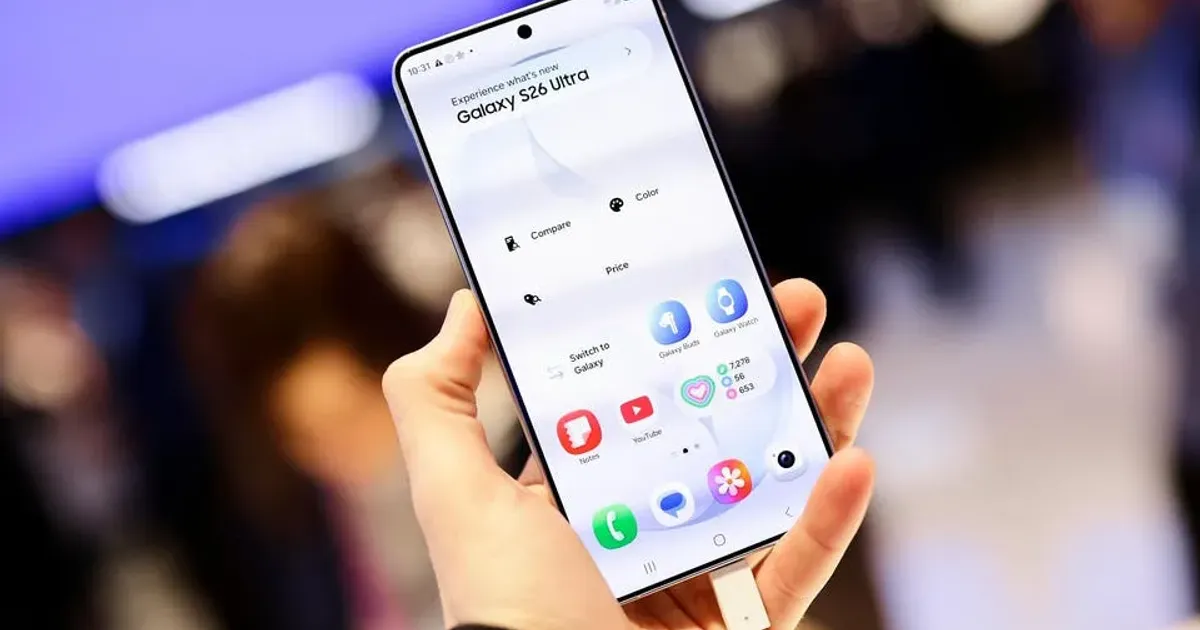
Samsung is expanding One UI 8.5 beyond its newest Galaxy phones, bringing newer Galaxy AI features to a wider device base. By May 8, 2026, reports around the rollout pointed to staged availability for recent Galaxy S, Z Fold, Z Flip and Tab models. The rollout matters because software is now one of the main ways phone makers differentiate devices that otherwise look increasingly similar. For Galaxy users, the update is less about a new interface color and more about which AI tools their hardware can actually support.
The 2026 update cycle has put on-device intelligence at the center of Samsung's pitch. Some features run locally, while others still depend on cloud systems or hybrid processing. That balance shapes privacy, speed and battery life, and it also determines which older phones receive the full experience.
AI Features Depend on Hardware
One UI 8.5 highlights a practical limit of software promises: not every Galaxy phone has the same neural-processing capacity. Newer flagship devices can handle heavier AI tasks more smoothly, while older models may receive a reduced feature set. That does not make the update meaningless, but it does mean the rollout is not identical for every user. Samsung has an incentive to make AI feel fast without turning battery life into the tradeoff. Background scheduling, model compression and smarter use of the device's processor all matter here. The real test is not whether an AI feature works once in a demo, but whether it works repeatedly during ordinary use.
That is why staged deployment matters. Releasing software across carriers and regions lets Samsung watch for battery complaints, app conflicts and overheating reports before the update reaches every eligible device. The caution may frustrate users waiting for the download, but it reduces the chance of a broad rollback.
Privacy Moves Toward the Device
Local processing is also a privacy argument. If more voice, image and text tasks can be handled on the phone, fewer sensitive requests need to leave the device. That helps Samsung answer a concern that has followed AI assistants for years: users often do not know where their data goes after they ask a question.
The shift does not eliminate cloud dependence. Some tasks still require server-side systems, especially when they involve web search, large context windows or account-level personalization. The useful distinction is whether Samsung explains those boundaries clearly enough for users to trust the setting they choose. Privacy settings are only useful if they are understandable. A user should know whether a voice command, image edit or document summary stays on the phone or leaves the device. The more Samsung leans on AI as a selling point, the more it has to make those processing choices visible.
Device Support Pressure
The biggest near-term issue is rollout quality. Samsung has to manage staged releases across regions, carriers and device families. A smooth update strengthens confidence after years of uneven Android update timing; a buggy rollout would undercut the AI message before users even test the new tools.
Compatibility lists will matter as much as the feature list. Owners of recent Galaxy S, Z Fold, Z Flip and Tab devices will want to know whether they are getting the full One UI 8.5 package or a lighter version. Midrange users may receive performance and security improvements without the most demanding AI functions.
The broader lesson is that mobile AI is becoming part of the upgrade cycle. Samsung is selling software, but the best version of that software still depends on new silicon. That makes One UI 8.5 a consumer update and a hardware-retention strategy at the same time.
The company also has to avoid making older-device owners feel abandoned. Seven-year support promises create expectations that phones will remain modern for longer. If AI features become the visible difference between old and new models, Samsung will need to explain where the hardware limit is real and where the limit is a product decision. That communication will shape how users judge the update as much as any benchmark. A Galaxy S24 owner may accept a lighter feature set if Samsung explains the NPU constraint clearly; the same owner may resent the rollout if the missing tools look like an artificial push toward the newest phone. One UI 8.5 therefore sits at the intersection of engineering, privacy and customer trust. The update is not just code; it is a test of whether long software support can coexist with an AI cycle that rewards newer chips. For developers, the rollout also creates a clearer target: apps that use local AI hooks must perform across several generations of Galaxy hardware, not only on the newest flagship. That will shape how quickly the ecosystem around Samsung's AI tools becomes useful rather than ornamental. The coming support cycle will show whether Samsung can make that distinction without creating resentment among users who bought recent phones expecting long-term parity. For users, the practical question is whether the update improves daily tasks without making older devices feel slower or more complicated.