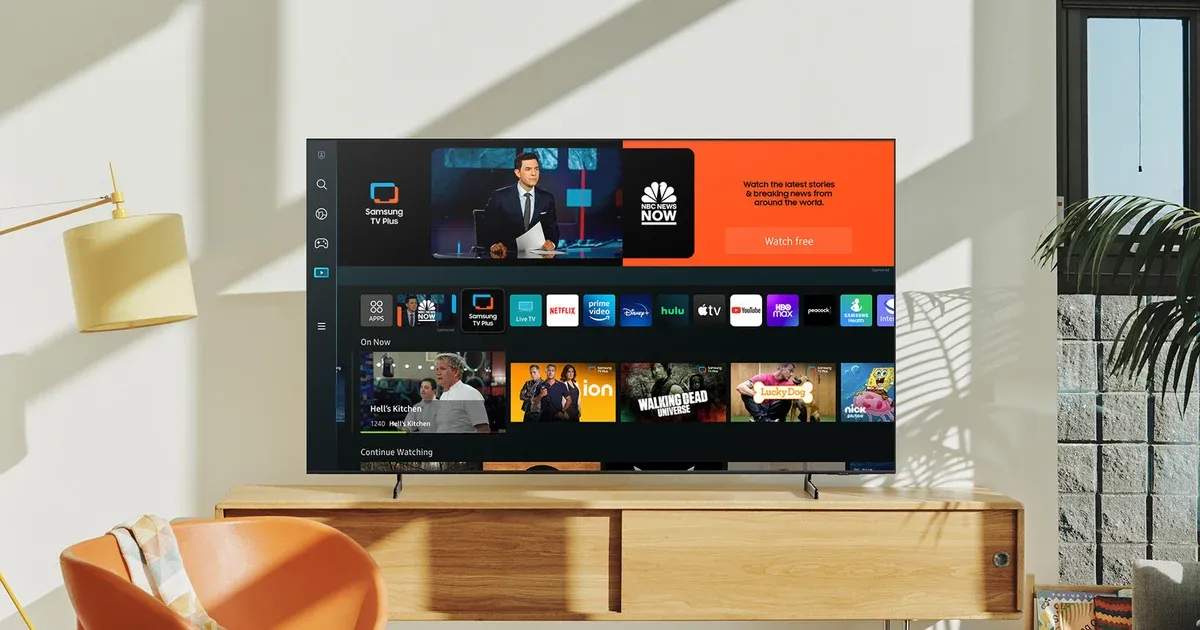
Samsung is tightening its smart TV app rules after researchers found software capable of routing strangers' web traffic through customers' home connections. The company says it has restricted new registrations containing that function and is looking for existing apps that must be removed. The policy addresses distribution through Samsung's store, while the research exposes a second problem: an app can change what it runs after review.
On August 3, 2026, Samsung said it was implementing platform-wide developer rules that explicitly prohibit residential proxy SDKs. These software kits can make a television an exit point for a proxy service. A remote customer sends requests through the household connection, so websites see the TV owner's residential internet address instead of the customer's original address. That residential origin can help automated collection or other activity avoid filters that distrust data-center addresses. The forwarded traffic is generally encrypted, which also limits what a household can learn merely by inspecting its connection.
The finding does not mean every named app automatically shared a connection or that researchers found viewers' local files being stolen. In Mnemonic's test, the proxy component inside a licensed Pac-Man game was dormant. The concern was that the component was already present, could be enabled by a server-side setting and had been distributed inside an app displayed in Samsung's Editor's Choice section.
A Dormant SDK Can Wake After Store Review
Mnemonic found Bright Data code embedded in games from connected-TV developer Play.Works, which advertises a catalogue of more than 400 games and installations across more than 400 million homes. When a game opened, it contacted a configuration server to determine which functions should run. Pac-Man lacked the activation flag during the test, but a football-themed 2048 game received a remote configuration that switched the proxy component on. The result showed that the package's dormant state at one moment did not guarantee the same state on a later launch.
Activation still presented a consent screen. Once accepted, however, a service supported by Samsung's Tizen platform could continue in the background after the viewer left the game. That sequence separates installation from activation: carrying the code created the capability, a remote configuration selected whether to use it and a button press started the service. Mnemonic observed a real consent prompt, but noted that the person accepting it could simply be trying to continue a game and might not understand the networking role being authorized.
The app design makes a one-time inspection incomplete. Mnemonic described some games as small shells that fetch their working code from a Play.Works server. Developers gain the ordinary benefit of fixing or changing software without another store download, but the reviewed package may not show the later runtime behavior. The Pac-Man package examined by Mnemonic was essentially a short HTML shell pointing to server-hosted game logic, allowing more than routine content to change without a new store package. The researchers reached that behavior by rooting a test television and extracting firmware from its flash chip, work ordinary viewers cannot reproduce.
Removal Is the First Measurable Test of the Ban
Samsung told TechCrunch that new app submissions using proxy functions had already been restricted. It also said it was identifying and removing apps already available in its store that contain the components. Those are two distinct enforcement jobs: screening new packages and revisiting software that customers may already have installed.
LG announced a similar restriction the previous month after proxy code was reported across its television app store; TechCrunch cited research estimating that roughly 42 percent of LG store apps enlisted televisions in proxy networks. The two manufacturers' actions move the issue from isolated app behavior to platform governance. A written ban can stop an app whose submitted package plainly includes an SDK; remotely fetched code requires monitoring beyond submission day.
The immediate result to watch is therefore not the announcement itself but the store inventory that follows it. App removals would show how Samsung applies the rule to known packages. Mnemonic's limited traffic sample appeared largely connected to dataset collection and scraping, but the researchers stressed that they saw only a small fraction of the wider network. Longer-term enforcement depends on whether the company can detect code or configuration delivered after approval. The policy closes a stated permission; the runtime architecture determines whether that closure remains effective.