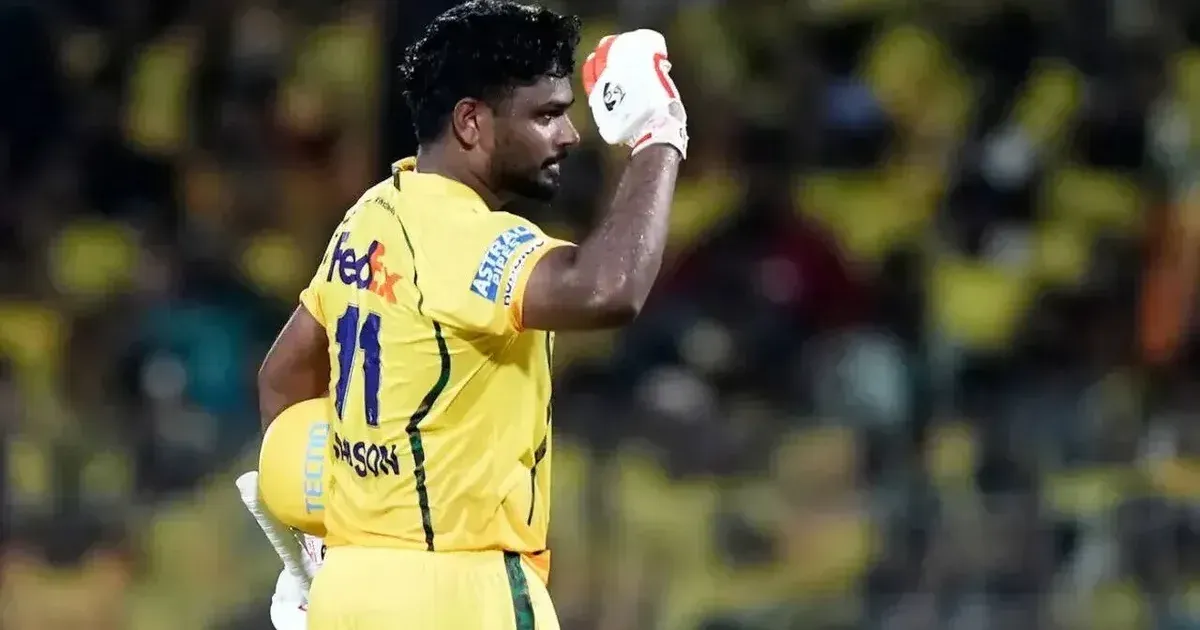
Sanju Samson's innings kept Chennai in a tournament race that had almost no room left. Delhi still had chances to close the match but lost control of the chase. The result reported on May 5, 2026, gave Chennai another narrow path toward survival. Sanju Samson's unbeaten 87 gave Chennai Super Kings an eight-wicket win over Delhi Capitals and changed the tone of both teams' IPL 2026 playoff run-in. Chennai chased 156 with 15 balls to spare at Arun Jaitley Stadium, where Samson and Kartik Sharma turned a modest target into a controlled finish. The result kept CSK close to the crowded qualification group while pushing Delhi into a far less forgiving position.
The scoreline was not only about one chase. Delhi made 155 for 7 after choosing to bat, then watched Chennai reach 159 for 2 in 17.3 overs. Samson's 52-ball innings, built with seven fours and six sixes, carried the authority of a player who understood both the surface and the table. For Delhi, the problem is now bigger than one poor night; their margin for error has nearly disappeared.
Delhi's Qualification Squeeze
Delhi Capitals are still alive mathematically, but the defeat leaves them dependent on a sharp reversal in form and help from results elsewhere. Their negative net run rate has become a second opponent, because narrow wins may not be enough if teams around them keep collecting points. A side that once looked close to the playoff conversation now has to treat every remaining fixture as a pressure match.
The batting collapse was the clearest reason Delhi lost control. Sameer Rizvi and Tristan Stubbs gave the innings some late structure, but the top and middle order left too much repair work for the final overs. A total of 155 was defensible only if Delhi struck early and repeatedly. Instead, Chennai's chase settled after the first two wickets, and the home side could not create a sustained squeeze.
That is why the defeat carries more weight than the points table alone shows. Delhi have struggled to match tactical clarity with scoreboard pressure, especially at home, and the latest result exposed the same gap again. The next selection call now has to be about roles as much as names: who bats through a difficult phase, who attacks spin, and who protects the net run rate when the match starts slipping.
Samson's Chase Changes the Table
Sanju Samson gave Chennai the kind of innings that compresses a chase. He began carefully, then widened the scoring areas once the pace of the pitch became clear. The unbeaten 114-run stand with Kartik Sharma meant Delhi never reached the point where one wicket could reopen the match. Samson did not just finish the chase; he removed suspense from it.
Chennai's bowlers had already created the platform. Noor Ahmad, Akeal Hosein and the supporting seamers kept Delhi from turning starts into a total above par, using changes of pace and spin to make new batters work immediately. On a surface where the ball held up at times, that discipline mattered. It also protected Chennai from needing a reckless chase to improve their position and net run rate.
The win moved CSK to 10 points and left them within reach of the playoff pack. That does not make their path simple, but it gives them a cleaner route than Delhi's. Chennai can still build a finish around controllable parts of their game: bowling discipline, a stable chase plan and Samson's current form. Those are firmer foundations than waiting for tie-breakers to fall kindly.
For Delhi, the opposite is true. The loss forces them to chase both points and run rate, a combination that often changes how teams bat. Conservative starts become harder to justify, but reckless hitting can make collapses worse. The pressure is therefore tactical as much as emotional, and it will test whether the side can keep a clear plan under elimination pressure.
Orange Cap Race Adds Another Layer
KL Rahul still reclaimed the Orange Cap, moving to 445 runs, but the personal milestone arrived inside a team result that offered little comfort. Rahul's season has kept him near the top of the batting charts, yet Delhi need more than one reliable scorer to stay alive. In this phase of a tournament, individual runs only matter fully when they also move the team result.
Samson's innings tightened that individual race as well. He moved into the top five run-scorers, while Abhishek Sharma remains close enough to keep pressure on the leaders. The Orange Cap table now mirrors the playoff table: several players are separated by small margins, and one innings can shift the order quickly. That makes every remaining fixture carry a second layer of stakes.
The larger story, though, is Chennai's timing. A late-season surge only matters if it is repeatable, and this win showed a balanced version of CSK rather than a one-player rescue. The bowling group limited Delhi's ceiling, Samson controlled the chase, and Kartik Sharma gave the innings a calm partner at the other end. That combination is what keeps Chennai relevant.
Delhi leave the match with harder questions. They have enough individual quality to win games, but the pattern of batting uncertainty and fragile pressure management is now damaging their campaign. If the Capitals do not fix that quickly, the race will move on without them, regardless of how many scenarios remain on paper.