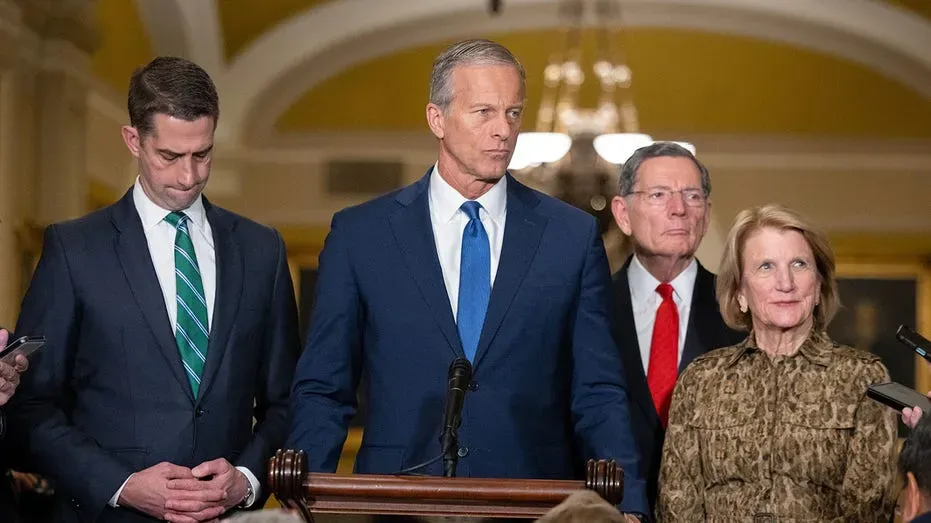
Senate Republicans are fracturing over a Trump-backed voting bill, exposing a familiar tension between election messaging and legislative risk. The bill may appeal to the party's base, but not every Republican senator wants to carry its legal and political consequences. The split had become a test of how much influence Trump still holds over Senate strategy. Some lawmakers see the measure as necessary election reform; others worry it could revive arguments that hurt the party with swing voters.
Election Rules Divide the Conference
Voting bills are rarely just administrative. They become statements about trust, fraud, access and power. That makes compromise difficult, especially when activists and donors are watching closely. Senators from safe states may have more room to support aggressive language. Members facing competitive races may prefer narrower provisions that can be defended as procedural rather than ideological.
Trump's Endorsement Cuts Both Ways
Trump's support gives the bill energy, media attention and grassroots pressure. It also makes the measure harder for skeptics to reshape quietly. Once a proposal becomes a loyalty test, policy details can become secondary. That dynamic is risky in the Senate, where margins are narrow and procedural obstacles are real. A bill can be useful as a campaign message even if it has little chance of becoming law.
Legal Challenges Are Likely
Any broad federal voting measure would invite scrutiny from states, civil-rights groups and election administrators. Questions about federal authority, voter access and implementation costs could move quickly into court. That legal risk matters for Republicans who want election security arguments without being seen as restricting legitimate voters. The bill's language will determine how easily opponents can frame it.
A Governance Test for the Party
Senate Republicans also face a broader question: are they writing law, setting campaign contrast or satisfying a former president's priorities? Those goals can overlap, but they are not identical. If the bill is too symbolic, it may energize supporters while giving Democrats an easy target. If it is too narrow, Trump-aligned activists may dismiss it as weakness.
The Strategic Read
The fracture shows that voting politics remain central to Republican identity, but the party has not settled on a governing version of that agenda. The next move will reveal whether Senate leaders can turn election distrust into a legally durable bill, or whether the issue remains more useful as a campaign weapon than a legislative project. The fracture also reveals a leadership problem. Senate leaders may prefer to keep the party focused on inflation, immigration and foreign policy, but voting rules remain a high-emotion issue for activists who believe the party must keep fighting over election administration.
Committee process could expose further divisions. Technical provisions on voter identification, mail ballots, federal funding and state certification rules each create different coalitions of supporters and skeptics. State officials will be watching closely because they would likely carry much of the administrative burden. A federal bill that changes deadlines or verification standards can force local election offices to rewrite procedures, train workers and defend choices in court. Democrats are likely to frame the bill as voter suppression, regardless of Republican claims about security. That response is predictable, but it can still be effective if moderate voters see the bill as solving a problem that has not been clearly proven. Republicans therefore need evidence as much as rhetoric. If they cannot show why each provision is necessary, the bill may look like a loyalty exercise rather than a governance plan.
Election legislation is now a test of party discipline and institutional seriousness. Republicans can use the issue to energize voters, but durable law requires more than grievance. It requires rules that can survive courts, state implementation and public scrutiny. Campaign consultants will read the split differently from election lawyers. Strategists may value the bill because it keeps voters engaged and forces Democrats to defend unpopular practices. Lawyers will focus on whether the text can survive judicial review.
Those incentives can pull the party apart. A provision that is useful in a primary ad may be too vague for court. A carefully drafted provision may be too modest to satisfy activists who want a sweeping statement. The bill also intersects with state-level Republican officials who already run elections. Some may welcome federal reinforcement; others may resist Washington imposing rules that complicate their own systems.
If Senate leaders cannot resolve those tensions, the measure may become another symbolic fight that proves party loyalty while producing no durable law. That outcome can still have political value, but it does little to settle election administration. Republicans are trying to convert distrust into statute. The difficulty is that distrust is emotionally powerful but legally imprecise. A serious bill has to turn it into rules that are clear, enforceable and publicly defensible.
The Senate split may also shape fundraising. Outside groups on both sides can turn the bill into a purity test, rewarding senators who take absolutist positions and punishing those who ask technical questions. That incentive structure is bad for lawmaking because election administration is full of details: deadlines, databases, provisional ballots, court orders and local staffing. A party that ignores those details may win applause while writing a bill that collapses under implementation. The party's internal media environment will intensify the pressure. Senators who ask for narrower language can be accused of weakness before they have finished explaining their objections. That makes legislative craftsmanship harder because the incentive is to perform certainty, not examine tradeoffs.
Election administrators, meanwhile, will care about timelines. A bill passed too close to an election can create confusion even if its goals are defensible. Training poll workers, updating systems and informing voters all take time, and rushed implementation often becomes the source of the next dispute. the Republican conference is confronting the difference between election politics and election administration. The first rewards sharp messages. The second punishes ambiguity. A bill that cannot bridge that gap will remain a symbol rather than a durable reform.