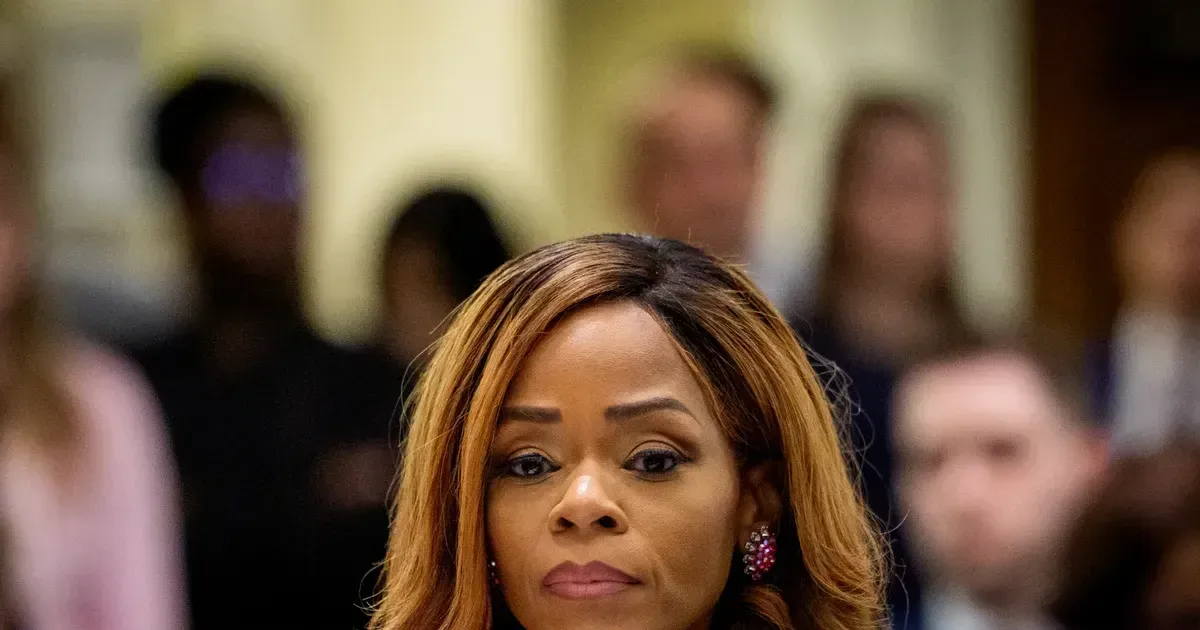
Sheila Cherfilus-McCormick’s resignation shifts the ethics case from a looming expulsion vote to criminal accountability and a Florida special election. Representative Sheila Cherfilus-McCormick resigned from the United States House of Representatives on April 21, 2026, moments before colleagues intended to move for her formal removal from office. Her departure concludes a congressional career that shifted from a narrow special election victory to a national scandal involving federal disaster relief. Documents submitted to the Speaker of the House indicate her immediate withdrawal from all legislative duties. Sheila Cherfilus-McCormick faced a looming vote by the House Ethics Committee that sources suggest would have been the final step toward her historic expulsion. This exit allows her to avoid the public spectacle of a floor vote where bipartisan support for her removal had reached a critical mass. The resignation also changes how party committees evaluate candidate risk before ethics findings become floor action.
Investigators focusing on her financial dealings uncovered a complex web of transactions involving $5 million in federal funds. These funds, originally designated for disaster relief and pandemic recovery programs, allegedly flowed into personal accounts and political coffers. Parallel to the criminal investigation, the House Ethics Committee spent months detailing more than 20 violations of federal law and chamber rules. Specifically, the panel scrutinized how money meant for struggling businesses or local infrastructure during emergencies ended up financing a congressional campaign. Evidence suggests a portion of these stolen funds paid for television advertisements and consultant fees during her 2022 bid for office.
Sheila Cherfilus-McCormick and the Ethics Investigation
Minutes before the scheduled committee meeting, the Florida Democrat issued a brief statement confirming her resignation. She had maintained her innocence for months, characterizing the probe as a politically motivated attack on her character. Federal prosecutors, however, have built a case centered on bank records and wire transfers that contradict her public denials. Every member of the ethics panel had access to a 150-page report detailing her alleged misconduct. House Ethics Committee leaders planned to recommend her immediate expulsion based on the severity of the campaign finance breaches. Congressional rules regarding the use of public funds are explicit, yet the findings suggest a systematic effort to bypass these safeguards.
“An investigation found she committed more than 20 ethics violations, including breaking campaign finance laws.”
Prosecutors in the Florida district where she resides are preparing for a federal trial scheduled later this year. Charges include wire fraud, conspiracy, and making false statements to federal authorities. Records show that the missing $5 million relates to multiple disaster declarations where she allegedly leveraged her position to steer contracts and relief payouts. Witnesses within her inner circle have reportedly provided testimony about the internal accounting practices used to hide these transactions. Legally, her resignation does not shield her from criminal prosecution in the federal court system. It only terminates her status as a sitting member of the legislative branch.
Allegations Involving $5 Million in Federal Funds
Stealing money meant for disaster victims is a charge that carries great weight in a state like Florida. Residents in the 20th Congressional District, which includes parts of Broward and Palm Beach counties, have frequently relied on such funds for recovery from devastating hurricanes. Evidence compiled by the Federal Bureau of Investigation indicates that Sheila Cherfilus-McCormick directed resources away from these critical areas. Much of the $5 million was siphoned through shell companies that appeared to be legitimate vendors for relief supplies. Under the surface, these companies were allegedly controlled by associates who then funneled the cash back into her campaign account.
Corruption of this scale usually triggers immediate red flags within the Treasury Department. Historically, the safeguards on disaster relief funds have been criticized for being too porous, allowing opportunistic actors to exploit the system during crises. This specific case highlights how a sitting member of Congress could potentially manipulate the bureaucratic machinery of the federal government for personal gain. Financial analysts noted that the scale of the theft was unusually high for a freshman representative. Most of the misappropriated funds were moved in increments small enough to avoid immediate detection by automated bank monitors.
Florida voters now face the prospect of a special election to fill the vacancy. Because the 20th District is a heavily Democratic seat, the primary will likely determine the eventual successor. Political consultants in the region are already identifying potential candidates who can restore trust in the district office. While Cherfilus-McCormick won her first primary by only five votes, her departure leaves a power vacuum that many local leaders are eager to fill. The local Democratic party must now manage the fallout of a representative accused of defrauding the very people she was elected to serve.
Legislative Impact in Florida and Washington
Washington lawmakers reacted with grim pragmatism to the news of the resignation. Several members of the Florida delegation issued statements emphasizing the need for integrity in the distribution of federal aid. Beyond the immediate political consequences, this scandal has reignited debates over how the House Ethics Committee monitors the outside business interests of its members. Every representative is required to file annual financial disclosure forms, yet Cherfilus-McCormick allegedly omitted several key bank accounts from her filings. Oversight committees are now reviewing those forms to determine how the omissions went unnoticed for several years.
Money trails often lead to broader networks of influence. Investigators are looking into whether other individuals within the Florida political ecosystem assisted in the movement of the $5 million. If the trial reveals a wider conspiracy, more arrests could follow in the coming months. Sources close to the Department of Justice suggest that the investigation into the stolen disaster funds is far from over. Prosecutors are currently analyzing thousands of pages of emails and text messages recovered from her office. The focus remains on identifying the exact moment the disaster funds were first diverted.
House leadership on both sides of the aisle appears relieved to avoid a messy expulsion vote. Expelling a member is a rare and solemn act that requires a two-thirds majority, a threshold only met a handful of times in American history. By resigning, Sheila Cherfilus-McCormick effectively removed the burden from her colleagues to judge her fitness for office. The House Ethics Committee will likely release the full text of its findings despite her resignation to ensure public transparency. This move would provide a definitive record of the evidence gathered during the multi-year probe.
Ethics Case Reshapes Florida Seat
Asking a legislative body to cleanse itself of corruption is like asking a river to flow uphill. The resignation of Sheila Cherfilus-McCormick is not a triumph of ethics, but a failure of institutional oversight that allowed a representative to allegedly divert $5 million before the system even blinked. We must stop pretending that voluntary resignation is a form of accountability. It is a tactical retreat designed to preserve a pension and negotiate a more favorable plea deal with federal prosecutors. The timing of her exit, mere minutes before a recommendation for expulsion, proves that she stayed in power until the very second it became personally disadvantageous to do so.
Congressional self-policing is an exercise in theater where the curtain only falls when the lead actor is already in the parking lot. The House Ethics Committee only finds its teeth when the evidence is so overwhelming that inaction would be a political suicide pact for the rest of the caucus. If the allegations of stealing disaster relief funds are true, this is a betrayal that goes beyond simple campaign finance violations. It is a predatory exploitation of the vulnerable. Florida deserves a representative who does not view hurricane recovery as a personal profit center.
Voters should remain skeptical of any claims that the system worked as intended. The system allowed a person to hold office for years while allegedly funneling millions in public money into private hands. True accountability will only arrive in a federal courtroom, far from the mahogany desks and polite traditions of the House. We should expect more indictments. Only a conviction will complete the reckoning.