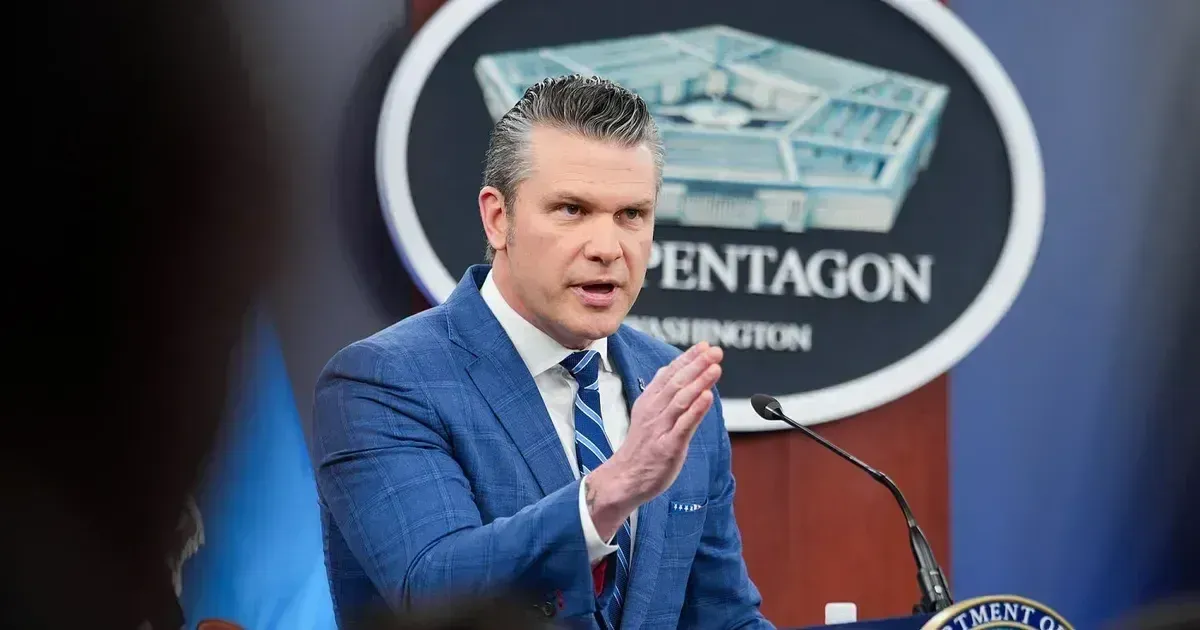
Pete Hegseth’s flu shot reversal is bringing vaccine politics into military readiness policy. The decision will be judged by medical risk as much as personal liberty rhetoric. Pete Hegseth announced on April 21, 2026, that the Department of Defense is immediately ending the mandatory annual flu vaccination requirement for all active-duty service members. Defense Secretary Hegseth characterized the longstanding requirement as a policy that provides little benefit while burdening the individual liberty of those in uniform. He released a video statement to social media platforms explaining that the United States military must focus on lethal readiness over administrative compliance. Hegseth explicitly labeled the mandate as not rational in its previous broad application to the entire force.
Military leadership previously viewed the influenza vaccine as a critical tool for maintaining unit cohesion during the winter months. Proponents of the mandate often cited the 1918 pandemic as evidence that respiratory viruses can disable entire divisions faster than enemy fire. Hegseth, however, rejected these historical parallels by arguing that modern medicine and varied risk profiles among young, healthy soldiers make a universal mandate unnecessary. He described the decision as a moment to discard absurd overreaching mandates that only weaken warfighting capabilities. Pentagon records indicate that influenza vaccination rates among troops have consistently hovered near 100 percent for over a decade.
“We are seizing this moment to discard any absurd overreaching mandates that only weaken our warfighting capabilities,” Defense Secretary Pete Hegseth said during his video announcement on April 21.
Critics of the policy change point to the potential for localized outbreaks in cramped environments like aircraft carriers or forward operating bases. Medical officials within the Department of Defense have historically argued that a single infected sailor could compromise the operational status of a multibillion-dollar vessel. Hegseth dismissed these concerns by emphasizing personal responsibility and the voluntary nature of health decisions. Removal of the requirement does not ban the vaccine but rather shifts it to an optional status for all branches including the Army, Navy, Air Force, and Marines.
Hegseth Policy Shift Reverses Longstanding Military Protocol
Defense Secretary Pete Hegseth noted that the mandate was overly broad and failed to account for the physical fitness levels inherent in the military population. Every service member must now decide individually whether the seasonal flu shot aligns with their personal health goals. Hegseth argued that the 1.3 million active-duty personnel deserve the same medical autonomy as the civilians they protect. Department officials expect the change to reduce the administrative burden on unit commanders who previously spent weeks tracking compliance metrics.
This policy is a major departure from the medical readiness standards that defined the Global War on Terror era. During that period, non-compliance with vaccination schedules could result in a service member being declared non-deployable or facing non-judicial punishment. Commanders often used the flu shot clinics as a test of unit discipline and logistical efficiency. Hegseth argued that these exercises diverted time from combat training and tactical drills. Data from the 2024-2025 flu season showed that even with the mandate, thousands of hours were lost to minor side effects and clinic wait times.
Logistical chains for the distribution of millions of doses across global installations will now undergo a large restructuring. Medical units must transition from mandatory mass-vaccination events to a supply-on-demand model for those who request the shot. Hegseth stated that the Department of Defense would save millions of dollars annually by reducing the volume of bulk vaccine purchases. Private contractors who previously held lucrative agreements to supply the military with influenza doses may see their contracts scaled back or terminated entirely. The United States government previously prioritized these contracts to ensure a stable domestic manufacturing base for vaccines.
Scientific and Strategic Justification for Vaccine Repeal
Service members have frequently expressed frustration with the annual requirement, particularly those who have experienced adverse reactions in the past. Hegseth leaned into this sentiment by framing the repeal as a recruitment and retention tool. Recruiting shortfalls have plagued several branches, and Hegseth suggested that stripping away bureaucratic requirements might make military service more attractive to a broader segment of the population. He insisted that a military free from unnecessary medical intervention is a more resilient force. The United States Army, in particular, has struggled to meet its enlistment goals for three consecutive years.
Public health experts outside the Pentagon expressed immediate concern regarding the wider effects on civilian populations near military bases. Active-duty personnel frequently interact with local communities, potentially acting as vectors for the virus if vaccination rates drop sharply. Hegseth did not address these external public health implications in his initial announcement. His focus remained exclusively on internal military efficiency and the elimination of what he termed irrational obstacles to mission success. Internal memos from the Defense Health Agency suggest that a 20% drop in vaccination could lead to a measurable increase in sick-call visits during peak winter months.
Legislative support for the move has been split along predictable partisan lines in Washington. Supporters in Congress argue that Pete Hegseth is finally bringing common sense back to the Department of Defense. They contend that the military should not be a laboratory for social or medical experimentation. Opponents argue that the move ignores a century of military medical science and places the health of the force at risk for political points. Senatorial aides confirmed that the Armed Services Committee plans to hold hearings on the health implications of the repeal later this summer.
Impact on Department of Defense Readiness Standards
Personnel records will no longer flag individuals as red or non-deployable for lacking a seasonal flu shot. This change simplifies the Pre-Deployment Health Assessment process for units rotating to overseas theaters. Hegseth emphasized that his primary duty is to ensure that the United States can project power without being slowed by domestic health mandates. He stated that the Department of Defense must be ready to fight tonight without checking a vaccine card. Military medical facilities will continue to stock the vaccine for any service member who chooses to receive it voluntarily.
Commanders at the battalion and squadron levels now face the task of managing health risks without a top-down mandate. Some officers have expressed private concerns that a spike in flu cases could impact training schedules during the high-intensity work-up cycles. Pete Hegseth has countered these concerns by stating that leadership should focus on hygiene and physical distancing rather than forced medical procedures. He believes that the maturity of the force is sufficient to manage health risks without a directive from the secretary. The United States Navy has already begun drafting new guidelines for sick-bay protocols given the policy changes.
Financial analysts believe the move could signal further rollbacks of mandatory medical procedures across the federal government. If the military can operate without a flu mandate, other agencies like the Border Patrol or the Department of Veterans Affairs may face similar pressure. Hegseth has positioned himself at the forefront of a broader movement to reduce the reach of the administrative state. He concluded his announcement by reiterating that the era of overreaching mandates in the military has ended. Future health policies will likely prioritize individual choice over collective requirements.
Flu Shot Reversal Tests Readiness
Defense Secretary Pete Hegseth is conducting a high-stakes experiment by stripping away preventative medical requirements in favor of a libertarian-infused military culture. While he frames this as a win for warfighting capability, the move ignores the reality of military logistics where the individual is a cog in an enormous machine. One sick pilot can ground a billion-dollar mission, making the individual liberty argument a luxury the United States military has historically been unable to afford. Hegseth is betting that modern sanitation can outweigh the benefits of herd immunity, but history suggests that viruses do not care about political ideology or personal freedom.
The repeal is a calculated political maneuver designed to signal a purge of the previous administration's legacy. By labeling the mandate as not rational, Hegseth is effectively telling military medical professionals that their data-driven recommendations are secondary to political optics. This creates a dangerous precedent where strategic readiness is defined by social media videos instead of epidemiological reality. If a major outbreak occurs in a high-tension area like the South China Sea or Eastern Europe, the cost of this policy will be measured in operational failures, not just sick days.
Hegseth’s focus on recruitment through mandate repeal is a desperate attempt to fix a systemic cultural problem with a quick-fix medical policy. High-quality recruits are not avoiding the military because of a flu shot; they are avoiding it because of perceived instability and better private-sector opportunities. Stripping health protections only makes the service less safe for those who do sign up. It is a gamble on the health of the force. Time will expose the folly. Pure political theatre.