Tina Fey hosted the premiere of Saturday Night Live U.K. on March 22, 2026, as the long-anticipated British iteration of the late-night institution finally reached the airwaves. Sky One broadcast the ninety-minute special from its suburban London studio. Audience data released shortly after the credits rolled suggests a warm reception from viewers despite the daunting legacy of the American parent show. This figure indicates a stable beginning for a franchise that many observers thought would never cross the Atlantic.
Overnight data indicates that 226,000 people watched the live transmission. That figure equates to a 3.2% share of the total viewing public at 10 p.m. While these numbers are modest compared to peak terrestrial television heights, they represent a strong performance for a pay-TV channel in a crowded Saturday night market. Sky executives are reportedly looking at these metrics as a validation of their multi-million pound investment in the format.
Ratings Success for Saturday Night Live U.K.
Lorne Michaels stood in the wings as executive producer.
Success for the debut episode relied heavily on the star power of its host and guest performers. Tina Fey anchored the broadcast with a familiar professional polish, guiding a fresh cast of British comedians through a series of topical sketches. Graham Norton also appeared in several segments, providing a bridge between the American-born format and British television sensibilities. Producers clearly intended to signal that this version would maintain the high production values of the Lorne Michaels stable while adapting to local tastes.
In fact, the broadcast arrived during a period of perceived crisis for domestic sketch comedy. Broadcasters have largely abandoned the genre in recent years, favoring low-cost panel shows or reality competitions. Industry analysts have categorized British sketch comedy as an at-risk art form. Sky One is positioning the new series as a potential remedy for this drought. Whether a translated American format can truly revitalize a domestic tradition is still a point of contention among television historians.
Shakespeare and Starmer Sketches Anchor Premiere
Writing in The Guardian, critics noted that the inaugural episode worked better than expected. Ambition was visible in every frame, from the elaborate sets to the biting political commentary. One highlight included a series of impressions of Keir Starmer, portraying the Prime Minister as a man struggling to maintain control over a fractious cabinet. The sketches did not shy away from local controversy, taking aim at dodgy skincare products and the current state of the National Health Service.
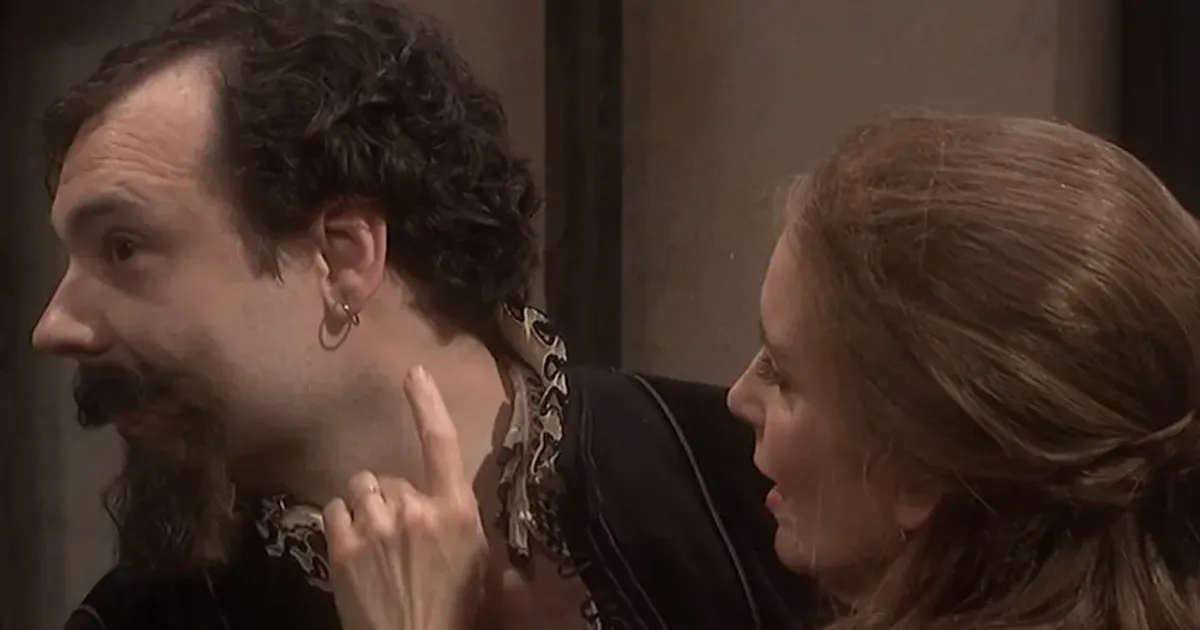
Featured in the most discussed segment of the night was a parody of the film Hamnet. A version of William Shakespeare returned home from London in the sketch, depicted as a Gen-Z hipster who had spent too much time in the capital's trendiest circles. This version of the Bard carried a Team Anne Boleyn tote bag and wore what the script described as a coy little earring. He also attempted to hide a stash of ketamine from his wife, claiming he had merely brought back new poetic inspirations from the city.
But the humor relied on more than historical spoofs. The show targeted modern British life with a sketch regarding influencer culture and the dubious ethics of social media marketing for beauty brands. Actors mimicked the frantic energy of TikTok presenters, peddling serums that promised impossible results. Still, some viewers noted that certain performances felt very weak, a term used by some reviewers to describe the inevitable growing pains of a live debut.
Lorne Michaels Imports American Format to Sky
Variety reporters observed that the show is strongest when it leans into what makes British comedy distinct. Replicating the exact structure of the American original carries risks. The cold open, the monologue, and the musical guest are all elements that American audiences take for granted. British viewers are accustomed to more anarchic or surreal structures in their sketch shows. The tension between these two styles was evident throughout the premiere broadcast.
The general feeling, I think, will be that the inaugural episode of Saturday Night Live U.K. did work.
Critics from multiple outlets pointed out that the format risks feeling too American if it does not evolve. While the jokes were British, the pacing followed the rigid requirements of the New York template. This approach ensures a professional sheen but can sometimes stifle the spontaneity that British performers are known for. Writers will need to find a balance between the discipline of the Michaels method and the messy energy of the local comedy circuit.
Sky One has invested heavily in the infrastructure required for a live weekly broadcast. Moving a production of this scale into Elstree Studios required significant technical upgrades. The network is betting that the live element will create a sense of urgency that recorded comedy lacks. By contrast, traditional British sitcoms have seen their budgets slashed or moved entirely to streaming platforms where the cultural impact is often diffused over several weeks.
British Comedy Landscape Faces New Competition
Even so, the competition for Saturday night eyeballs is fierce. Established reality formats still dominate the ratings, and the 226,000 viewers for Saturday Night Live U.K. represent only a fraction of that total. Sky must now prove that it can maintain this momentum without the novelty of a premiere episode. The second broadcast will provide a better indication of the program's long-term viability. Producers are already scouting for hosts who can match the international profile of Tina Fey.
Separately, the inclusion of a musical guest is still a core part of the strategy. The premiere featured a performance that adhered to the traditional two-song structure. The element of the show provides a cross-promotional opportunity that Sky is keen to exploit across its various media platforms. Music industry sources suggest that the show is already being viewed as an essential new stop on the European promotional circuit for major artists.
In turn, the cast members are beginning to see their profiles rise on social media. Sketches from the premiere, particularly the Shakespeare parody, have gained significant traction on platforms like X and Instagram. The digital afterlife is often more important for modern television success than the initial overnight rating. If the show can generate consistent viral moments, it will likely secure a renewal for a second season regardless of the linear broadcast figures.
Yet, the pressure remains on the writing staff to deliver sharp, weekly satire. British politics moves at a speed that can make a Saturday night show feel dated by the time it airs. Writers must anticipate the news cycle or find evergreen topics that connect with a cynical public. The first episode proved they are capable of landing punches, but the endurance test of a full season is a different matter entirely.
The Elite Tribune Perspective
Importing a fifty-year-old American institution to rescue British television is a confession of creative exhaustion. Sky is effectively admitting that the United Kingdom can no longer generate its own comedy formats with sufficient gravity to anchor a Saturday night. We are watching a cultural exchange that looks more like an annexation. Lorne Michaels is an undisputed titan, but his formula is a product of a specific Manhattan milieu that does not necessarily translate to the rain-slicked streets of Borehamwood. The premiere was polished, certainly, but it lacked the dangerous, unpredictable edge that once defined the best of British satire.
By dressing up local grievances in the tuxedo of a New York variety show, the producers risk creating something that feels like a high-budget tribute act. If British comedy is truly at risk, the solution is not to buy a franchise from an American conglomerate. The solution is to fund original, risky, and indigenous voices that do not need a 3,000-mile-away approval stamp from 30 Rockefeller Plaza. Ratings of 226,000 are a respectable start for Sky, but they are a pittance compared to the cultural dominance once held by native sketch legends.
It is not a revival; it is an imitation.