Apple and Samsung mobile divisions faced a surprising market shift on April 5, 2026, while consumers began prioritizing specialized hardware over all-in-one devices. Recent sales data suggests that the saturation of the flagship smartphone market has reached a critical threshold. High-end handsets costing upwards of $1,400 now compete with a fragmented array of dedicated tools that perform individual tasks with greater efficacy. Instead of a single device serving every need, users are returning to a hardware silo model that favors tactile photography and dedicated desktop computing power. This trend indicates a movement away from the convergence that defined the last decade of consumer electronics.
Fujifilm leads this charge in the imaging sector with a device that prioritizes simplicity over algorithmic complexity. The Fujifilm Instax Mini 13 has gained traction among demographics that previously relied solely on mobile sensors. While flagship phones use computational photography to mimic depth of field, the Instax uses chemical reactions on physical film. Market analysts at Elite Tribune noted that the desire for physical artifacts has outweighed the convenience of digital storage for a growing segment of younger buyers. The physical reality of a printed photo provides a permanence that a cloud-based file cannot match.
Fujifilm Instax Mini 13 Challenges Mobile Photography
Analog hardware offers a reprieve from the constant notifications and screen fatigue associated with modern glass slabs. Fujifilm designed the Fujifilm Instax Mini 13 to include a built-in self-timer and a simplified lens structure. These features contrast sharply with the triple-lens arrays found on the latest iPhone or Galaxy models. Digital sensors often over-process images, leading to skin tones that look artificial or colors that appear hyper-saturated. By contrast, the analog process delivers a predictable, muted aesthetic that social media filters try to replicate through software.
"This updated Instax adds a self-timer, but otherwise, it keeps it simple and inexpensive for those who want to dip their toes in instant film photography," a reporter for CNET observed in a recent evaluation.
Simplicity drives the appeal of the Fujifilm Instax Mini 13 in a world of complex menus and subscription-based editing apps. Users do not need to worry about battery life or storage limits in the same way they do with a smartphone. The camera operates on AA batteries and uses standard Instax Mini film packs. Historically, the brand has maintained a steady presence in the market, but the 2026 surge suggests a deeper rejection of the digital-first lifestyle. Every shot counts when a pack of ten exposures carries a real cost. Fujifilm reported a 15% increase in film sales during the first quarter of 2026.
HP Omen Max 45L Navigates Global RAM Shortage
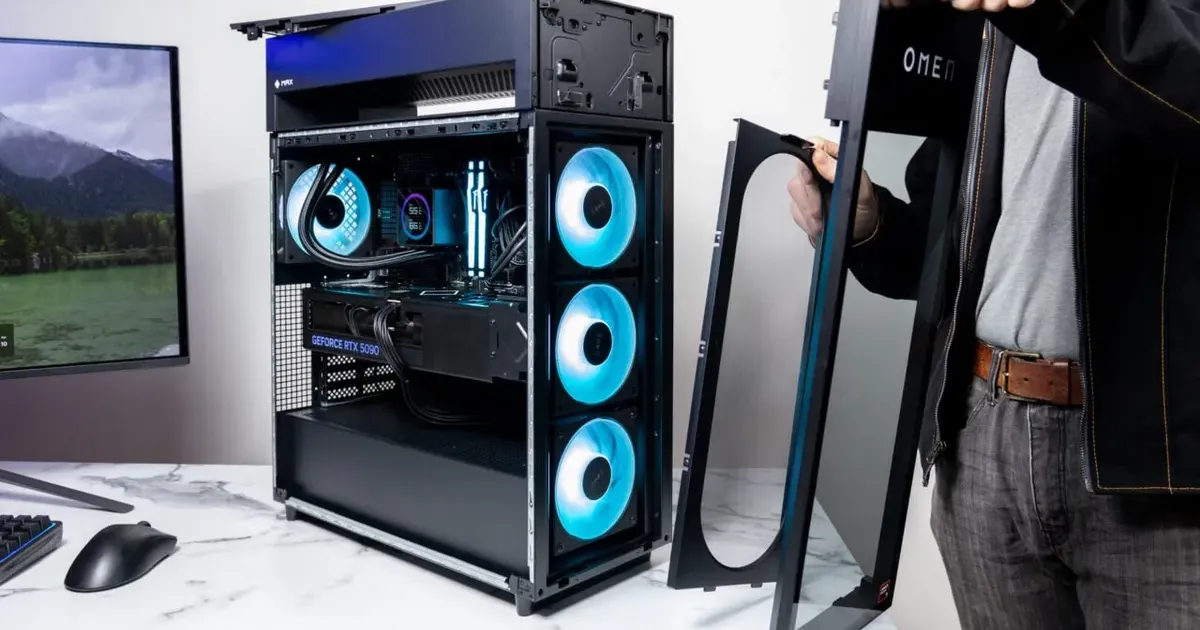
Gaming performance on mobile devices has also hit a plateau, pushing enthusiasts back toward dedicated towers. The HP Omen Max 45L provides a level of thermal management that a thin smartphone chassis simply cannot provide. Inside the desktop, a patented Cryo Chamber uses ambient air to cool the liquid radiator, ensuring the processor does not throttle during intense sessions. Mobile chips like the A19 Bionic or Snapdragon 8 Gen 5 struggle with heat dissipation after thirty minutes of high-fidelity play. Desktop components operate at much higher wattages and maintain stable frame rates.
Hardware costs for custom-built PCs have soared because of a persistent semiconductor supply-chain failure. A global RAM crisis has made individual memory modules nearly impossible to source at retail prices. HP has managed to reduce these costs by leveraging long-term contracts with major silicon fabricators. So, the HP Omen Max 45L has become one of the most cost-effective ways to access 4K60 gaming. Buying a pre-built machine from a major manufacturer is often cheaper than trying to build a similar system from scratch in the current economic climate.
Memory manufacturers in South Korea and Taiwan have redirected their focus toward enterprise AI servers. This shift has left the consumer DDR5 and LPDDR5X markets underserved. HP continues to secure shipments of high-bandwidth memory for its Omen line by guaranteeing high-volume purchases. Apple and Samsung are also vying for these same components, which drives up the manufacturing costs of their flagship phones. The price of a 1TB smartphone now rivals that of a mid-range gaming desktop. HP offers the Omen Max 45L with up to 64GB of RAM in its base configuration.
Mobile Hardware Performance Hits Thermal Limits
Physics dictates the boundaries of what a handheld device can achieve. Silicon chips generate heat that must be dissipated to prevent permanent damage to the internal circuits. Smartphones rely on passive cooling through their metal or glass frames. The HP Omen Max 45L uses active cooling with multiple 120mm fans to move air through the system. Heavy workloads like video editing or ray-traced gaming quickly overwhelm the heat sinks in a flagship phone. Users are realizing that a device in their pocket cannot replace a workstation on their desk.
Samsung has attempted to bridge this gap with improved vapor chambers in its Galaxy S26 series. These efforts have yielded marginal improvements in sustained performance but fall short of dedicated hardware. The HP Omen Max 45L allows for easy upgrades to the GPU and storage, extending the lifespan of the investment. Most smartphones are sealed units with components soldered to the logic board. Repairability and modularity have become key selling points for consumers tired of the two-year upgrade cycle. HP utilizes a tool-less entry system for its chassis.
Technically, the bridge between mobile and desktop is widening rather than narrowing. Advanced cooling solutions and larger power supplies allow desktop CPUs to clock at nearly double the frequency of mobile variants. The HP Omen Max 45L utilizes a 1200W power supply to feed its hungry components. Flagship phones must operate within a 5W to 10W power envelope to preserve battery life and prevent burns. These constraints limit the complexity of the software that a mobile device can run natively. Most mobile games rely on aggressive upscaling and simplified textures to maintain performance.
Consumer Shifts Toward Single Purpose Hardware
Financial reality is forcing a re-evaluation of the "everything device" philosophy. When a single phone costs as much as a dedicated camera and a gaming PC combined, the benefit begins to crumble. Fujifilm has positioned its Fujifilm Instax Mini 13 as a lifestyle accessory that complements a phone instead of replacing it. HP targets the user who needs raw power that no mobile chip can provide. Both companies are profiting from the limitations of the smartphone form factor. Specialized hardware offers a depth of experience that multi-purpose devices often lack.
Semiconductor analysts expect the RAM shortage to persist through the end of the 2026 fiscal year. This scarcity will likely lead to further price hikes for smartphones that require high-speed memory for AI tasks. HP remains in a strong position due to its diversified supply chain. Fujifilm stays insulated from these issues by relying on analog mechanical components. The diversity of the hardware market is increasing as consumers seek out tools that do one thing exceptionally well. A single Fujifilm Instax Mini 13 sells for less than the sales tax on a new iPhone.
The Elite Tribune Strategic Analysis
Why do we keep buying digital mirrors when we crave physical glass? The resurgence of the Fujifilm Instax Mini 13 and the dominance of the HP Omen Max 45L are not coincidental anomalies. These trends are a direct indictment of the flagship smartphone's failure to deliver on its promise of total replacement. For years, the tech industry pushed the narrative that the device in your pocket would eventually render the desktop and the dedicated camera obsolete. That narrative has officially died despite thermal physics and a global semiconductor crisis. Consumers have realized that a multi-tool is never as good as a specialized blade. The smartphone has become a jack of all trades and a master of none.
The current RAM crisis has exposed the fragility of the mobile-first economy. Apple and Samsung are trapped in a cycle of diminishing returns, where each new iteration offers marginal gains at enormous costs. Meanwhile, HP is winning by providing raw, unthrottled power to a market tired of compromise. Fujifilm is winning by offering the one thing digital sensors cannot provide: an uneditable, physical truth. Data reveals a return to intentional hardware. If you want to play a game, buy a tower. If you want a memory, buy a film camera. The era of the mediocre all-in-one is ending. It is a necessary correction for a market that has spent too long chasing thinness over utility.