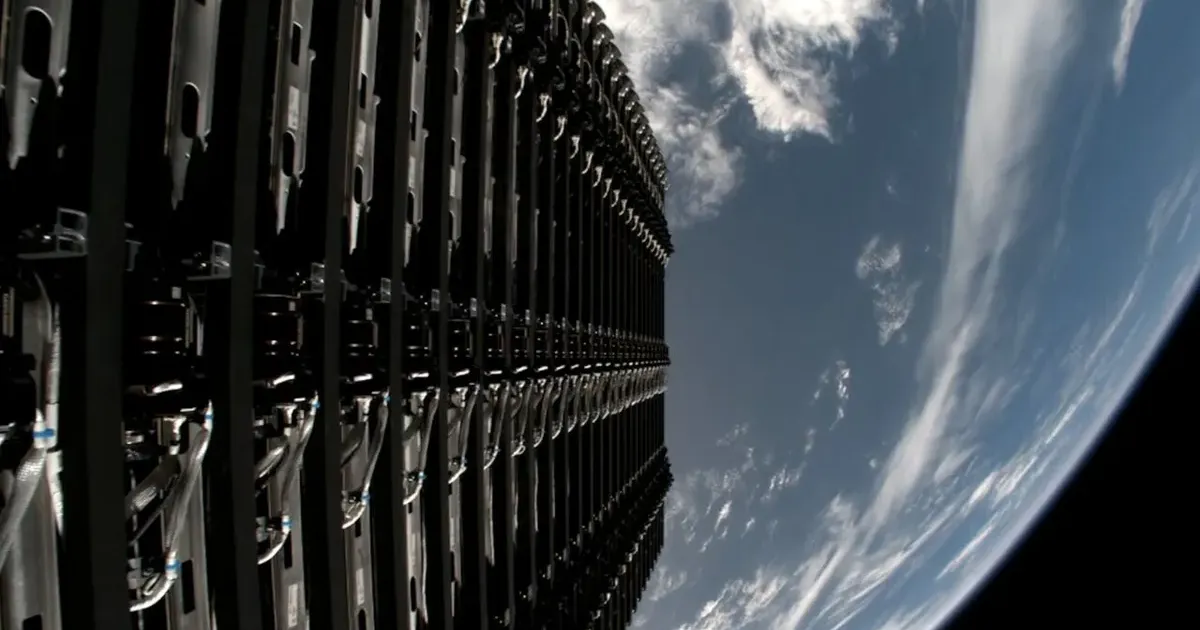
SpaceX engineers confirmed that a Starlink satellite suffered a critical anomaly and disintegrated in orbit. Reports from CNET and Gizmodo describe a total loss of hardware after telemetry signals vanished without warning. Tracking stations monitored the fragmentation event as the craft broke into several dozen pieces of debris. This is the second major hardware failure affecting the megaconstellation since late 2025. By April 1, 2026, the second satellite failure had turned Starlink reliability into a renewed engineering question.
Spacecraft monitoring systems first detected the irregularity during a routine station-keeping maneuver. Telemetry data indicated a sudden drop in power before the on-board computer ceased communication. Independent tracking firms like LeoLabs confirmed the appearance of new debris clouds in the same orbital plane. Observers noted that the breakup happened at an altitude that minimizes immediate risks to the International Space Station.
Orbits in this region of space are increasingly crowded. Large constellations require near-perfect reliability to avoid cascading collision scenarios. Each satellite must perform hundreds of autonomous maneuvers per year to dodge existing space junk. Failure to maintain control over a single unit can jeopardize neighboring assets. The company has not yet released the specific satellite identification number for the lost unit.
SpaceX Orbital Debris and Risk Assessment
Engineers at the Hawthorne headquarters are currently reviewing assembly line logs to determine if a specific batch of hardware is compromised. Production speed has increased sharply to meet the goal of launching thousands of satellites annually. Faster manufacturing timelines sometimes introduce microscopic flaws in propellant valves or battery casings. These components operate under extreme thermal stress while transitioning between direct sunlight and the shadow of the Earth. A single hairline fracture can lead to an explosive decompression when pressurized systems fail.
Debris from the December incident remains under observation by the United States Space Command. That event also involved a sudden fragmentation without an external collision. Experts at Gizmodo reported that the similarities between these two events suggest a recurring mechanical flaw. Identifying the root causes is difficult because the hardware is destroyed during the malfunction. Investigators must rely entirely on remote telemetry and light-curve analysis to reconstruct the final seconds of the mission.
Ground-based sensors recorded a flash of light consistent with a rapid energy release. High-velocity fragments now circle the planet at speeds exceeding 17,000 miles per hour. Even a piece of metal the size of a marble carries enough kinetic energy to disable a much larger spacecraft. Space safety protocols require that any dead satellite be de-orbited within five years to prevent such risks.
Repeating Mechanical Failures in Starlink Constellation
Reliability rates for the V2 Mini satellites have come under intense scrutiny from the aerospace community. While SpaceX maintains a high success rate compared to legacy providers, the sheer volume of their fleet makes even a 1% failure rate problematic. Thousands of active units create a statistical likelihood of regular hardware attrition. Critics argue that the rapid deployment strategy prioritizes market dominance over environmental sustainability. The company launched 24 Falcon 9 rockets in the first-quarter of the year alone.
The event sounds similar to an incident that caused SpaceX to lose a satellite in December, suggesting a possible systemic issue in the newer satellite designs.
Atmospheric drag eventually pulls debris back into the thickest layers of the air where it burns up. However, this process takes years at the altitudes where the recent malfunctions occurred. Every new breakup adds to the background noise of tracked objects that automated systems must monitor. Collision avoidance algorithms must now process an additional 12,000 potential conjunctions per day. Insurance costs for satellite operators continue to rise as the orbital environment becomes more volatile.
One failed satellite can generate a cloud of fragments that persists for a decade.
Federal Aviation Administration Scrutiny of Space Hardware
Regulators at the Federal Aviation Administration and the Federal Communications Commission have requested a detailed technical briefing on the recent losses. New rules implemented in 2024 mandate that commercial operators provide a debris mitigation plan for every orbital shell. SpaceX currently holds licenses to operate nearly 12,000 satellites in low Earth orbit. Officials want to ensure that these malfunctions do not represent a design flaw that could affect the entire constellation. Penalties for non-compliance with space safety standards include heavy fines and the suspension of launch permits.
Financial analysts estimate the cost of a single Starlink satellite at roughly $250,000 to $500,000. While the hardware cost is manageable for a firm valued at over $150 billion, the regulatory risk is more meaningful. A mandatory grounding of the Falcon 9 fleet to investigate hardware issues would stall multiple NASA missions and national security launches. The aerospace giant must balance its internal innovation pace with the demands of government oversight bodies. Failure to address these anomalies could empower competitors seeking to challenge the Starlink monopoly.
Satellite failures often go unreported by smaller operators, but the scale of the SpaceX fleet ensures every incident is documented by global sensors.
Reliability Risk for Starlink
A second orbital failure matters because Starlink’s value depends on scale and reliability. Individual satellites are replaceable, but repeated mechanical issues can raise questions about design checks and launch cadence.
Regulators will also watch debris risk. SpaceX can tolerate some hardware losses only if tracking, deorbit planning and communications with other operators remain credible.