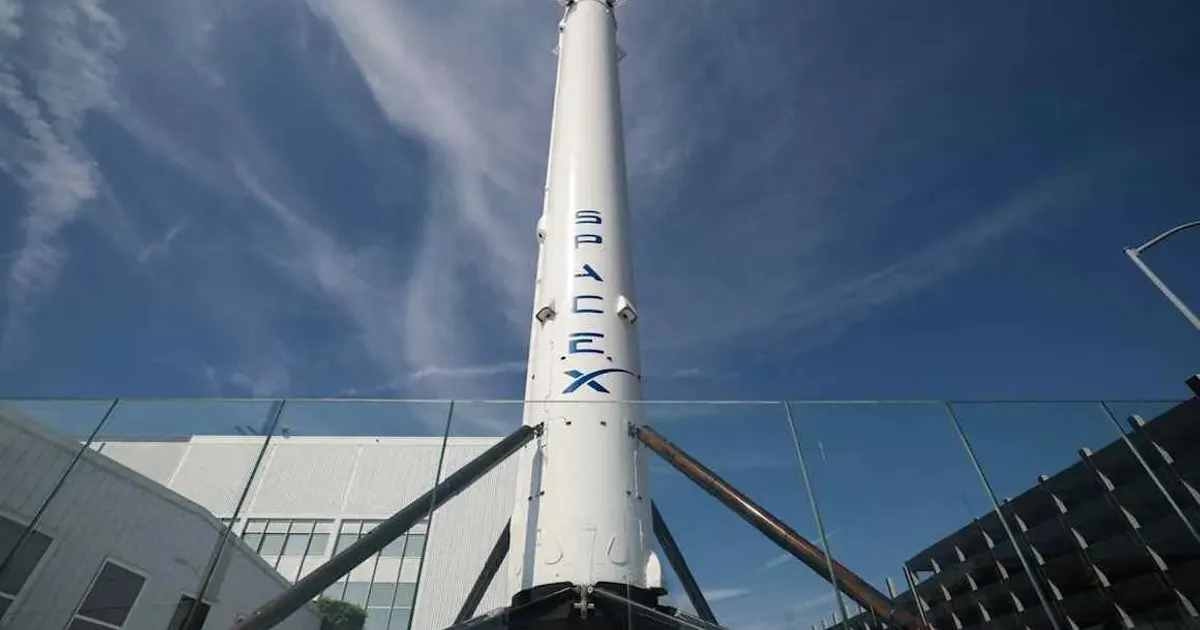
SpaceX submitted confidential paperwork to the SEC to initiate the most serious public offering in financial history. On April 1, 2026, corporate filings of this nature allow companies to undergo preliminary regulatory scrutiny away from public markets, providing a buffer as auditors verify multi-year revenue streams. Elon Musk previously dismissed the necessity of a public listing, but the capital intensity of the Starship program has altered the fiscal trajectory of the firm. Reports suggest the listing could occur as early as June 2026.
Confidential submissions provide a distinct advantage for high-valuation entities by shielding sensitive competitive data from rivals until the final weeks of the process. SpaceX used this path to protect proprietary launch cost structures that underpin its current market dominance. Financial analysts estimate the company holds a valuation exceeding $250 billion, a figure that would immediately place it among the most valuable corporations on the planet. Bankers at several Tier-1 institutions have reportedly been vying for lead underwriting roles for months. The June target aligns with the expected launch window for the ninth orbital flight test of the Starship launch system.
Because the company maintains a complex web of private investors, the transition to public markets requires an exhaustive reconciliation of equity grants and secondary market trades. Internal valuations rose steadily throughout 2025, driven largely by the operational success of the Starlink satellite constellation. Starlink now accounts for over 60 percent of the total revenue generated by the Hawthorne-based firm. Documents indicate that the satellite internet division achieved consistent profitability in late 2025. This milestone provided the necessary financial foundation for the current IPO push.
Regulatory Hurdles and the Confidential SEC Filing
Regulatory authorities in Washington will scrutinize the filing for transparency regarding government contracts and national security implications. SpaceX is the primary launch provider for the Department of Defense and NASA, creating a unique overlap between private commerce and federal interests. Disclosure requirements for a public company are far more stringent than those for a private venture. These requirements include the public release of quarterly earnings, executive compensation packages, and detailed risk factors. Gwynne Shotwell, the president of the company, has been instrumental in preparing the internal infrastructure for these disclosure standards.
Financial transparency has been a recurring point of contention for private aerospace firms. While Bloomberg suggests the company has already completed three years of audited financials, Reuters sources claim that some discrepancies in Starship development costs stayed under review until last month. The SEC will likely focus on how the company categorizes research and development expenses versus operational costs for its satellite fleet. Proper categorization determines the earnings per share metrics that investors use to value the stock. The company reported $11 billion in revenue for the 2025 fiscal year.
Investors expect the initial offering to include a mix of primary and secondary shares. Primary shares would generate fresh capital for the company to fund its Mars exploration goals, while secondary shares allow early employees and venture capital firms to liquidate their holdings. Institutional appetite for the stock is projected to be unprecedented, with many pension funds seeking exposure to the growing space economy. Current market conditions favor large-cap technology listings despite broader economic volatility. The SEC reviews process typically lasts between 60 and 90 days.
Starlink Revenue Projections and Market Valuation
Revenue from the Starlink division surpassed $6.5 billion in the previous calendar year. This success is a result of rapid expansion into markets in Southeast Asia and Africa where traditional terrestrial internet remains absent. The company successfully deployed its Gen3 satellite hardware, which increased data throughput by 40 percent per unit. Lowering the cost of user terminals allowed the service to penetrate lower-income demographics. Subscribers now number over 5 million globally.
SpaceX is no longer a speculative venture but a dominant utility provider that happens to own the most efficient transportation system in the world.
Valuation models for the IPO rely heavily on the projected growth of the satellite internet sector. Analysts at Morgan Stanley suggest that the global space economy could reach $1 trillion by 2040, with SpaceX capturing the lion's share of that value. Competition from Blue Origin and the Kuiper project from Amazon stays several years behind for deployment scale. Starlink possesses a first-mover advantage that is difficult to erode due to the high barrier to entry in orbital logistics. The company launched 140 rockets in 2025 alone.
Cash flow stability from Starlink offsets the high-risk nature of the Starship development program in South Texas. Starship represents the future of heavy-lift capabilities, designed to carry over 100 tons to low Earth orbit. Each launch of the Falcon 9 rocket currently generates a profit margin exceeding 50 percent for the company. These margins provided the liquidity needed to sustain operations without frequent private funding rounds in recent years. The company currently maintains a cash reserve of $4 billion.
Institutional Appetite for Private Space Assets
Private equity firms have long viewed SpaceX as the crown jewel of the aerospace sector. Limited access to share in the private secondary market led to an enormous buildup of institutional demand. The public listing will allow retail investors to participate in the growth of the company for the first time. Market makers expect high volatility during the first week of trading given the celebrity status of the CEO. Elon Musk is expected to retain a majority of the voting rights through a dual-class share structure.
Institutional portfolios often lack direct exposure to orbital infrastructure beyond traditional defense contractors. Boeing and Lockheed Martin operate with different business models that focus on government cost-plus contracts rather than commercial scaling. SpaceX operates on a fixed-price model that encourages efficiency and rapid reuse of hardware. This approach has forced a paradigm shift across the entire aerospace industry. The biggest launch providers are now attempting to develop their own reusable rocket systems. The Falcon 9 booster has been successfully landed and reused over 300 times.
Investment banks including Goldman Sachs and JPMorgan Chase are expected to lead the syndicate. These firms have extensive experience managing jumbo IPOs like the Saudi Aramco listing or the Alibaba debut. The sheer size of the SpaceX offering will require a global roadshow to attract sufficient capital from sovereign wealth funds. Sources indicate that interest from the Middle East and Singapore is particularly strong. Final pricing of the shares will depend on the performance of the broader Nasdaq index in May. Initial price talk suggests a range of $120 to $145 per share.
IPO Risk for Space Investors
Public markets and Elon Musk share a volatile history that suggests this marriage will be anything but harmonious. Taking SpaceX public is a tactical retreat from the autonomy Musk has enjoyed for decades. While the infusion of capital is necessary to build the Mars fleet, the accompanying regulatory leash will inevitably chafe. Public shareholders do not share Musk's multi-decadal vision of Martian colonization; they prioritize quarterly earnings and dividend potential. The fundamental misalignment of timelines creates an unstable environment for long-term innovation. SpaceX is effectively trading its soul for a checkbook that is larger than any private consortium could provide.
Skepticism regarding the valuation is also warranted. The $250 billion figure assumes that Starlink can maintain its monopoly while avoiding the geopolitical minefield of international spectrum rights. Russia and China are already developing domestic competitors that could lock SpaceX out of meaningful portions of the global market. If the satellite internet growth hits a ceiling, the entire valuation collapses, as the launch business alone cannot support such a large market capitalization. SpaceX is a utility company dressed in the costume of a tech unicorn. Investors should prepare for a reckoning when the reality of orbital debris and regulatory friction slows the current breakneck pace of deployment.
Ultimately, this IPO is a liquidity event for the early backers who are tired of waiting for a Mars landing that is still decades away. It is a brilliant exit for the venture capitalists and a high-risk gamble for the public. The volatility will be legendary. High-risk, high-reward.