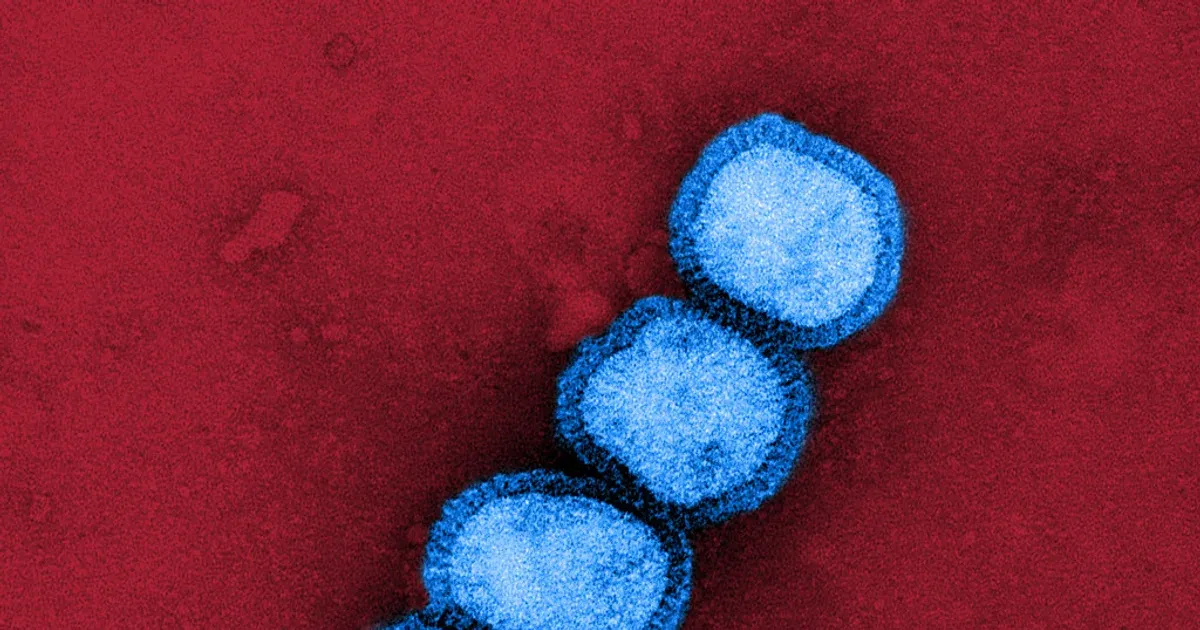
A human peptide called dermcidin can interfere with influenza A viruses in laboratory experiments, according to a study published in Proceedings of the National Academy of Sciences. The researchers also found a protective signal in mice and an association between higher nasal dermcidin levels and a history of not developing flu-like symptoms.
Those findings identify a possible antiviral mechanism, not a ready treatment. No person received dermcidin as a medicine. The mouse experiment produced its clearest benefit when the peptide was mixed with the virus before infection. Starting the peptide three hours after infection did not reduce disease or lung viral load compared with placebo.
The evidence covers distinct stages that cannot be treated as equivalent: cell assays, biochemical work, human sampling and a controlled mouse model. It does not establish a synthetic nasal spray, support for vaccination or a way to increase protective dermcidin production in people.
Researchers Traced the Signal to a Dermcidin Peptide
The project began with mouthwash samples from 19 health care workers who reported never having flu-like symptoms despite working around patients with influenza. Researchers created protein libraries from those samples and screened them for the ability to inhibit hemagglutination, a process involving influenza's hemagglutinin protein.
That screen identified dermcidin, an antimicrobial peptide already known from sweat. The team then chemically synthesized DCD-1L, a 48-amino-acid segment of dermcidin, along with related peptides and controls. Several dermcidin-derived peptides inhibited influenza A antigens and infectious viruses in cell-based assays, with activity varying by strain and peptide structure.
The experiments included H1N1 and H3N2 strains. The researchers also reported in-vitro activity against the measles virus and human coronavirus OC43. These tests show activity under controlled laboratory conditions; they do not establish effectiveness against those infections in patients.
Dermcidin was detected at respiratory entry sites, including the nasopharynx, saliva and tears. Average measured concentrations were lower than those previously reported in sweat. Sampling of individual salivary glands indicated that the parotid gland was the largest contributor to salivary dermcidin, supporting local production in the mouth.
Higher Human Levels Showed Association, Not Immunity
The study compared 31 people described as susceptible to influenza-like illness with 36 people described as asymptomatic. Baseline dermcidin levels in nasopharyngeal samples were about six times higher in the asymptomatic group. Gene sequencing did not link the group difference to a specific dermcidin variant.
The label asymptomatic requires caution. The researchers selected intensive-care health workers with a history of exposure and no reported flu-like illness, but acknowledged that they did not empirically confirm prior influenza infection or exposure. The groups were defined by symptom history, not by a trial in which infection and subsequent protection were measured.
Dermcidin also rose during illness. In 16 patients with laboratory-confirmed influenza, salivary levels were higher during hospitalization than four months later. Patients hospitalized with other respiratory viruses also had higher levels than healthy susceptible participants. That pattern could reflect part of the body's response to infection rather than a marker that independently prevents it.
Another gap separates laboratory activity from normal physiology. The paper says dermcidin concentrations needed for antiviral effects in vitro were roughly 80 to 250 micromolar, while typical nasal levels were about 0.02 micromolar. The authors proposed continuous secretion, cooperation with other immune factors and possible immunomodulatory effects as explanations worth studying. Those hypotheses do not erase the concentration difference.
The Mouse Result Depended on Timing
For the animal experiment, mice received influenza A virus through the nose. One group received DCD-1L beginning three hours after infection and daily for three more days. In another group, the peptide and virus were mixed for an hour before they were administered, followed by additional peptide doses. Zanamivir and placebo groups provided comparisons.
The pre-mixed group maintained low clinical scores and had lower lung viral load on day six, with an effect the researchers compared with zanamivir. By day ten, its viral load was still low but no longer significantly different from placebo. The group treated after infection lost weight and developed clinical signs much like the placebo group, and its lung viral load did not differ from placebo.
This design demonstrates that DCD-1L can neutralize virus under a favorable pre-exposure condition. It does not show that the peptide treats an established infection. The authors suggested that rapid metabolism or insufficient peptide at the infection site may explain the failed post-infection result and identified longer-lasting delivery as a future research question.
Separate mouse tests found no significant weight, clinical or tissue changes under the dosing regimens studied. That is preliminary animal tolerability evidence. It cannot define a safe human dose, long-term effects or risks of delivering a concentrated peptide into the respiratory tract.
The Discovery Is a Starting Point, Not a Flu Alternative
The study provides a useful target because DCD-1L appears to bind a conserved region of influenza hemagglutinin and push the protein prematurely into its post-fusion shape. That leaves the virus less able to attach to and enter a host cell. Future structural work is still needed to visualize the interaction directly and confirm the proposed binding site.
Before a dermcidin-based product could reach clinical use, researchers would need a formulation that remains active, dosing and toxicology studies, and human trials showing prevention or treatment benefit. They would also need to determine whether normal dermcidin levels predict risk independently of exposure, vaccination, age, other immune factors and medical history.
The paper did not compare dermcidin with influenza vaccination in people, test it as a vaccine enhancer or show that diet, exercise, sweating or another behavior raises antiviral protection. Calling a molecule natural does not make a concentrated synthetic version effective or safe. It also creates no basis for supplements or do-it-yourself nasal products.
The strongest conclusion is still significant: a peptide made by the human body revealed an unusual way to disable influenza before cell entry. The failed post-infection mouse arm and the large gap between physiological and laboratory concentrations define the work just as clearly as the positive findings. Any claim that dermcidin can replace vaccines or approved antivirals skips the experiments that would have to prove it.