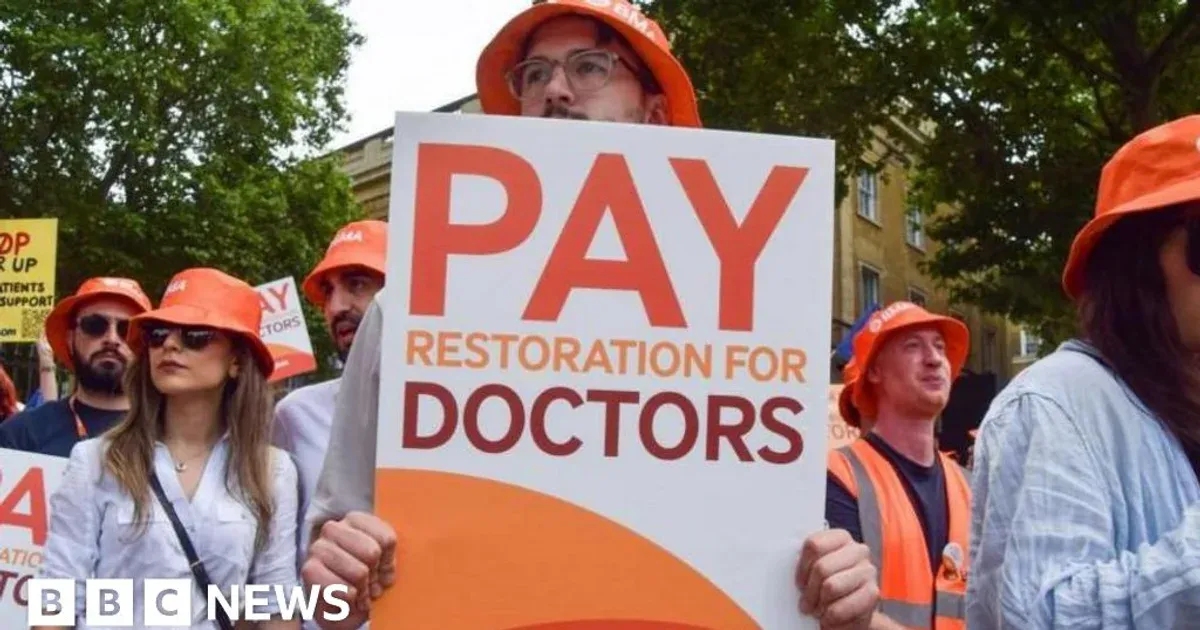
Prime Minister Keir Starmer issued a 48-hour ultimatum demanding the British Medical Association cancel its planned six-day walkout. By March 31, 2026, the order had turned the labor dispute into a direct threat to medical training. Failure to comply with this directive will result in the immediate withdrawal of funding for 1,000 medical training positions across the United Kingdom. Downing Street officials characterized the move as a necessary response to protect the National Health Service from further operational collapse. Junior doctors and consultants within the British Medical Association (BMA) previously scheduled their industrial action to begin immediately after the Easter holiday. The scheduled six-day disruption threatens to paralyze elective care and emergency services during one of the busiest periods for the health system.
BMA leaders received the formal notification early Tuesday morning as tensions reached a critical boiling point. This ultimatum targets the foundational career paths of the next generation of physicians by threatening the very posts required for specialization. Starmer stated that the government can no longer justify the expansion of training programs while existing staff refuse to provide essential services. Negotiations regarding pay restoration have stalled for several months with both sides refusing to move from their entrenched positions. Doctors demand a full reversal of real-terms pay cuts that they argue have eroded the profession since 2008. Treasury officials maintain that meeting these demands would require an additional 4 billion pounds in annual spending.
BMA Faces Training Post Reductions
Training posts function as the primary mechanism for junior doctors to progress into senior consultant roles. Eliminating 1,000 of these slots would create a large bottleneck in the medical pipeline. Specifically, the removal of these positions would leave hundreds of medical school graduates without a clear path toward specialty certification. Impacted departments would likely include general practice, emergency medicine, and psychiatry, which already face notable staffing shortages. BMA representatives argue that the Prime Minister is effectively using the careers of young doctors as a bargaining chip in a fiscal dispute. Government ministers insist that the 48-hour window provides ample time for the union to reconsider its aggressive stance.
Previous industrial actions throughout 2024 and 2025 resulted in the cancellation of millions of appointments and surgeries. Data from the Department of Health and Social Care indicates that the backlog of patients awaiting elective procedures now exceeds 7.8 million individuals. Starmer emphasized that the 48-hour deadline is firm and non-negotiable. Union officials are currently convening emergency meetings to determine whether to ignore the threat or proceed with the strike. Some senior members of the BMA suggest that withdrawing training posts could lead to a permanent exodus of talent to healthcare systems in Australia and Canada. Retention rates for UK-trained doctors have already reached a ten-year low.
NHS Staffing and Patient Care Risk
Health Secretary Wes Streeting supported the Prime Minister's hardline approach during a televised briefing. Streeting argued that the government must prioritize the immediate safety of patients over long-term educational investments if the strike proceeds. Every day of strike action costs the NHS approximately 100 million pounds in lost productivity and temporary staffing expenses. High-cost locum doctors often fill the gaps left by striking workers, further straining the central healthcare budget. Meanwhile, patient advocacy groups have expressed alarm over the potential loss of a thousand future specialists. Losing these posts could extend waiting times for decades as the workforce fails to replenish itself at the required rate.
"Industrial action on this scale during a recovery phase for the health service is no longer sustainable for the taxpayer or the patient," a spokesperson for the Prime Minister stated during the briefing.
The 1,000 posts represent nearly 10 percent of the annual intake for certain specialty training rotations. Westminster sources claim that the funds recovered from these cancelled positions would be redirected into emergency winter resilience programs. BMA council members describe the move as an act of industrial sabotage. Historically, the relationship between the medical union and the government has fluctuated, yet this specific threat marks a clear escalation in hostility. Starmer appears willing to risk a long-term staffing crisis to break the current cycle of walkouts. Most junior doctors remain committed to the strike despite the looming threat to their career advancement. The disruption of elective care and emergency services remains a primary concern as wait times reach record highs.
Training Pipeline Consequences
Medical students currently in their final year face the most immediate uncertainty. If the 48-hour deadline passes without a resolution, the competition for the remaining training slots will become much more intense. The resulting stress and increased mental health pressure on trainees could deter prospective students from entering the field entirely. Historically, the NHS relied on a steady flow of domestic graduates to maintain its workforce. Now, the government may be forced to rely even more heavily on international recruitment to fill the void left by these 1,000 missing posts. Whitehall officials believe that the threat will force moderate members of the BMA to push for a compromise.
By contrast, the BMA maintains that the strike is about the long-term survival of the NHS. Union leadership argues that failing to secure fair pay will lead to a far greater loss of staff than the 1,000 posts being threatened by the Prime Minister. Public opinion remains divided on the issue of doctor pay, though support for industrial action has waned as waiting lists continue to grow. Business leaders in the healthcare sector warn that the uncertainty created by the 48-hour ultimatum could disrupt private medical education partnerships. Starmer has reportedly instructed the Treasury to begin the process of de-funding the posts the moment the deadline expires. The formal withdrawal of funds would take place at midnight on April 2, 2026.
NHS Strike Pressure
The dispute now turns on whether ministers can use training capacity as leverage without deepening the staffing crisis they say they are trying to prevent.
For patients, the immediate strike risk and the longer training-pipeline risk point in the same direction: fewer available doctors when the NHS already lacks slack.
Hospital trusts would have to plan around both outcomes at once. Strike cover requires short-term staffing rotas, while a training-post cut would force longer recruitment work that cannot be solved with a single emergency budget.
The political risk for Starmer is that a hard deadline may be judged by whether it prevents disruption, not by whether it sounds firm. If the BMA proceeds, ministers will own both the strike response and the consequences of removing future doctors from the system.