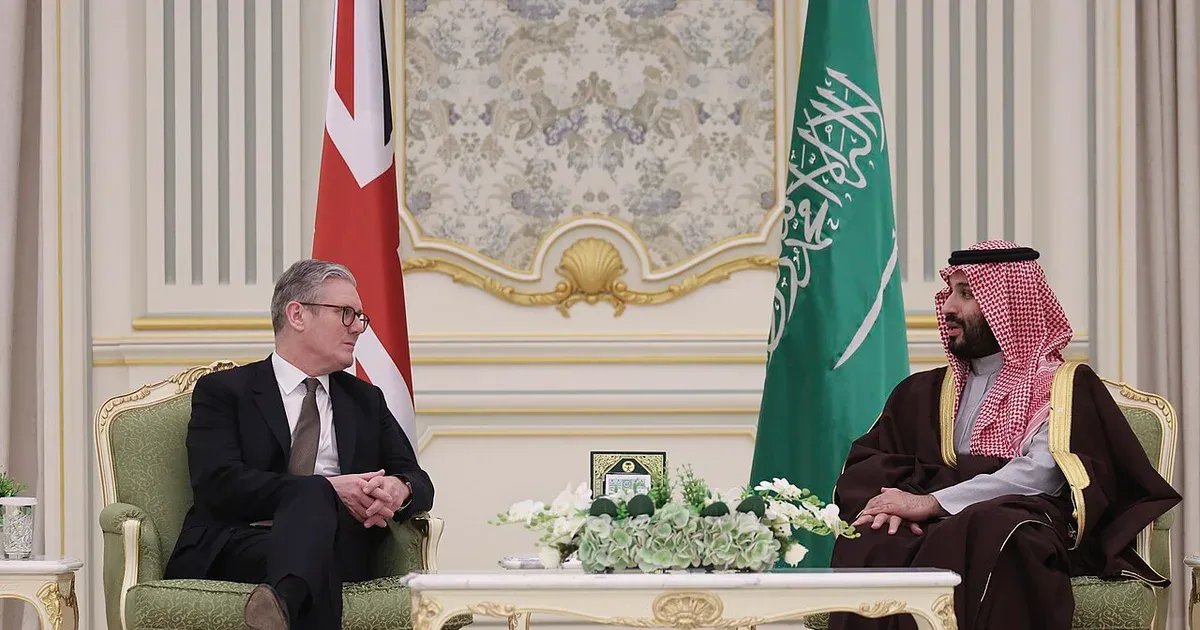
Keir Starmer arrived in Doha on April 10, 2026, seeking to repair a deteriorating ceasefire between the United States and Iran that has failed to restore global shipping routes. British officials confirmed that the Prime Minister landed in Qatar early this morning to begin a series of high-stakes meetings with regional leaders. The visit comes as part of a wider Gulf tour aimed at stabilizing a truce that many analysts now describe as purely nominal. Starmer intends to use British diplomatic leverage to prevent a return to open hostilities in one of the most volatile regions on the planet.
Reports from the Qatari capital indicate that the atmosphere remains tense as Starmer meets with the Emir of Qatar to discuss the structural flaws of the current agreement. British intelligence suggests that both Washington and Tehran have retreated to their respective corners, leaving little room for the neutral observation required to sustain a long-term peace. The resilience of the existing diplomatic framework has surprised some observers, yet the lack of real progress on the ground has dampened optimism. Current projections show that without immediate intervention, the agreement could collapse before the end of the month.
Maritime traffic through the Strait of Hormuz is currently operating at only a fraction of its normal capacity despite the formal cessation of fire. Ship owners and insurance underwriters continue to view the waterway as a high-risk zone, citing the persistent presence of naval fast-attack craft and electronic interference. Records from Lloyd’s of London show that maritime insurance premiums for the region have not returned to pre-conflict levels. Shipping in the area remains a trickle because the security guarantees promised by the United States and Iran have not materialized.
UK Prime Minister Addresses Fragile Regional Security
Starmer spoke to reporters briefly upon arrival, noting that the situation is very fragile and requires constant diplomatic maintenance. He intends to visit several other Gulf capitals over the next forty-eight hours to coordinate a unified response to the stalled negotiations. British foreign policy under the current administration has prioritized the restoration of energy supply lines, which are heavily dependent on the stability of the Persian Gulf. Maintaining the flow of natural gas from Qatar is a primary objective for the United Kingdom as it seeks to stabilize its own domestic energy costs.
Security officials in Doha have increased their presence around the diplomatic quarter to ensure the safety of the visiting delegations. Qatari mediators have been working behind the scenes for months, yet the recent surge in hostile rhetoric has complicated their efforts. Starmer faces the challenge of convincing his American allies to soften certain economic restrictions while simultaneously demanding that Tehran cut its regional proxy activities. These competing demands have historically sabotaged previous attempts at reconciliation. The Prime Minister held a private briefing with UK military advisors stationed in the region before his first formal session with Qatari officials.
Diplomacy in the Gulf has hit a wall.
Success in these talks depends on the willingness of both major powers to accept a monitors-on-the-ground approach. Starmer has reportedly proposed a multi-national naval observer group that would include personnel from non-aligned nations to verify compliance with the maritime truce. Washington has expressed cautious interest in the proposal, but Iranian officials have previously rejected any plan that includes Western military presence in the Gulf. Previous efforts to establish such a force have failed due to disagreements over the rules of engagement. Starmer met with the Emir of Qatar for three hours behind closed doors. This effort by the UK Prime Minister reflects the broader international coalition forming to secure the Strait of Hormuz.
Maritime Traffic Remains Stagnant in Strait of Hormuz
Data from satellite tracking services reveals that the number of tankers exiting the Strait of Hormuz has dropped by sixty percent compared to last year. Shipping firms are reluctant to send vessels into the corridor without thorough protection, which neither side is currently willing to provide. While the United States maintains a carrier strike group in the North Arabian Sea, the Iranian navy continues to conduct drills near the shipping lanes. The lack of clear communication channels between the two navies increases the risk of a miscalculation. Daily transit numbers have hovered at historic lows since the ceasefire began.
Insurance costs tell the real story of this conflict.
Underwriters at major global firms have kept war-risk surcharges in place, citing the absence of a verified de-escalation of naval assets. These financial barriers make it economically unfeasible for smaller shipping companies to operate in the region. Global supply chains feel the pressure as rerouted vessels take the longer, more expensive path around the Cape of Good Hope. Starmer is expected to argue that the economic damage of the stalemate will eventually hurt both Tehran and Washington. Insurance premiums for tankers have risen 400% since January.
Shipping in Strait of Hormuz still at a trickle despite US-Iran ceasefire.
Iranian authorities have dismissed claims that they are hindering the flow of commerce, asserting that their naval movements are purely defensive. Tehran claims the United States has violated the spirit of the truce by maintaining sanctions that were supposed to be lifted under the preliminary agreement. By contrast, the United States Department of State has issued statements accusing Iran of using its naval forces to harass commercial vessels under the guise of inspections. Neither side has provided public evidence to support these specific claims, yet the accusations are enough to keep the shipping industry in a state of paralysis. Commercial shipping companies have reported three unauthorized boardings in the last week.
Washington and Tehran Exchange Truce Violation Claims
Starmer intends to present a set of compromise proposals to the Iranian delegation later this week through Qatari intermediaries. These proposals focus on a phased removal of maritime restrictions in exchange for a verifiable freeze on certain naval maneuvers. British diplomats hope that by focusing on technical maritime issues, they can bypass the more intractable political disagreements that have stalled the broader peace process. The United States has signaled that it will not consider further concessions until Iran provides a clear timeline for the withdrawal of its advanced mine-laying equipment from international waters. National security advisors in the White House have maintained a hardline stance on this specific point.
Tehran maintains that its sovereignty over the Strait of Hormuz allows it to monitor all traffic as a matter of national security. Iranian leaders have repeatedly stated that they will only fully honor the ceasefire if the United States provides definitive proof of sanctions relief. This cyclical logic has prevented any meaningful progress since the document was signed in Geneva earlier this year. Starmer must find a way to break this deadlock before a minor incident at sea triggers a full-scale return to combat. The Iranian foreign ministry issued a statement this morning reiterating its right to defend its territorial waters.
Economic pressure on the United States to resolve the situation is mounting as domestic fuel prices begin to climb once more. The American public has shown little appetite for another protracted conflict in the Middle East, yet the administration is wary of appearing weak before the upcoming election cycle. Starmer is using this political vulnerability to push for a more pragmatic approach to the Iran problem. British interests are uniquely aligned with a swift resolution, as the UK remains highly susceptible to global energy shocks. Crude oil prices reached $110 per barrel during afternoon trading.
The Elite Tribune Strategic Analysis
Believing that a middle-tier power like the United Kingdom can mediate a clash of civilizations reveals a deep misunderstanding of Persian Gulf power dynamics. Keir Starmer is essentially attempting to repair a glass house with scotch tape while the two main occupants are still throwing stones. The fundamental issue is not a lack of communication or the absence of a neutral venue like Doha, but rather the reality that both the United States and Iran find more utility in a controlled state of tension than in a genuine peace. For Washington, the threat allows for the continued justification of a large military footprint, while for Tehran, the siege mentality is the only remaining glue holding a fractured domestic polity together.
Shipping will not return to the Strait of Hormuz because the ceasefire was never designed to be functional. It was a face-saving exit strategy for two administrations that had exhausted their tactical options. Starmer's visit is a performative exercise in legacy-building for a Prime Minister who wants to be seen as a global statesman despite having zero actual leverage over the primary combatants. If the UK truly wanted to impact the situation, it would address the insurance markets in London that are actually strangling the shipping lanes, yet Starmer remains silent on the corporate profiteering that thrives in the shadow of this stalemate. This diplomatic mission is theater.