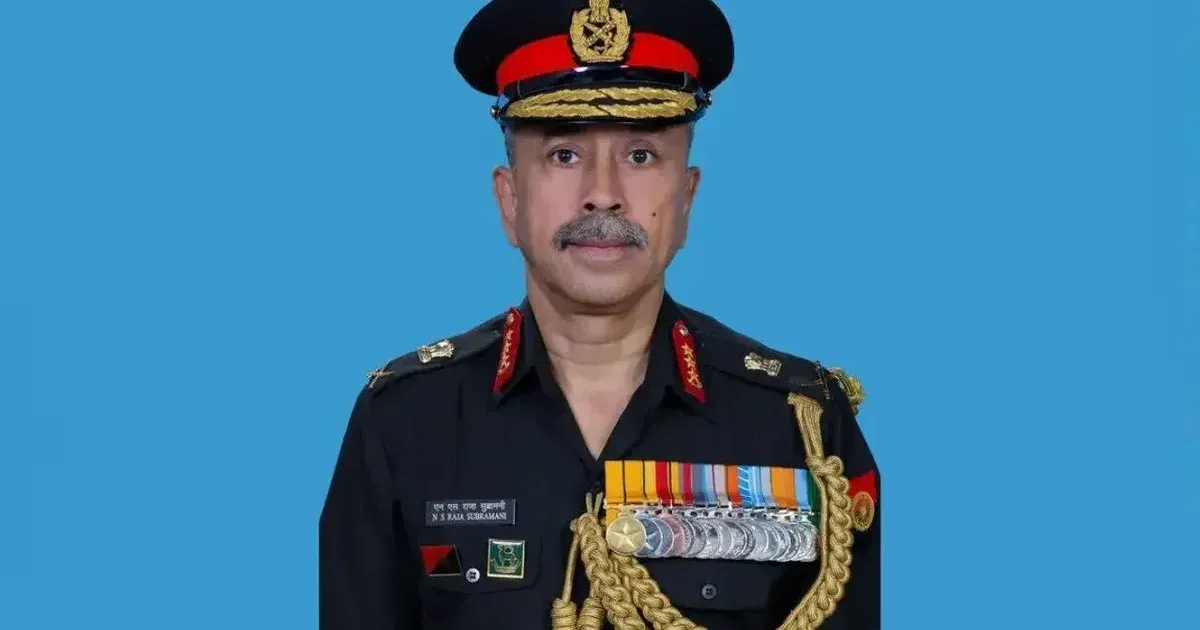
India's defence leadership is preparing for a transition at the top of the armed forces, with Lieutenant General N. S. Raja Subramani reported as the choice to become the next Chief of Defence Staff. The development emerged on May 9, 2026, ahead of the scheduled end of General Anil Chauhan's extended tenure later in the month. The appointment would also give the government a chance to show that military integration is moving through succession rather than personality alone.
The role matters because the Chief of Defence Staff also functions as Secretary of the Department of Military Affairs, a position created to push jointness across the army, navy and air force. That makes the appointment more than a personnel move. It places theater commands, procurement priorities and tri-service coordination back at the center of India's defence agenda. The timing is also sensitive because Chauhan's extension was designed to preserve continuity through May 30, 2026, giving the government room to manage succession without a visible command gap.
Subramani is a former Vice Chief of Army Staff and a Garhwal Rifles officer with long experience across command and staff roles. Official background released during his vice-chief appointment described service across varied terrain and operational profiles, with particular knowledge of India's western and northern borders.
Career Built Across Army Commands
Subramani was commissioned into the Garhwal Rifles in December 1985 and later rose through formation, staff and instructional appointments. The Ministry of Defence previously noted that he had served as General Officer Commanding-in-Chief of Central Command before becoming Vice Chief of Army Staff in July 2024.
That career path gives him direct exposure to the operational demands that shape Indian military planning: mountain warfare, border readiness, counter-insurgency, logistics and large-force administration. It also gives him familiarity with army headquarters at a time when the CDS must work across service cultures.
General Chauhan's tenure had already been extended until May 30, 2026, or until further orders, according to a Ministry of Defence release in September 2025. That extension created a defined window for succession planning while keeping the reform process under a serving CDS.
The next CDS will inherit unfinished work rather than a settled structure. India's services have moved toward greater integration, but theaterization remains a complex institutional project because it changes command habits, budget claims and service identities built over decades. The office therefore requires political trust as much as military seniority, because reforms that alter command boundaries cannot be implemented by staff memos alone. Service chiefs, civilian officials and procurement planners all have to treat the CDS as a real coordinator rather than a symbolic layer.
Theater Commands and Reform Pressure
The CDS post was created to act as the principal military adviser on tri-service matters and to head the Department of Military Affairs. Government material on the office also identifies jointness in operations, logistics, training, communications and capability planning as core responsibilities.
Those duties explain why the appointment is watched closely outside India as well. India has been expanding defence partnerships while also preserving strategic autonomy, so the CDS must coordinate with foreign partners without making the armed forces look externally dependent. Partners in the Quad and across the Indo-Pacific want to understand how quickly New Delhi can integrate land, sea, air, cyber and space capabilities into a more coherent command structure.
Theater commands are the hardest part of that agenda. A unified command can reduce duplication and sharpen response times, but it can also trigger resistance if one service believes its assets or doctrine are being subordinated to another. The new CDS will have to turn reform language into workable command arrangements.
Procurement is another pressure point. India is trying to balance domestic defence manufacturing with urgent capability needs, including air defence, submarines, fighters, drones and secure communications. The CDS cannot control every purchase, but the office influences inter-service priorities and the long-term capability plan.
The Next CDS Must Turn Jointness Into Operational Authority
India faces a security environment that leaves little room for slow coordination. The northern border with China, continuing Pakistan tensions and maritime competition in the Indian Ocean all require forces that can move information and authority quickly across service lines.
Subramani's army background may reassure planners focused on the Himalayan frontier, but the CDS role requires a wider view. Maritime reach, air mobility, missile defence and intelligence integration will matter as much as ground formations if India wants to project power beyond the subcontinent.
The appointment will be judged by execution. If theaterization advances without weakening service expertise, India gains a more modern command system. If the process stalls, the next crisis could again expose gaps between political ambition and military organization.
The larger lesson is that India's defence reforms have moved beyond symbolic restructuring. The next CDS must prove that jointness can survive contact with budgets, doctrine, promotion systems and the habits of institutions that have long operated separately. A successful tenure would be measured less by speeches about integration than by whether commanders can actually share intelligence, logistics and operational authority during a crisis.