Sudan's war has entered a fourth year with the country fractured between the Sudanese Armed Forces and the Rapid Support Forces. The April 15, 2026, milestone is less a turning point than a measure of accumulated national erosion. Records indicate that 58,000 individuals have perished since the initial outbreak of hostilities in 2023. This figure represents only the documented fatalities, leaving thousands more uncounted in the ruined outskirts of Khartoum and the scorched plains of Darfur.
Statistical analysis provided by Al Jazeera highlights a lethal consistency in the violence. The data correspond to one death every 27 minutes and a daily average of 53 people killed across the various fronts of the civil war. Casualties often include civilians caught in the crossfire of urban neighborhoods where front lines shift street by street. Instead of a traditional battlefield, the war utilizes city blocks as kill zones, turning essential residential areas into theaters of attrition.
Beneath the carnage is a systematic dismantling of the country's physical and social architecture. Sudan has seen its hospitals, schools, and power grids targeted with deliberate precision. Military planners have transformed health care facilities into barracks or sniper nests, effectively stripping the civilian population of emergency services. Satellite imagery confirms the destruction of approximately 70 percent of Khartoum’s industrial base, leaving the capital a shell of its former economic status.
Sudan Civil War Infrastructure Collapse
Estimates regarding the cost of the war suggest a generational reversal of developmental gains. Water treatment plants across the Blue Nile and White Nile regions no longer function at capacity, leading to a resurgence of cholera and other waterborne diseases. Power outages have become the permanent state of existence for millions of residents in Omdurman and Bahri. Without electricity, the cold chain for vaccines and essential medicines has collapsed, causing preventable deaths to outpace direct combat casualties.
Farmers in the agricultural heartlands of Al-Jazirah state report that fighting has prevented the planting of essential crops. Grain silos have been looted or incinerated by moving paramilitary units, creating an artificial famine in a region once capable of feeding the entire country. Supply lines between Port Sudan and the interior are frequently severed by localized checkpoints, where militiamen extort transporters for fuel and food. Transportation costs have risen by 400% since the start of the conflict, making basic nutrition unaffordable for the average family.
Violence Against Women Becomes Tactical Blueprint
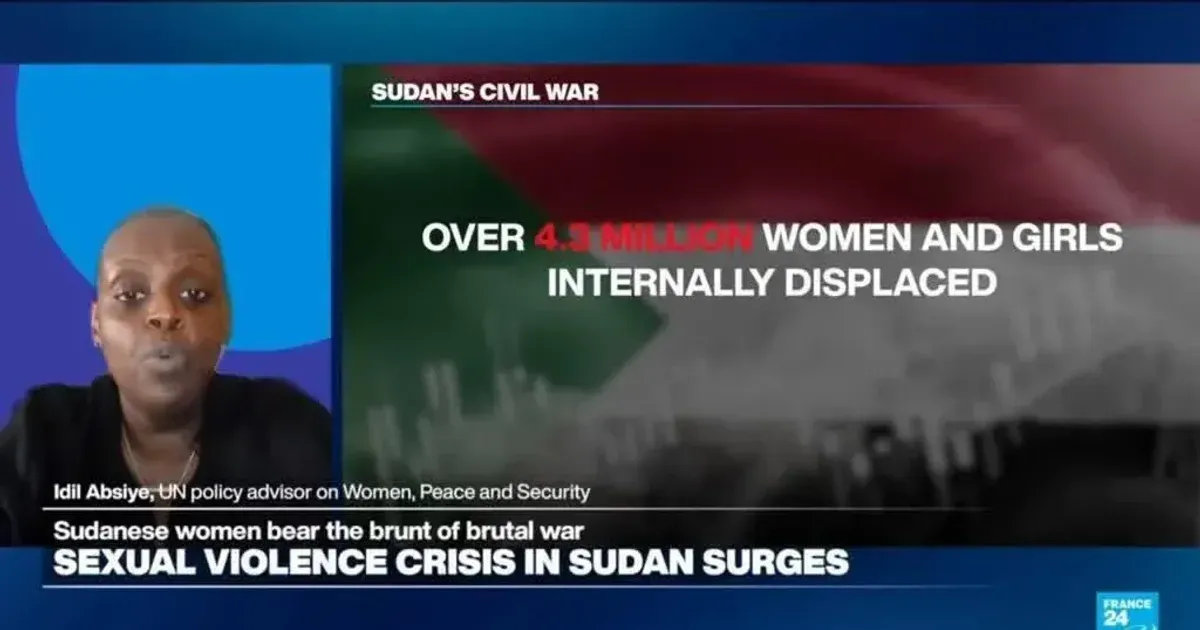
International observers have identified a more sinister development in the conduct of the warring factions. UN Women reports that sexual violence has shifted from an incidental byproduct of war to a central strategic tool. Idil Absiye, the Regional Policy Advisor for Women, Peace and Security at the UN Women East and Southern Africa Regional Office, argues that this violence is used to fracture the social fabric of communities. The objective is to instill terror that persists long after the physical combatants have moved on to new territory.
Absiye said sexual violence instills terror and fractures communities, creating an urgent need for accountability, sustained international attention and direct support for women-led organizations operating on the front lines. International diplomatic efforts, such as the Yvette Cooper-led Berlin Summit, continue to address the severely underfunded UN Humanitarian Response Plan.
Idil Absiye asserts that field data and partner testimonies reveal a systematic campaign of violence against women and girls. These acts are used as a weapon to punish specific ethnic groups and to force the permanent displacement of populations. Reporting from the ground suggests that women-led organizations are the only entities providing medical and psychological support in regions where international aid agencies cannot reach. Direct funding for these grassroots groups is the primary mechanism for survival in the current climate.
Evidence of this blueprint appears in the testimonies of survivors across Darfur and Khartoum. Paramilitary units use sexual assault to dominate local leaders and ensure compliance from the remaining civilian population. Systematic violence has become the primary administrative tool of the warring parties. Because the legal system has entirely collapsed, survivors have no recourse for justice within the national borders of Sudan.
Regional Stability Risks and Casualties Data
Border crossings into Chad and Egypt are now the site of the largest displacement crisis on the planet. Neighboring countries struggle to manage the influx of over 10 million displaced persons who have fled the Rapid Support Forces and the regular army. Resources in these host nations are stretched to their limits, creating friction between refugee populations and local residents. Pressure on regional water and food supplies increases with every thousand people who cross the frontier.
Documented deaths tell only part of the story, as the true scale of the tragedy is obscured by communications blackouts. While Al Jazeera suggests the average death toll is 53 people per day, France 24 highlights that the psychological and societal death of the nation is even deeper. Sudan is experiencing the erosion of its future through the targeting of its youth and the destruction of its intellectual class. University professors, journalists, and doctors have been specifically targeted or forced into exile.
Regional powers have historically played a role in the internal politics of Sudan, but the current level of interference has prolonged the stalemate. Arms shipments continue to flow into the country despite international embargos. These weapons fuel the ongoing cycles of violence and ensure that neither side can achieve a decisive victory on the battlefield. Sudanese citizens are the primary victims of this geopolitical proxy war that shows no sign of resolution.
International Response and Resource Scarcity
Accountability for war crimes remains a distant prospect for the victims of the conflict. The International Criminal Court has received numerous filings regarding the conduct of both the Sudanese Armed Forces and their paramilitary opponents. However, the lack of a functional central government and the refusal of military leaders to cooperate have stalled any meaningful investigation. Without the threat of prosecution, commanders continue to authorize the use of heavy artillery in densely populated urban centers.
Funding for the humanitarian response plan for Sudan has reached only a fraction of the necessary total. UN Women and other agencies emphasize that the international community has largely turned its attention toward other global crises, leaving the Sudanese people to face famine and disease alone. Frontline responders lack the basic equipment to treat battlefield injuries or manage the chronic health conditions of the elderly. Medicine shortages have forced doctors to perform surgeries without anesthesia in makeshift clinics.
Strategic analysts warn that the total collapse of the Sudanese state will create a vacuum of power that could destabilize the entire Horn of Africa. The loss of a centralized authority allows for the growth of non-state actors and extremist groups who thrive in chaotic environments. Sudan is no longer a country in transition; it is a territory in a state of terminal decomposition. Political solutions have failed to address the underlying grievances of the combatants, and the war continues to consume the nation's remaining resources.
Humanitarian Collapse Deepens
The limited international response to Sudan exposes the constraints of diplomacy when a conflict lacks sustained global attention or a simple geopolitical frame. While Western capitals focus on conflicts that offer strategic energy corridors, the Horn of Africa is left to incinerate under the weight of paramilitary ambition. The continued inaction reflects political choices despite extensive evidence of the crisis. Sovereignty has become a shield behind which the Sudanese Armed Forces and their rivals commit atrocities with zero fear of the International Criminal Court. Treaties and UN resolutions are treated as decorative paper by commanders who understand that the world lacks the stomach for intervention.
Power now resides in the hands of those willing to weaponize sexual violence and famine. If the goal was to preserve the Sudanese state, that objective has already failed. Unless the international community pivots from rhetorical concern to aggressive financial and logistical isolation of both warring parties, the nation will vanish. Sudan's collapse is the new standard for modern warfare. The war is a continuing tragedy shaped by the choices of the combatants and by the international failure to impose meaningful costs on them.