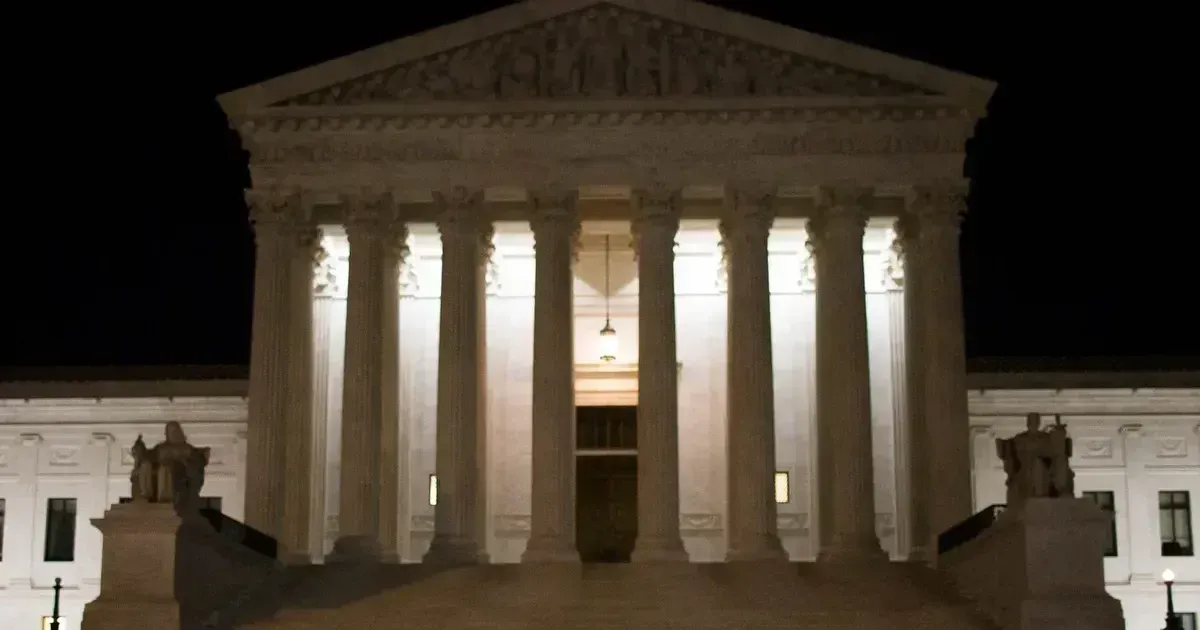
Harry Keyishian’s death renewed attention on the Supreme Court case that protected academic freedom. Harry Keyishian, the literature professor who successfully dismantled the New York state loyalty oath system, died on March 19, 2026, at the age of 92. His legal challenge against the University of Buffalo and the state's education department culminated in a landmark 1967 ruling that redefined the boundaries of the First Amendment within public institutions. Keyishian was the lead plaintiff among five faculty members who refused to sign certificates declaring they were not members of the Communist Party. His death at home marked the end of a life defined by a refusal to let political orthodoxy dictate academic employment.
Resistance began in 1962 when the University of Buffalo, then a private institution, merged into the State University of New York (SUNY) system. State laws required all public employees to sign loyalty certificates, a practice rooted in Cold War anxieties and the widespread fear of subversive infiltration. Keyishian and four colleagues chose termination over compliance, arguing that such mandates created a pall of orthodoxy over the classroom. They faced immediate dismissal for their stance, as the New York State Board of Regents enforced strict adherence to anti-subversive statutes.
Buffalo Faculty Resistance to Loyalty Oaths
State officials demanded that Harry Keyishian and his peers sign the Feinberg Law certificate as a condition of their continued employment. This document required instructors to swear they had never advocated for the forceful overthrow of the government or belonged to groups that did. Keyishian, an English instructor at the time, viewed the requirement as a direct assault on the intellectual independence necessary for higher education. He argued that the state had no right to probe the political associations of its teachers without evidence of misconduct. The administration at the University of Buffalo proceeded with the firings despite the faculty members' enduring records of service.
Legal proceedings followed as the five instructors filed suit against the New York State Board of Regents. Lower courts initially upheld the state's right to impose such conditions, citing previous precedents that favored national security over individual speech rights. Keyishian persisted, funded by small donations and supported by civil liberties advocates who saw the case as a chance to overturn McCarthy-era leftovers. The case eventually reached the highest court in the land after years of appeals and procedural delays.
University administrators contended that the loyalty oaths were necessary to protect students from ideological manipulation. They argued that the state had a strong interest in ensuring that those who shaped young minds were not committed to the destruction of the constitutional order. Keyishian countered that the vagueness of the law invited self-censorship among faculty who feared that any controversial statement could be construed as subversion. He maintained that the classroom required a free exchange of ideas, even those deemed unpopular by the government.
Legal Mechanics of the Feinberg Law
New York enacted the Feinberg Law in 1949 to enable the removal of subversive persons from the public school system. It empowered the Board of Regents to list organizations found to advocate the doctrine of violent revolution and made membership in those groups prima facie evidence for disqualification from teaching. Critics of the law noted its lack of specificity regarding what constituted "advocacy" or "membership." The statute created a climate where faculty members felt compelled to avoid any political activity that might catch the eye of state investigators. Keyishian focused his legal strategy on this specific lack of clarity, asserting that the law was unconstitutionally vague.
Attorneys for the state argued that the Supreme Court had already declared the Feinberg Law constitutional in the 1952 case of Adler v. Board of Education. That earlier decision held that teachers had no right to work for the state on their own terms and must meet reasonable standards of loyalty. Keyishian's legal team needed to convince the court that the legal landscape had evolved since the height of the Red Scare. They emphasized that the First Amendment demanded greater protection for academic inquiry than the 1952 court had acknowledged.
Internal documents from the period show that many faculty members signed the oaths under duress to protect their pensions and careers. Keyishian was an exception, willing to sacrifice his immediate livelihood for a broader principle of constitutional law. His refusal put him at odds not only with the state but also with colleagues who prioritized institutional stability over the risks of litigation. The personal cost included years of lost wages and professional uncertainty during the prime of his academic career.
Supreme Court Victory for Academic Freedom
Justice William Brennan delivered the majority opinion in January 1967, ruling 5 to 4 in favor of Keyishian. The decision famously described academic freedom as a special concern of the First Amendment, which does not tolerate laws that cast a pall of orthodoxy over the classroom. Brennan wrote that the New York statutes were too vague and overbroad to meet constitutional standards. This ruling effectively ended the era of mandatory loyalty oaths for public employees across the United States. Harry Keyishian returned to his teaching duties, but the impact of his case extended far beyond the campus in Buffalo.
Brennan wrote that the nation was deeply committed to safeguarding academic freedom and that its transcendent value extended beyond teachers.
Legal experts consider the Keyishian decision a fundamental protection against political litmus tests for government employment. The court rejected the idea that public employment could be conditioned on the surrender of constitutional rights. It shifted the burden of proof from the individual teacher to the state, requiring specific evidence of illegal intent rather than mere association with a group. This shift forced states to rewrite their employment contracts and discard dozens of anti-subversive statutes that had been on the books for decades.
Victory in the Supreme Court did not immediately erase the tensions on campus. Keyishian continued his career as a scholar of Shakespeare and Elizabethan drama, eventually moving to Rutgers University. He frequently lectured on the importance of the First Amendment, warning that the impulse to enforce ideological conformity often returns under new guises. His death concludes a chapter of American legal history where five individuals successfully challenged the collective power of the state's educational bureaucracy.
Keyishian Legacy Tests Academic Freedom
The death of a man whose defining contribution was refusing to sign a piece of paper deserves recognition. Its importance lies in the persistent cowardice of academic institutions when faced with political pressure. Harry Keyishian was not a revolutionary; he was a stubborn grammarian who understood that language used by the state to enforce loyalty is always a precursor to the death of thought. The University of Buffalo administrators who fired him were not villains in their own minds, but rather bureaucrats seeking the path of least resistance against a legislature hungry for perceived enemies.
Institutions today have replaced the loyalty oaths of the 1960s with new forms of mandatory affirmations. Whether these are diversity statements or ideological pledges, the mechanism remains identical to the Feinberg Law. The state or the institution demands a public profession of faith as a requirement for intellectual labor. The same vagueness appears in modern administrative codes that Keyishian fought sixty years ago. His victory was a temporary reprieve, not a permanent cure for the institutional urge to purge dissenters.
The 1967 ruling is often cited by those who believe the law is a shield, but the reality is that the shield only works for those willing to be destroyed first. Keyishian lost years of his professional life while the legal gears turned. Most academics today lack that stomach for sacrifice, choosing instead to sign whatever document ensures their continued tenure. Principles are expensive. Keyishian paid the price. Empty chairs at faculty meetings are the only honest legacy of a system that prizes compliance over courage.