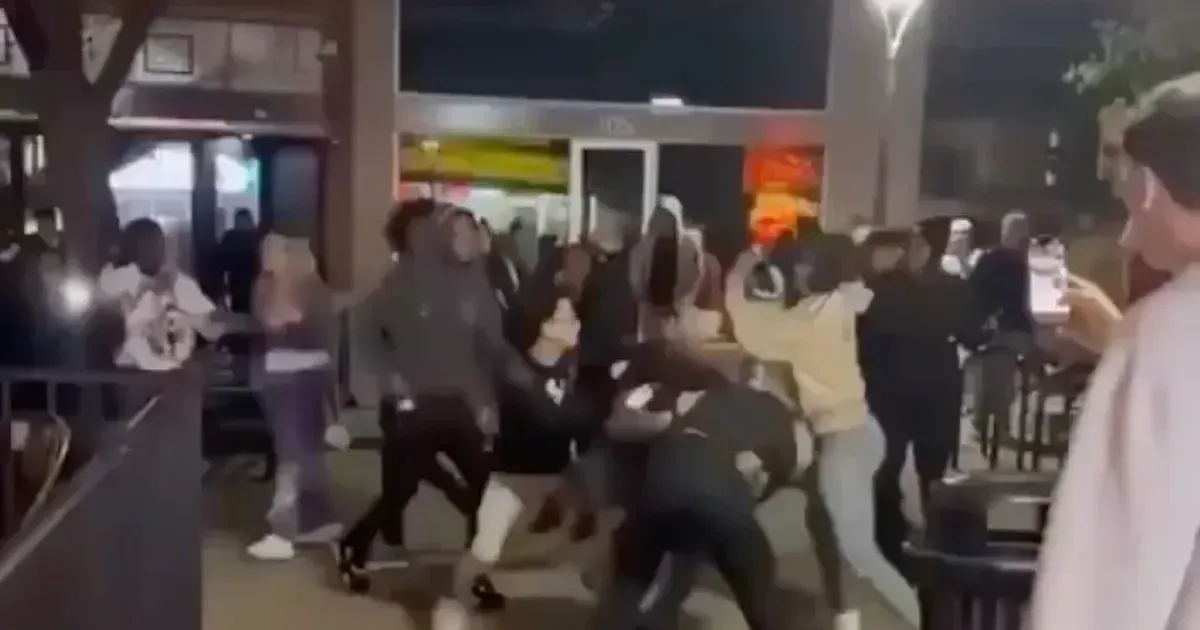
A gunman opened fire during a large brawl near the University of Iowa, turning a crowded public gathering into another test of campus-area safety. Police responded in April 2026 after reports that a fight involving dozens of people had spilled into gunfire near a commercial district used by students and residents.
The first law-enforcement priority was to secure the scene, identify victims and determine whether more than one person fired. By April 19, 2026, investigators were confronting the usual problems of chaotic crowd incidents: witness accounts can conflict, video may be partial and officers often have to separate the original fight from the later shooting.
A Fight Becomes a Shooting Scene
Large brawls create difficult conditions for police because people scatter, phones record from different angles and suspects can blend into the crowd. Investigators will likely rely on surveillance cameras, social media video, shell casings and interviews to determine who fired and whether the shooting was planned or impulsive.
University of Iowa students and nearby businesses will also want to know whether the area had enough security before the violence escalated. That question is not simple. Entertainment districts can shift from normal nightlife to disorder quickly, especially when crowds move between bars, parking lots and outdoor spaces.
Campus Edges Are Hard to Police
Incidents near universities often happen just outside formal campus boundaries. That can divide responsibility among city police, campus police, private security and property owners. Clear coordination matters before a crisis because the first minutes can determine whether a fight disperses or expands.
Officials may review patrol levels, lighting, camera coverage and emergency communications. They may also consider whether previous calls in the area suggested a need for more visible prevention. The goal is not only to solve this shooting but to reduce the chance that the next argument becomes a mass-casualty risk.
The Investigation Needs Patience
Public frustration usually rises faster than the evidence file. Residents want arrests, students want reassurance and businesses want normal traffic back. Investigators still need to confirm basic facts: how the fight started, who had weapons, how many shots were fired and whether any suspect left in a vehicle.
The shooting also fits a broader American pattern in which ordinary disputes become deadly when guns are present. A brawl that might once have ended with injuries can become a citywide emergency in seconds.
For Iowa City, the immediate work is medical care, arrests and scene reconstruction. The longer work is deciding whether nightlife areas near campus can be made safer without turning them into locked-down zones. That balance will shape the local response after the crime tape comes down.
Hospitals and emergency medical crews become part of the investigation as well. Victim locations, wound patterns and arrival times can help reconstruct where shots were fired and how people moved after the first burst of panic. In a crowded setting, that information can be as important as witness statements.
City leaders will also have to communicate with parents who see the phrase near the University of Iowa and assume the campus itself was under attack. Clear geography matters. A commercial district used by students can feel like campus life even if it sits outside university property and policing systems.
Prevention will be the hardest part of the public conversation. More patrols can deter some violence, but officers cannot stand inside every argument. Businesses may need better crowd management, earlier calls for help and clearer plans for closing time, when fights often become more likely.
The shooting will likely remain politically local unless the casualty count rises, but the pattern is national. A dispute grows, a gun appears, and an ordinary public space becomes a trauma scene. That is the public-safety problem officials now have to answer.
University officials may also review how quickly alerts reached students. Even when a shooting occurs off campus, students expect timely information if they might pass through the area. Alert fatigue is a real concern, but silence during an active police response can create confusion and rumors.
Local prosecutors will eventually need a case that can survive more than public outrage. If video is unclear or witnesses disagree, charges may depend on forensic links between a weapon, casings and a suspect. That is why police often ask for additional phone footage after crowd shootings.
The commercial district will have its own recovery. Customers may avoid the area for a time, employees may feel unsafe returning to late shifts, and business owners may ask for more visible patrols. Public safety after a shooting is partly about arrests and partly about restoring confidence in ordinary places.
Community leaders will also have to decide how much prevention can happen before police arrive. Youth outreach, transport planning, conflict mediation and late-night business rules are slower tools than an arrest, but they may matter more if the goal is fewer armed confrontations.