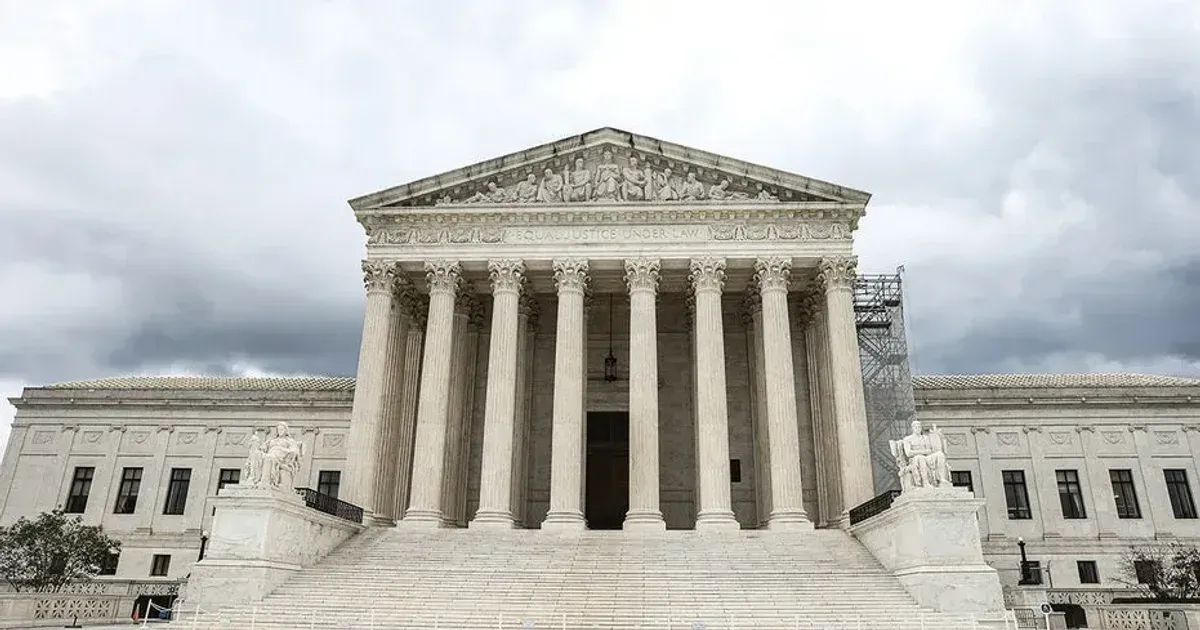
The Supreme Court education docket is testing how far public funding rules can stretch. April 20, 2026, marked a divergent path for the Supreme Court as justices issued a series of orders that simultaneously tightened and loosened the grip of state authorities over religious education. Justices on Monday agreed to hear a major challenge from Colorado regarding the exclusion of religious institutions from taxpayer-funded preschool. St. Mary Catholic Parish filed the lawsuit after state officials barred the institution from a universal pre-K program. Simultaneously, the Supreme Court declined to hear a separate appeal from Massachusetts regarding parental consent for student pronoun changes. Massachusetts parents argued that schools must obtain permission before using different names or pronouns for children. Enrollment in these programs remains a focal point of legal friction across the country.
Colorado Universal Preschool Program Conflict
Colorado established its Universal Preschool Program to provide free education for every four-year-old child in the state regardless of financial status. Conflict erupted when officials mandated that every participating provider adhere to strict anti-discrimination rules. These rules require schools to admit families regardless of sexual orientation or gender identity. St. Mary Catholic Parish maintains that these requirements force religious schools to violate their core theological tenets. Leaders within the Archdiocese of Denver argue that their schools act as an extension of the church’s ministry. Policies at these schools require families to sign statements affirming they will support Catholic teachings. Participation in the state program became impossible under the current regulatory framework.
State attorneys defended the policy by emphasizing the need for universal access. Officials contend that public funds must not support institutions that select students based on religious or identity-based criteria. Legal filings from the state suggest that inclusive environments are a requirement for receiving government subsidies. Colorado officials stated that faith-based providers are welcome if they follow the same rules as secular schools. Lower courts previously upheld the state's right to enforce these standards. Justices will now examine whether these mandates violate the Free Exercise Clause of the First Amendment.
"All participating providers, whether religious or secular, must ensure that children have equal opportunity to enroll in and receive preschool services regardless of those children’s (or their families’) religious affiliation, race, ethnicity, sexual orientation, gender identity, lack of housing, income level, or disability," according to a statement from Colorado officials.
Religious freedom advocates view the exclusion as a form of unconstitutional discrimination. They point to previous Supreme Court rulings that prohibited states from excluding religious schools from generally available public benefits. Archdiocese of Denver officials, who oversee 34 preschools, claim the state is forcing a choice between their faith and public resources. Legal experts expect oral arguments to take place during the fall term. A decision could redefine the boundary between state anti-discrimination laws and the autonomy of religious organizations. Current regulations remain in place until the high court issues a final ruling.
Massachusetts Parental Rights Case Rejection
In the Northeast, a different legal battle concluded without Supreme Court intervention on April 20, 2026. Parents in Massachusetts challenged a school district policy that allowed staff to enable gender transitions for students without notifying families. Litigation focused on the 14th Amendment’s due process guarantee, which protects the right of parents to direct the upbringing of their children. School employees in the Ludlow district reportedly used different names and pronouns for students in the classroom while using birth names when communicating with parents. Plaintiffs argued this practice created a wedge between children and their families. Justices declined to take up the appeal without offering a specific explanation for the denial.
Public school districts in Massachusetts often follow state-level guidance designed to protect the privacy of transgender and nonbinary students. These guidelines suggest that revealing a student’s gender identity to parents without the student's consent could lead to safety risks. Massachusetts officials argue that the policy encourages a supportive learning environment for vulnerable youth. Parents countered that such policies violate their fundamental rights to make medical and psychological decisions for their offspring. This rejection marks the second time in recent months that the high court has turned away a case involving parental notification. A similar challenge from a different region was rejected in December.
Lower courts have largely sided with school districts on this issue. Judges often rule that school policies do not rise to the level of a constitutional violation if they do not physically remove children from the home. Massachusetts legal teams argued that schools have a legitimate interest in protecting student confidentiality. Critics of the policy argue that secrecy undermines the trust between the community and the educational system. The high court's refusal to hear the case leaves the existing district policies in place. Many legal observers expected the justices to eventually address the growing circuit split on parental notification.
Constitutional Disputes Over Education Control
Education remains a primary battleground for interpreting the limits of state power and individual liberty. The Supreme Court has historically fluctuated between protecting institutional autonomy and ensuring broad civil rights protections. Recent jurisprudence has leaned toward protecting religious entities from state-imposed exclusions. Colorado now faces a bench that has previously ruled in favor of religious taxpayers in Missouri and Montana. Those cases established that states cannot deny a public benefit solely because of an institution's religious character. The upcoming arguments will test if that logic extends to programs with complex non-discrimination requirements.
Parental rights advocates face a more difficult climb in the federal judiciary. While the 14th Amendment provides broad protections, the specific application to classroom pronouns has not yet gained traction at the highest level. Massachusetts parents had hoped their case would provide a definitive standard for transparency in public schools. Instead, the court’s silence leaves a patchwork of regulations across different states. Some legislatures have passed laws requiring parental notification, while others have codified student privacy protections. Disparate rules continue to govern the relationship between teachers and families.
Constitutional scholars suggest the court might be waiting for a case with a cleaner factual record. Some appeals contain procedural hurdles that prevent justices from reaching the core constitutional question. Colorado presents a direct clash between a state’s regulatory power and a church’s internal governance. Such a case offers a clearer path for the Supreme Court to establish a nationwide precedent. The distinction between a parental notification case and a funding case is significant for legal strategy. Funding cases often rely on the First Amendment, which has seen solid defense from the current conservative majority.
Archdiocese of Denver Legal Strategy
Archdiocese of Denver leadership remains committed to defending the religious identity of their preschools. They argue that the state’s universal preschool program is not truly universal if it excludes faith-based providers with traditional beliefs. St. Mary Catholic Parish is the lead plaintiff in a case that could impact hundreds of religious schools in the region. Lawyers for the archdiocese have focused on the "ministerial exception" and the right of religious groups to set their own standards for membership. They contend that requiring a Catholic school to ignore Catholic teachings on gender is a form of state-sponsored secularization. Enrollment numbers at these institutions could shift depending on the availability of state funding.
State officials in Colorado show no signs of retreating from their inclusive mandate. They maintain that the program is open to everyone on the condition that they do not discriminate. Evidence presented in lower courts showed that the state sought to create a uniform experience for all four-year-olds. Colorado argues that allowing exceptions would undermine the purpose of the universal program. If the Supreme Court rules against the state, officials may have to choose between restructuring the program or ending it entirely. Administrative challenges would be substantial for a system that already serves thousands of families.
Developments in Colorado are being watched closely by other states with similar preschool initiatives. A victory for the Archdiocese of Denver would likely trigger lawsuits in other jurisdictions. Supreme Court scrutiny often leads to a re-evaluation of state-level administrative rules. Massachusetts schools, meanwhile, continue to operate under their current pronoun policies. The legal landscape for parental rights appears stalled even as religious freedom cases advance. Future litigation will likely focus on whether the state can compel speech in the classroom or if families have a right to full transparency. Current trends favor institutional religious protections over individual parental claims.
Education Cases Test Court Boundaries
Institutional neutrality has become a myth in the modern American legal landscape. The Supreme Court is that is increasingly comfortable shielding religious institutions while remaining curiously hesitant to protect the nuclear family from bureaucratic overreach. By taking the Colorado case while spurning the Massachusetts appeal, the justices have signaled that they value the rights of established organizations over the rights of individual parents. This creates a lopsided constitutional hierarchy where the Church gets its day in court, but parents are told to wait in the hallway. States are effectively being told they can indoctrinate children behind closed doors as long as they do not withhold checks from the local parish.
Skepticism toward the Massachusetts decision is warranted. If the 14th Amendment does not protect a mother from a school clerk changing her child’s identity in secret, then the concept of parental rights is effectively dead at the federal level. The Court’s refusal to act is a green light for school districts to continue their policy of strategic deception. Meanwhile, the Colorado litigation will likely result in another win for the Free Exercise clause, further cementing the status of religious schools as a protected class of contractors.
The end result is a bizarre reality where a school can keep a student's transition a secret from their father but still demand a state subsidy to do so. Our legal system is prioritizing the funding of the building over the integrity of the home. Institutions are the new primary subjects of constitutional protection.