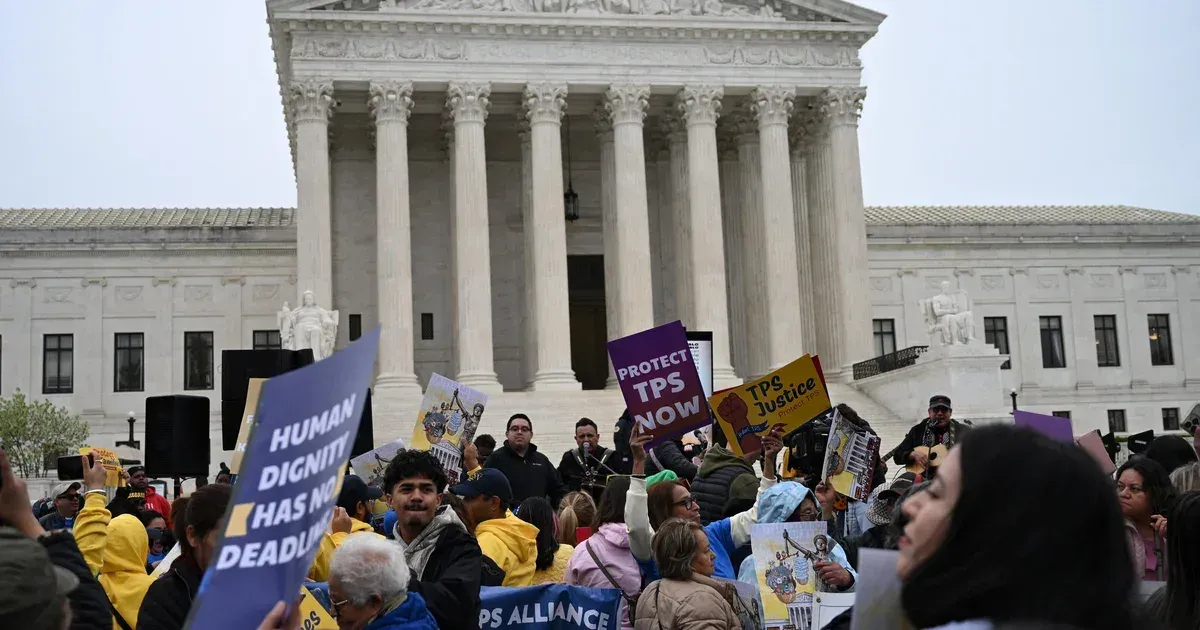
The Supreme Court has allowed the Trump administration to move ahead with stripping deportation protections from Syrians and Haitians, giving the White House another major immigration victory.
The June 25, 2026, order affects more than 356,000 people who had temporary protection from deportation. The case centers on Temporary Protected Status, a program that shields people from removal when war, disaster or other severe conditions make return unsafe.
The ruling does not decide every underlying immigration question, but it changes the practical position of hundreds of thousands of families. People who built lives in the United States under TPS now face a more uncertain legal clock while the administration pushes a broader enforcement agenda.
The Immediate Stakes Are Human And Administrative
TPS cases are often discussed as policy categories, but the people affected may have jobs, U.S.-born children, mortgages, medical needs and years of community ties. Ending protection can turn a stable legal status into a removal risk in a short period of time.
That shift also creates administrative pressure. Immigration agencies must process notices, manage legal challenges, handle work authorization consequences and decide how aggressively to pursue people who had been lawfully protected from deportation.
For employers, schools and local governments, the ruling could create disruption even before removals occur. Workers may lose authorization, families may move or go underground, and local service providers may face urgent questions from people trying to understand their options.
The legal uncertainty is especially sharp because TPS is temporary by design but often lasts for years. Courts and administrations regularly fight over whether conditions in a country still justify protection, and those decisions can shift with elections.
That long duration is what makes abrupt changes so disruptive. Many TPS holders have renewed documents repeatedly, paid fees, passed background checks and organized family life around a status that is legally temporary but practically embedded. Losing protection can mean losing work authorization before any final answer arrives in the courts. For affected households, the decision may trigger a scramble for legal advice. Some people may have separate asylum claims, family petitions or other immigration pathways, but many will not. The difference between those groups can determine whether a person can stay in public view or must prepare for removal.
A Broader Immigration Strategy Is Emerging
The TPS order came alongside another Supreme Court move allowing the administration to turn away some asylum seekers at the border. Together, the actions strengthen the White House's ability to narrow humanitarian protections while litigation continues.
That pattern matters because immigration enforcement is not moving through one channel. The administration is working through border rules, protected-status programs, detention priorities, expedited removal and court emergency requests at the same time.
Supporters argue that presidents need broad discretion to end temporary programs and restore control over the border. Critics say the approach treats people fleeing dangerous conditions as enforcement targets and bypasses the humanitarian purpose of existing law.
The court's emergency docket is again central. When the justices allow a policy to proceed before full litigation ends, the practical impact can arrive long before lower courts issue final decisions.
That timing gives the administration leverage. Once work permits lapse or removal notices move forward, even a later legal victory may not fully undo the disruption. Families can lose jobs, housing and legal stability while litigation is still formally alive. The same timing can affect local economies because protected workers may leave payrolls before employers know whether the policy will survive final review.
What Changes for TPS Families
The next phase will test how quickly the administration acts and how immigrant advocates respond. Lawsuits may continue, but affected families need immediate guidance on work permits, removal risk and whether any alternative status is available.
The ruling also gives Republicans a clear enforcement win while putting Democrats under pressure to explain whether they would restore or redesign humanitarian protections. That makes TPS deportation protection a legal question and a campaign issue at the same time.
The political fight will likely focus on competing definitions of temporary. The administration can argue that TPS was never meant to become long-term residence. Advocates can answer that ending protection without accounting for current country conditions and settled family ties turns a humanitarian program into a mass-enforcement trigger. Congress could settle some of that tension by creating a more durable legal path for long-term TPS holders, but immigration legislation remains difficult. That leaves the court's interim orders and agency decisions carrying consequences that would normally belong to a broader policy debate with immediate human costs.
The broader consequence is that temporary status looks less stable than it did before. If the administration can unwind large TPS designations quickly, future immigrants may treat humanitarian protection as a fragile reprieve rather than a reliable bridge to safety.