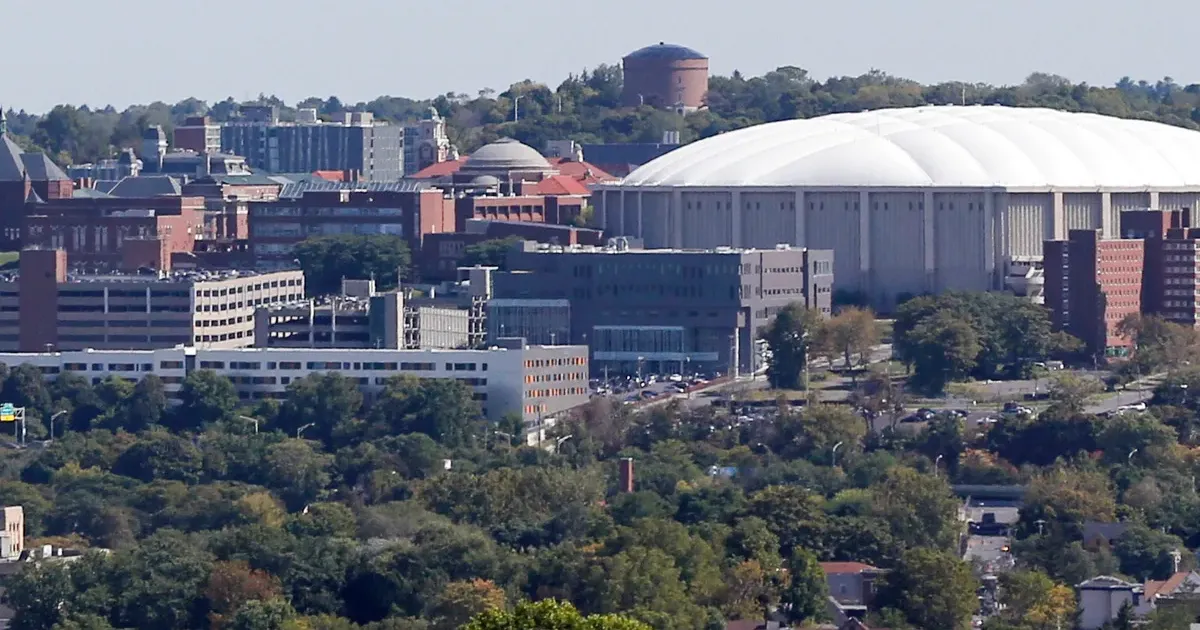
Syracuse University administrators announced a broad institutional restructuring that eliminates degree programs in Classics, Italian, and Ceramics. The restructuring was announced on April 1, 2026. Decisions finalized by the university board of trustees result in the closure or suspension of 93 separate academic offerings. Total program counts at the university will drop from 460 to 367 once the phase-out process completes. Leaders at the institution characterized the move as a necessary alignment of campus resources with current student interests. Records provided by the registrar show that a significant part of the eliminated programs existed on paper only. Enrollment data indicate that 55 of the 93 programs slated for closure currently have zero students enrolled.
Syracuse University officials launched the program review process late last year to identify underutilized academic tracks. Programmatic audits revealed a sprawling catalog where specialized minors and niche concentrations had spread without matching student demand. Academic departments often maintained these listings despite years of stagnant interest from prospective applicants. Fiscal oversight committees argued that maintaining the infrastructure for empty programs diverted funds from high-growth areas like data science and nursing. Administrators have not yet clarified how many faculty positions will be affected by the downsizing of these departments. Faculty members received notification of the closures during a private briefing early Tuesday morning.
Syracuse University Program Closure Data
Data released by the provost office outline a sharp focus on simplifying the College of Arts and Sciences. While the university offers hundreds of majors, the consolidation effort targets tracks that fail to meet minimum viability thresholds. Program closures represent roughly 20 percent of the total academic catalog. Statistics from the last five years show a consistent decline in humanities enrollment across the central New York campus. Syracuse University joined several other private research institutions in trimming heritage language programs and traditional studio arts. Budgetary pressures and a shrinking pool of college-aged applicants forced the university to prioritize efficiency.
Enrollment numbers dictated the survival of ancient languages.
"No students were majoring in 55 of the programs that are ending," a Syracuse University spokesperson confirmed during the announcement.
Resources will now shift toward interdisciplinary tracks and professional certifications. Administrators contend that the 55 empty programs were a legacy of previous decades when the university expanded its offerings without a sunset clause. Closing these inactive majors allows the registrar to simplify graduation requirements for the general student body. External auditors suggested that a leaner catalog would improve the university ranking by concentrating investment in high-performing departments. Total student enrollment at Syracuse remains stable, yet the distribution of those students has skewed heavily toward the Maxwell School and the Newhouse School of Public Communications.
Classics and Italian Enrollment Trends
Classics and Italian majors faced the most public cuts due to their enduring presence on the Syracuse campus. Scholars of the ancient world argued that the loss of the Classics major diminishes the intellectual depth of the university. Professors in the department pointed to the successful study-abroad programs in Rome as evidence of continued interest in Mediterranean history. However, the number of students declaring a full major in these subjects dropped below sustainable levels for three consecutive years. Italian studies faced a similar trajectory despite the university's steady presence in Florence. Students frequently choose Italian as a minor or a secondary language requirement rather than a primary field of study.
Institutional priorities have moved toward professional certifications.
Departmental chairs received the news with frustration but acknowledged the fiscal reality of the 2020s. Small class sizes in upper-level Latin and Greek courses created a high cost-per-student ratio that the administration could no longer justify. Italian language faculty argued that their program provides the cultural foundation for the school's renowned international programs. Provost office documents suggest that the university will continue to offer language instruction at the introductory level. Removing the major status allows the college to reduce specialized upper-division course requirements that often had fewer than three students per section. Financial sustainability became the primary metric for the program review committee.
Financial Reallocation and Ceramics Programs
Ceramics programs also fell victim to the restructuring despite the deep historical ties between Syracuse and the American studio pottery movement. The university ceramics department long benefited from its proximity to the Everson Museum of Art and its world-class collection. Master of Fine Arts candidates in ceramics often achieved national recognition, but undergraduate interest in the medium has waned. Ceramics as a primary major requires meaningful studio space and expensive kiln maintenance that administrators deemed inefficient. Student artists now gravitate toward digital media and graphic design where job placement rates are higher. The $1.2 billion university endowment will now support expanded facilities for emerging technologies.
Market demands influenced the decision to pause these creative tracks.
Administrators cited the high cost of maintaining specialized equipment for a handful of degree seekers. Projections for the 2027 fiscal year indicate that reallocating studio art funding will allow for the hire of four additional faculty members in the computer science department. Critics of the plan argue that Syracuse is abandoning its role as a steward of traditional craft and culture. Supporters of the overhaul maintain that the university must evolve to remain competitive in a landscape of rising tuition costs.
Alumni groups from the School of Art have already begun a petition to save the ceramics kiln facilities for non-major use. The current plan does not include a pathway for new students to enter the ceramics major after the current cohort graduates.
Future of Syracuse University Humanities Programs
Structural changes at Syracuse reflect a national trend where private universities are moving away from the full liberal arts model. Academic leaders at peer institutions like Cornell and Rochester are monitoring the Syracuse overhaul as a potential template for their own program reviews. Success of this consolidation will be measured by the university's ability to lower administrative overhead. Students currently enrolled in the eliminated majors will be allowed to complete their degrees. University officials promised that all graduating seniors in Classics, Italian, and Ceramics will receive the full support of their respective departments through 2028. No new students will be admitted to these 93 programs starting in the fall semester.
Administrative priorities stayed focused on the bottom line throughout the three-month audit.
Potential applicants to the College of Arts and Sciences now face a more restricted set of options. The university maintains that the remaining 367 programs offer more than enough variety for a modern education. Future investments will likely focus on the intersection of technology and the social sciences. Faculty members in the English and History departments expressed concern that their programs could be next if enrollment does not improve. Syracuse University will release a full report on the financial impact of these closures in October. The transition period marks a sharp departure from the expansive growth strategies of the previous administration.
Humanities Program Risk
Efficiency is a poor substitute for institutional identity. Syracuse University is not merely trimming fat; it is amputating the very organs that allowed it to claim status as a prestigious center of humanistic inquiry. By eliminating Classics and Italian, the administration is signaling that it no longer views the preservation of Western heritage as a core mission. This is a cynical capitulation to the vocational school model where students are viewed as customers and degrees are treated as job-training certificates. If a university only teaches what is popular in the current labor market, it ceases to be a university and becomes a trade school with a higher price tag.
Administrators hide behind the statistic that 55 programs had zero students to justify the slaughter of the other 38. This is a classic bait-and-switch maneuver designed to neutralize faculty opposition by making the cuts seem mathematically inevitable. While empty programs should obviously be closed, the destruction of the Classics and Ceramics majors is a deliberate choice to devalue intellectual rigor in favor of shiny, marketable buzzwords. Syracuse is trading its soul for a slightly improved balance sheet and a more efficient registrar. It is a shortsighted strategy that will eventually alienate the very donors and scholars who give the institution its prestige. The death of the humanities is a choice, not a law of nature.