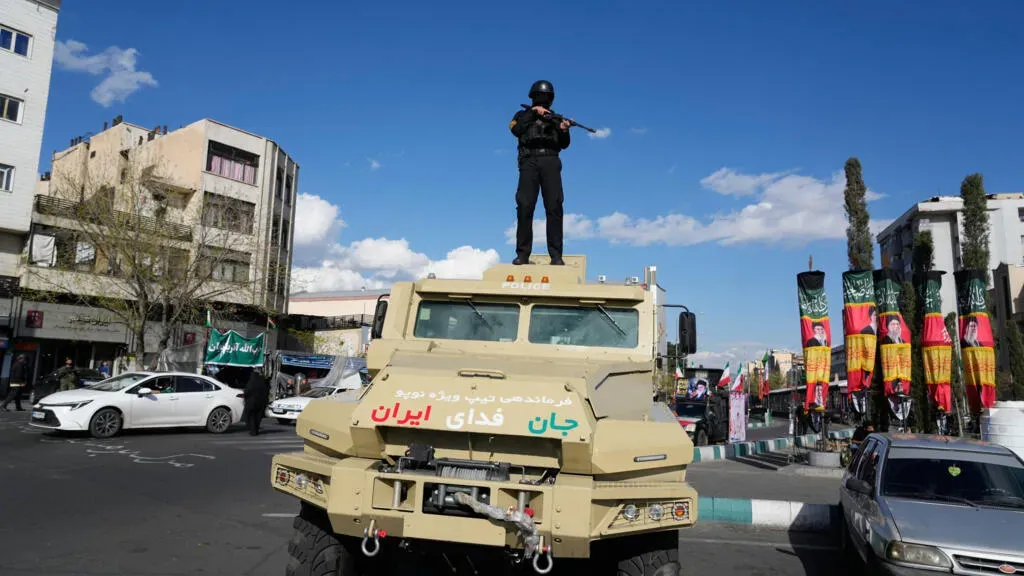
President Donald Trump issued a direct ultimatum to Tehran after Iranian forces launched new missile strikes across the Middle East. Security officials in Washington reported multiple waves of projectiles targeting Israeli population centers and military installations. The Tehran Rejects Peace Deal During Fresh Missile Barrage report carried a March 31, 2026 time marker for readers following the latest account. Iranian leadership concurrently dismissed American peace proposals as a fabrication intended to mask escalating military aggression. These developments have pushed the region closer to a full-scale maritime conflict that threatens the stability of the global energy supply chain. Military observers noted that the latest salvos mean a rejection of diplomatic backchannels that the White House previously claimed were making progress.
Tehran officials described the American framework for a ceasefire as unrealistic while maintaining that direct negotiations have not occurred. This stance contradicts persistent claims from the Trump administration regarding secret diplomatic breakthroughs. Pentagon planners responded by authorizing the deployment of thousands of additional ground troops and naval assets to the Persian Gulf. Defense analysts believe this buildup serves to reinforce regional allies currently under the shadow of Iranian ballistic capabilities. Recent intelligence suggests the Iranian military has finalized plans to impose a transit fee on all vessels navigating the Strait of Hormuz. Such a move would transform an essential international waterway into a proprietary revenue stream for the Islamic Revolutionary Guard Corps.
Kharg Island Targeted in Security Threats
President Donald Trump has specifically identified Kharg Island as a primary target for potential retaliatory strikes. This coastal hub enables over 90 percent of Iran's crude oil exports and represents the economic jugular of the regime. Targeting this facility would effectively decouple Iran from the global energy market and erase its primary source of hard currency. Iranian commanders have vowed to destroy regional desalination plants and power grids if their export infrastructure suffers any damage. Such a scenario would leave millions of civilians in neighboring states without potable water or electricity. Satellite imagery confirmed that Iran has already moved mobile missile batteries into positions overlooking these critical civilian assets.
Economic pressure within the Iranian interior continues to mount as the threat of an embargo looms. Military hardware remains the priority for state spending despite the growing needs of the domestic population. Iranian state media broadcast footage of the missile launches as a display of technological parity with Western systems. Defense experts at the International Institute for Strategic Studies noted that these missiles demonstrate improved guidance systems compared to previous iterations. The capability to strike moving targets at sea has increased the risk profile for commercial shipping. International insurers have already begun adjusting premiums for any vessel entering the Gulf of Oman.
Global Energy Markets React to Hormuz Toll
Energy prices responded violently to the prospect of a Hormuz transit tax and the disruption of traditional shipping routes. Brent crude jumped past $110 per barrel as traders factored in a notable supply deficit for the upcoming fiscal quarter. West Texas Intermediate followed a similar trajectory by climbing above $100 for the first time in years. Global markets now face a reality where the free flow of energy is no longer a certainty. Saudi Arabia has initiated emergency protocols to reroute a portion of its crude through pipelines terminating at the Red Sea. This logistical shift cannot fully compensate for the closure or taxation of the Hormuz chokepoint. Tensions regarding the Strait of Hormuz have prompted the White House to set a new deadline for Iranian compliance.
American consumers are feeling the immediate impact of these geopolitical tremors at the pump. National average gasoline prices reached $4 a gallon according to the latest data from GasBuddy. The price point is a psychological and economic threshold that historically triggers a slowdown in US consumer spending. Refiners in the Gulf Coast have warned that continued volatility will require further price hikes for finished petroleum products. While the US produces a clear volume of domestic shale oil, the global nature of pricing ensures that American drivers remain vulnerable to Middle Eastern instability. Logistics companies have already announced fuel surcharges that will likely trickle down to the cost of consumer goods.
Tehran described the current United States peace proposals as unrealistic before launching waves of missiles at Israeli targets.
US Military Deployment Expands in Persian Gulf
Washington has responded to the missile barrage by accelerating the arrival of carrier strike groups to the Arabian Sea. Combat sorties have increased in frequency to monitor Iranian coastal movements and Houthi activity in the Bab el-Mandeb strait. Houthi militants in Yemen have synchronized their own missile strikes with Tehran to create a dual-front maritime crisis. These coordinated attacks have successfully disrupted commercial traffic through the Suez Canal. Shipping conglomerates like Maersk and Hapag-Lloyd are now opting for the lengthy journey around the Cape of Good Hope. The added transit time adds approximately two weeks to delivery schedules for European and American retailers.
Naval commanders are emphasizing the need for a unified international task force to protect merchant shipping. Previous iterations of such coalitions have struggled with varying levels of commitment from European partners. The current administration has signaled that it will act unilaterally if allies do not provide notable naval support. Strategic bombers have been repositioned to bases in Diego Garcia and Qatar to provide a persistent long-range strike capability. Intelligence reports indicate that Iranian subterranean facilities are being prepped for extended occupancy by military leadership. These bunkers are designed to withstand the very conventional munitions Trump has threatened to use. The threat of total infrastructure destruction has not yet compelled the Iranian high command to soften its rhetoric.
The immediate risk is not confined to the missile exchange itself. Any disruption around Kharg Island or the Strait of Hormuz would move quickly into insurance rates, tanker routing and refinery schedules across Asia and Europe.
Diplomats also face a credibility problem because Tehran is rejecting talks at the same time Washington is describing progress. That mismatch makes every battlefield signal harder for allies and markets to interpret.
For Israel and Gulf states, the barrage creates a double test of air defense and political restraint. A successful interception does not remove the pressure to answer a strike that was designed to show reach.
The next phase depends on whether the White House treats the rejection as negotiating theater or as proof that coercive diplomacy has failed.
War Diplomacy Standoff
Tehran now has to decide whether diplomacy can pause the missile exchange or whether the barrage remains a bargaining tool. Civilians, energy buyers and regional governments will feel the cost first if talks stay frozen.