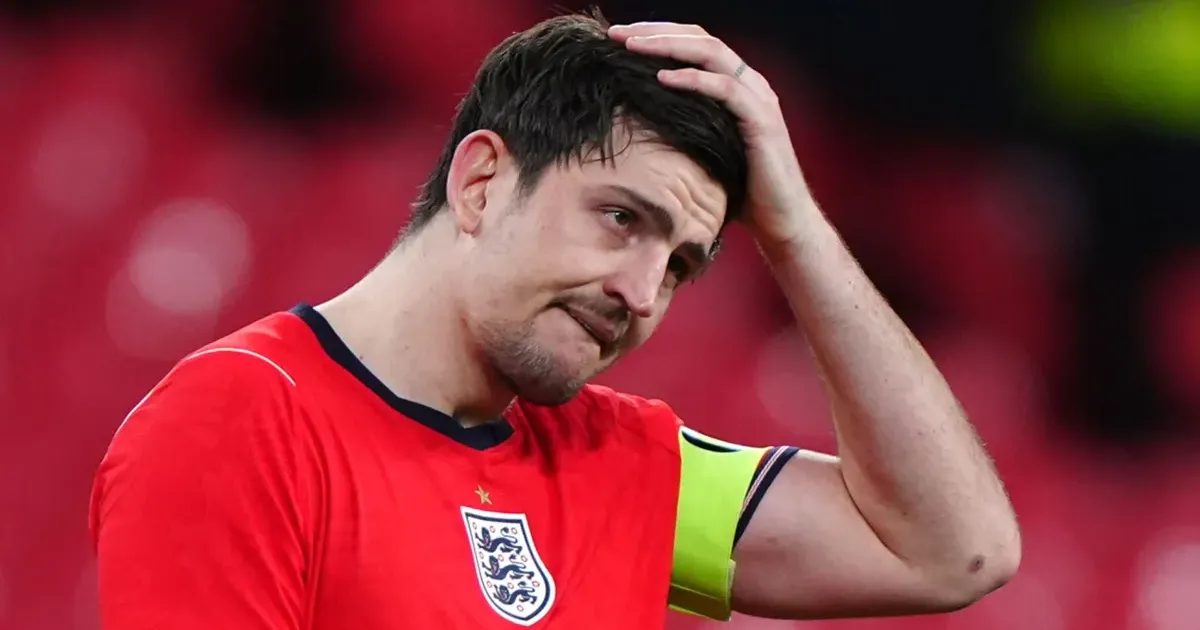
March 28, 2026, marked a definitive shift in the defensive strategy for the England national team as manager Thomas Tuchel clarified the standing of veteran center-back Harry Maguire. Speaking during a full squad briefing, the German coach confirmed that the former captain has fallen sharply in the internal pecking order. Maguire now occupies the fifth position among central defenders, a placement that jeopardizes his inclusion in the upcoming World Cup roster. This hierarchy reflects a move toward more mobile, technically skilled ball-playing defenders suited for a high defensive line. Professional assessments of the current squad dynamics suggest that the transition away from the previous regime's favorites is nearly complete.
Tuchel arrived at the national team post with a reputation for tactical rigidity and a preference for specific athletic profiles. Recent training sessions and selection patterns indicate that the manager prioritizes recovery speed and vertical passing over aerial dominance. These requirements have historically favored younger options who have flourished in high-press systems across Europe. Maguire, who was a foundation of the defense for nearly a decade, now finds his international career at a crossroads. England's coaching staff has reportedly spent weeks evaluating performance data from domestic leagues to finalize these rankings.
Defensive Hierarchy and World Cup Squad Depth Analysis
England's defensive core has undergone a rapid evolution since the conclusion of the last European Championship cycle. Four players currently sit ahead of Maguire in the rotation, representing a blend of youth and Champions League experience. Tactical experts point to the necessity of speed when defending against modern counter-attacking threats as the primary reason for this reshuffle. Tuchel has consistently emphasized that seniority holds no weight in his selection process. Every training drill is monitored by performance analysts to ensure that only those meeting the physical benchmarks remain in the starting contention.
Competition for the remaining defensive slots has become fierce among the core group of Premier League starters. While Harry Maguire provides a wealth of experience, his lack of recent consistent minutes at the club level has worked against him. Tuchel noted that rhythm and match fitness are non-negotiable for a tournament as intense as the World Cup. The coaching staff believes that having a fifth-choice defender who is not playing regularly for his club presents too high a risk for a month-long competition. Squad harmony also plays a role, as younger players require a clear pathway to prove their utility.
Statistical Comparison of Modern Center-Back Requirements
Comparing the statistical output of the top four defenders to Maguire reveals clear disparities in progressive carries and successful tackle percentages in open space. Modern international football requires center-backs to act as secondary playmakers while maintaining a high line near the center circle. Maguire has traditionally excelled in deep-block systems where his physical presence in the box is maximized. Tuchel's system, however, demands lateral agility that the 33-year-old defender has struggled to maintain following several minor leg injuries. Data from the current season shows a 15% decline in his successful recovery runs compared to his peak in 2021. This tactical shift follows the controversial news that Thomas Tuchel drops Alexander-Arnold from England's defensive rotation.
England boss Thomas Tuchel has appeared to deliver a big blow to Harry Maguire's World Cup chances by insisting he is still at least the fifth-choice centre back.
Manchester United has also seen a change in Maguire's use, which directly impacts his international viability. Club managers often communicate with national team setups regarding player workload and technical development. The lack of cooperation between his club role and Tuchel's international vision creates a widening gap. Analysts at various sports networks have observed that Maguire’s positioning has become more conservative to compensate for his decreasing pace. Such adjustments are difficult to reconcile with a manager who demands aggressive, proactive defending.
Management Styles and International Career Longevity
International careers often end not with a sudden retirement but with a slow descent down the depth chart. Previous managers valued Maguire for his leadership and his threat during set-piece situations. Tuchel acknowledges these traits but views them as secondary to the primary defensive mission. The German coach has a history of making cold, performance-based decisions at Chelsea and Bayern Munich. He rarely allows sentiment to influence his squad architecture, even when dealing with players who have over 60 caps for their country. Manchester United staff have reportedly been informed of this shift to help the player manage his expectations.
Financial implications for the player also exist as sponsorship deals often tie bonuses to international appearances and tournament participation. A move from a guaranteed starter to a fifth-choice backup affects marketability and long-term career planning. Agents and advisors are likely exploring options for a summer transfer to a club that offers guaranteed minutes. Without a meaningful increase in playing time, the probability of Maguire making the final cut for the trip to the United States and Mexico remains low. The FA has remained silent on individual player rankings, deferring all technical questions to the management team.
Tactical Shifts in the England National Team
The tactical identity of the national team is currently being rewritten to favor a more continental style of play. This involves a shorter passing game and an emphasis on winning the ball back within seconds of a turnover. Defenders in this system must be comfortable defending one-on-one in wide areas when full-backs push forward. Maguire has historically relied on a partner to cover space behind him, a luxury that Tuchel's aggressive shape does not always provide. Internal reports suggest that the coaching staff is prioritizing players who can operate in a back three or a back four with equal proficiency.
Future training camps will serve as the final proving ground for those on the fringes of the squad. Maguire must now outperform at least two players ahead of him to regain a competitive standing. This specific ranking suggests that the coaching staff sees a marked talent gap between the fourth and fifth positions. Such a clear public demarcation of status is rare in the high-stakes environment of international football. It is a transparent signal to the player and the media about the direction of the team.
The Elite Tribune Strategic Analysis
Ruthlessness is the hallmark of every successful international manager, and Thomas Tuchel is proving that reputation is a currency he does not accept. By publicly demoting Harry Maguire to fifth-choice status, the German coach is effectively ending an era of English football defined by loyalty over utility. The former manager Gareth Southgate was often criticized for his stubborn adherence to a core group regardless of club form, but Tuchel has swung the pendulum to the opposite extreme. It is not merely a tactical adjustment; it is a cultural purge designed to eliminate any sense of entitlement within the St. George's Park locker room.
Is Maguire a victim of his own physical decline or a manager’s rigid ideology? The reality is likely a combination of both, yet the optics of this decision are particularly harsh for a player who has often been the scapegoat for broader team failures. Tuchel is betting his reputation on a younger, faster defensive unit that has yet to be tested in the furnace of a World Cup knockout match. If the defense falters under pressure, the ghost of Maguire’s experience will haunt every post-match press conference. For now, the message is clear: the past provides no protection against the demands of the present.