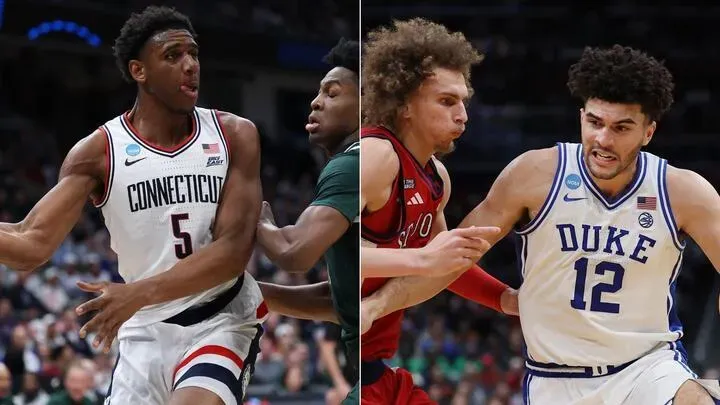
UConn and Duke gave the Elite Eight a frontcourt showcase before the game turned on one final shot. The result mattered because both programs entered with enough frontcourt strength to control the tempo. The East Regional final was played on March 29, 2026, in Washington, where UConn came back from 19 points down to beat top-seeded Duke 73-72. The result made the pregame debate about size feel more complicated than either side expected. Duke spent much of the night looking like the cleaner team, but UConn kept enough physical resistance in the lane to make the comeback plausible before the final shot ever left Mullins' hands.
Duke had Cameron Boozer, the freshman force who spent the season bending defenses around his scoring and rebounding. UConn had Tarris Reed Jr., whose physical work inside helped the Huskies survive long stretches when their outside shooting disappeared. The game was marketed as a clash of big men, but its lesson was sharper than that. Size only works in March when the rest of the roster can still solve late-game pressure, protect the ball and punish the help defense that inevitably comes toward the paint.
That is exactly where UConn separated itself. The Huskies started cold from three-point range, trailed badly and still kept enough structure to make the final minutes tense. Their comeback was not a clean shooting correction as much as a slow accumulation of stops, second chances and steadier possessions. Braylon Mullins eventually hit the decisive three-pointer with less than a second left, turning a game built around the paint into a reminder that March rarely obeys one tactical theme.
Interior Play Set the Terms
The frontcourt mattered because it shaped the tempo. Duke looked most comfortable when Boozer touched the ball early and forced UConn to send help. His gravity opened passing lanes and helped the Blue Devils control stretches of the game without needing a barrage of threes.
UConn answered in a different way. Reed's value was not just points; it was screening, rebounding position and the ability to keep possessions alive while Duke tried to speed up the finish. When the Huskies needed a second chance, their size kept them from being pushed out of the game.
Neither team played like a small-ball experiment. Duke wanted the game to pass through Boozer's decision-making, while UConn wanted its frontcourt to keep the floor balanced long enough for guards and wings to find a late answer. That made the matchup feel older in its physicality but modern in its spacing demands. The paint still mattered, but it mattered as the beginning of the possession rather than the entire possession.
Late Possessions Changed the Story
The final sequence mattered because it showed the limit of a simple "big man revival" reading. Duke had the lead, the star forward and the cleaner statistical profile for much of the night. UConn still won because it defended one more action, forced one more mistake and trusted a freshman wing to take the shot that decided the regional.
That does not make the frontcourt theme irrelevant. It makes it more realistic. Modern college basketball still rewards spacing and shot creation, but the teams that last deep into March need bodies who can survive contact, protect the rim and rebound misses when the offense stalls.
Duke left with proof that Boozer can be the center of a title-level roster. UConn left with the win.
What the Game Shows
The broader lesson is not that the sport is going back to an older era. It is that the best teams are becoming harder to categorize. UConn's comeback included physical interior play, veteran patience and one cold-blooded perimeter shot. Duke's loss included enough evidence to show why a dominant forward can still tilt an entire bracket. The game also showed why the final minutes of tournament basketball are rarely decided by the matchup that dominates the preview. They are decided by which team can keep its best idea alive while everything around it becomes less comfortable.
For coaches, the takeaway is practical. Recruiting size only matters if the guards can handle pressure and the wings can punish help defense. Building around shooting only works if someone can finish through contact when the game slows down. The best tournament rosters now need both traits at once: a frontcourt that can absorb punishment and a perimeter group calm enough to turn that pressure into one clean look.
This Elite Eight matchup revived the frontcourt debate because both teams made it credible, and because neither team could reduce the game to one preferred style once the pressure rose. UConn simply added the final answer. The result should not be read as a rejection of Duke's model or a simple endorsement of UConn's. It was a reminder that title-level teams need interior answers, perimeter nerve and enough late-game organization to keep both from working against each other when the bracket turns one possession into the whole season. That frontcourt contrast also gave scouts a cleaner way to judge how both teams handle physical pressure late in tournament games.