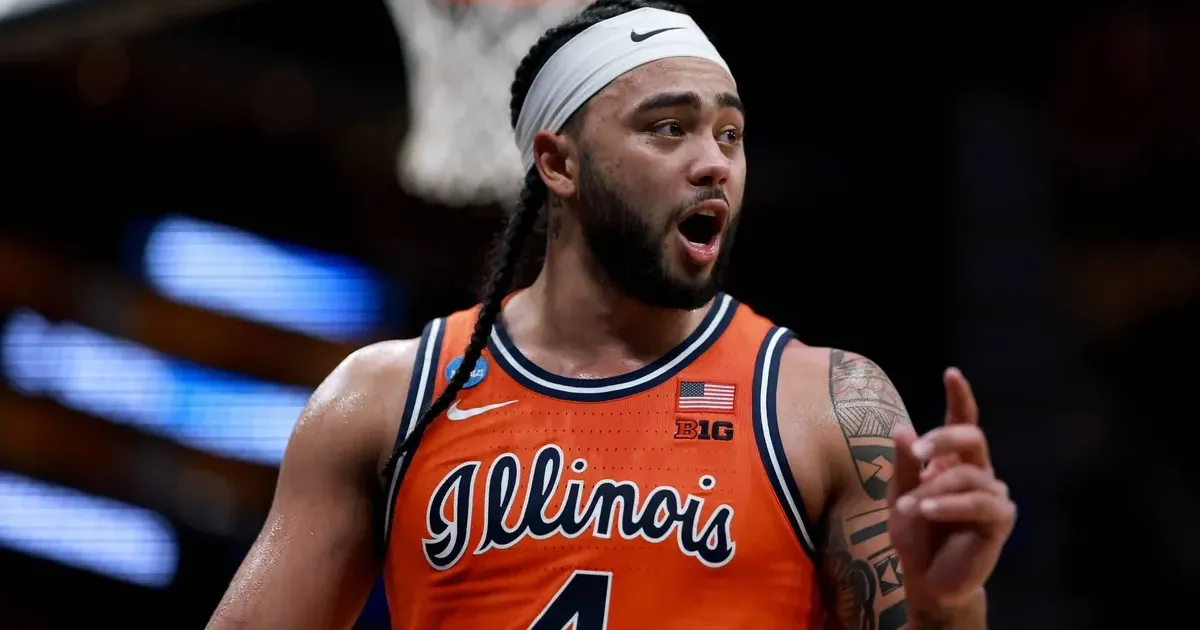
Illinois and UConn entered Elite Eight projections as two of the teams most trusted by analysts and oddsmakers. The numbers put two roster-building models under pressure before the weekend games: Illinois with defense and rebounding, UConn with balance and depth. Prediction models can identify matchup edges, but March still punishes thin assumptions.
Illinois prepared for a Big Ten meeting with Iowa while UConn's profile continued to shape the national title conversation. The remaining matchups gave markets and analysts a familiar tournament question: whether defensive structure matters more than underdog momentum. The answer may depend less on seeding than on who controls tempo first.
Statistical profiles for the remaining teams show a divide between offensive bursts and defensive reliability. Illinois has leaned on physicality, rebounding and shot prevention. UConn has leaned on balance and late-possession execution. Iowa and Michigan State carry belief, but belief has to survive the first eight minutes of real matchup pressure.
Illinois Defense Challenges Iowa's Run
Illinois entered the matchup with a defensive profile that makes Iowa's upset path narrow. The Illini have controlled the glass and limited easy interior looks throughout the tournament. That matters against an Iowa team whose run has been driven by shot-making, pace and confidence. If Illinois turns the game into a half-court contest, Iowa's margin for error shrinks quickly.
Iowa deserves credit for reaching this stage after a run few expected. The Hawkeyes beat high-level opposition and survived enough late-game pressure to prove the moment is not too large. The question is whether their offensive rhythm can hold against a team built to wear down possessions through size and discipline.
"All credit to Iowa for its first Elite Eight appearance in nearly four decades, one that nobody saw coming after the Hawkeyes entered the NCAA tournament in a 3-7 slump," said Matt Jacob of Yahoo Sports.
The previous Illinois-Iowa meeting offers context but not certainty. Familiar opponents know each other's habits, and that can make execution harder for both sides. Illinois will try to control transition and the boards. Iowa needs early pace, clean perimeter looks and enough defensive rebounding to prevent the game from becoming a possession drain.
Models Favor Structure Over Story
SportsLine and similar projection systems run thousands of simulations to identify matchup probabilities, but those outputs should be read as analysis rather than certainty. Models tend to reward repeatable traits: rebounding, shot quality, turnover control, depth and defensive efficiency. They are less good at measuring sudden shooting spikes, foul trouble or the emotional swing of a tournament crowd.
That is why Illinois grades well. A team that defends, rebounds and wins interior possessions gives itself more ways to survive a poor shooting stretch. Iowa's case is more volatile. A hot perimeter game can change everything, but a cold start against a physical defense can create a deficit that is difficult to erase.
UConn's profile is similar in a different way. The Huskies are trusted because they can win through multiple styles. If the first option stalls, they have enough passing, size and guard play to find another route. That versatility is why analysts keep them near the center of the title conversation.
UConn Dominance Meets Michigan State Resilience
Connecticut enters its matchup against Michigan State with the confidence of a team that has rarely looked rushed. The Huskies move the ball well, protect spacing and punish defensive mistakes. Michigan State's best path is to slow the game, make possessions physical and turn the contest into a coaching and execution battle.
That formula can work, especially in March, but it demands discipline. Michigan State cannot afford empty trips, live-ball turnovers or long stretches without defensive rebounds. UConn's depth becomes more dangerous as fatigue builds. The Spartans need to keep the game close enough that pressure shifts back onto the favorite late.
Tennessee, Iowa State and the other remaining contenders add more defensive weight to the bracket. Several matchups may be decided less by highlight plays than by who gets the final contested rebound, who avoids the careless foul and who can score when transition disappears.
What the Models Trust
Sentimentalists often distort tournament analysis by overvaluing the underdog story. Iowa is compelling television, but Illinois is the kind of opponent that can turn a feel-good run into a physical audit. Defensive metrics do not care about a four-decade wait for an Elite Eight appearance. Rebounding margins do not care about narrative. If Iowa cannot keep Illinois off the glass, the story will bend toward the favorite quickly.
UConn remains the program with the most complete case because it can answer different styles without abandoning its identity. Michigan State and Iowa provide strong drama, but they have less room for mistakes. The safer analytical read stays with defensive anchors, rebounding strength and roster balance rather than the romance of a Cinderella script. March can still break models, but it usually does so by punishing the team that loses the possession battle first.