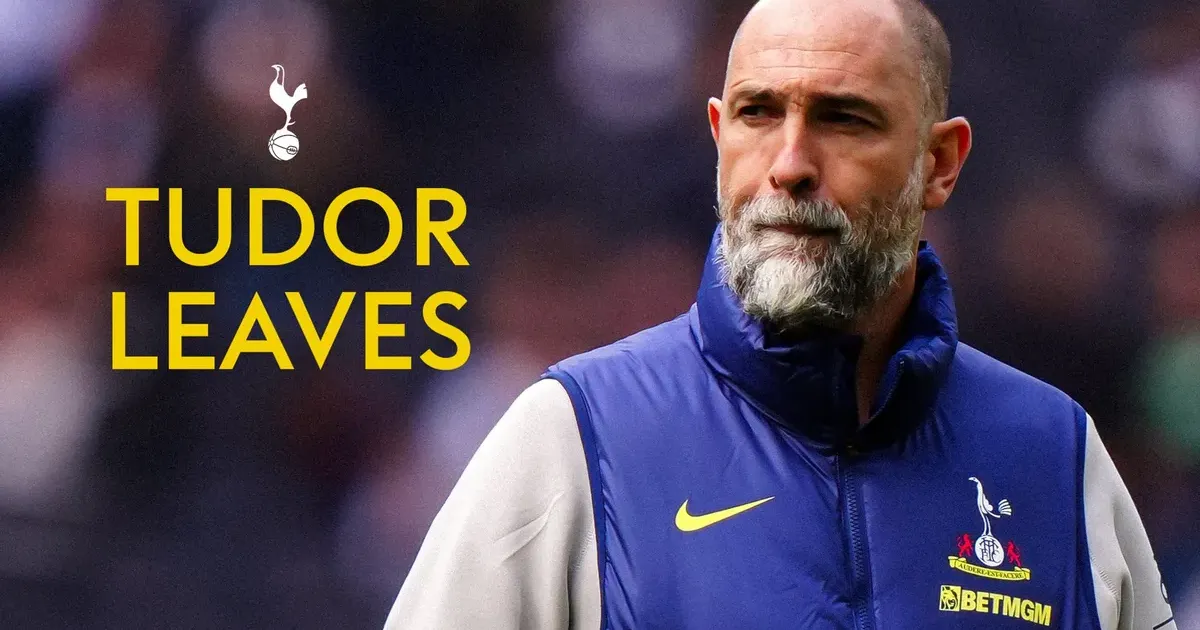
Igor Tudor departed his role as head coach of Tottenham Hotspur, ending a brief and turbulent tenure that lasted only 44 days. The North London club confirmed the exit followed a mutual agreement between the board and the manager. Seven matches into his appointment, the Croatian coach leaves a squad struggling to find a competitive identity. On March 29, 2026, performance metrics had fallen far enough for the hierarchy to act before the season reached a terminal stage. Croat-born Tudor arrived with a reputation for tactical discipline, yet his team failed to secure a single victory in five Premier League outings. Statistics show the club earned just one point from a possible fifteen during this stretch. Sunday's 3-0 home defeat against Nottingham Forest acted as the final catalyst for the dismissal. Supporters at the stadium voiced their frustration through loud jeers at the final whistle as the team slid closer to the relegation zone. Tottenham currently sits a mere one point above the bottom three, a position that was previously considered unthinkable for a club of its stature. Relegation to the Championship would bring catastrophic financial consequences. Revenue from broadcasting rights and global sponsorships would drop by $110 million or more in the first year alone. Debt obligations related to the stadium construction also require the high-level cash flow provided by top-flight status.
Relegation Risks at Tottenham Stadium
Falling into the bottom three would jeopardize the entire commercial model of the organization. Financial analysts predict a mass exodus of elite talent if the club fails to maintain its Premier League standing. High-earning players often possess contract clauses that allow for reduced transfer fees in the event of demotion. Such a scenario would prevent the board from recouping the serious investments made in the squad over the previous three years.
Management must now decide whether to appoint another short-term interim or seek a permanent leader during a period of extreme instability. Several candidates have been linked to the vacancy, but the pool of elite managers willing to enter a relegation scrap is shallow. Emergency meetings continued throughout the night at the club headquarters to determine a viable path forward. Critics argue the pattern of hiring and firing has created a culture of instability that undermines the performance of the athletes.
Prestige offers no protection against the math of the bottom three. History is littered with major clubs that believed they were too big to fail only to find themselves playing in the second tier. Tottenham management remains desperate to avoid the fate of other fallen giants. Pressure from the fanbase has reached a fever pitch, with various supporter groups calling for structural changes at the executive level. Further context on the personal and professional struggles faced by Igor Tudor can be found in our previous reporting.
Personal tragedy and tactical stagnation complicated Tudor's short spell, but the competitive record ultimately drove the boardroom decision.
Tudor endured meaningful personal hardship during his brief time in London. He spent several days away from the training ground following the death of his father, a period that coincided with a critical run of fixtures. Preparation for key matches suffered as a result of his absence. While the club expressed sympathy for his situation, the lack of improvement on the pitch became impossible to ignore for the directors. The Croat failed to win a league match as interim head coach and had been away from his post following the death of his father, as the club parted company with Igor Tudor after seven games in a desperate attempt to halt their slide.
Tactical consistency never materialized under the direction of the former Marseille boss. Players appeared confused by shifting formations and defensive responsibilities. Training ground reports indicated a lack of cohesion between the coaching staff and the senior squad members. Results declined sharply after an initial draw, leading to the current crisis of confidence that fills the dressing room.
Nottingham Forest exploited these weaknesses with clinical efficiency on Sunday. Three goals unanswered highlighted the defensive frailties that Tudor could not resolve. Tottenham has conceded more goals from set-pieces in the last month than in the previous three months combined. This statistical decline suggests a failure to address basic organizational issues during training sessions.
Boardroom Pressure and Failed Coaching Searches
Daniel Levy faces intensifying scrutiny regarding his decision-making process over the last 18 months. The hiring of Tudor was viewed by some as a gamble that failed to pay dividends. Successive managerial changes have not cured the underlying issues affecting squad performance. The hierarchy continues to search for a solution that provides long-term stability rather than a temporary fix.
Rumors suggest that the board is considering a return to a more traditional British management style to navigate the remaining fixtures. Several former players have also been mentioned as potential components of an interim coaching staff. The priority stays fixed on survival and securing the necessary points to stay in the division. Failure to do so would lead to a radical restructuring of the entire sports department.
Championship football would drastically alter the recruitment strategy for the summer window. Primary targets would likely reconsider joining a club outside the Premier League. The current squad contains 24 senior internationals who expects to compete at the highest level of European football. Dropping down a division would force the sale of key assets to balance the books and satisfy financial fair play regulations. March 29, 2026, marks one of the lowest points in the modern history of the club. Tudor leaves with a win rate of zero percent in the league, a figure that highlights the severity of the situation. Management announced that an update regarding the interim coaching setup will be provided within the next 48 hours. The search for a savior continues as the clock ticks toward the end of the season.
What Tottenham Must Fix Next
Desperation is the only currency left in the coffers at Tottenham Hotspur. The dismissal of Igor Tudor after just 44 days is not a reflection of his managerial quality but a loud admission of systemic failure at the highest levels of the club. Daniel Levy has spent years building a palace of commerce while the foundation of the footballing project crumbled into dust. Hiring a manager and then failing to support him through a personal tragedy, only to sack him when the inevitable results followed, is an exercise in reactionary governance.
Football history shows that clubs in this level of freefall rarely save themselves by simply swapping the man in the dugout for the third time in a single campaign. The rot at Tottenham is not tactical; it is cultural. By prioritizing stadium debt and real estate ventures over a coherent sporting identity, the board has rendered the manager's seat a poisoned chalice. Any elite coach watching this 44-day circus would be wise to delete the chairman's number from their phone.
The math of the Premier League is cold and unforgiving. With only 1 point from the last 15 available, the momentum suggests that the London side is the favorite for the drop. Unless the board finds a way to stop the internal bleeding and reconnect with a demoralized squad, the newest stadium in the country will soon be hosting Friday night fixtures in the Championship. That is a reality the balance sheets are not prepared to handle. Pure incompetence.