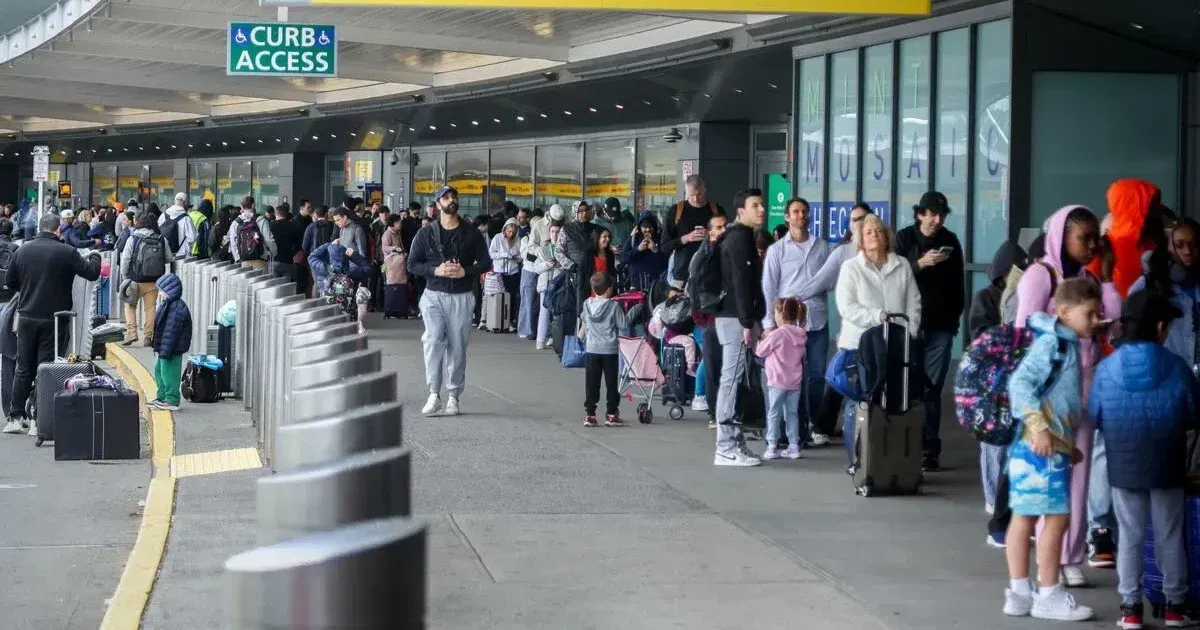
Wealthy travelers are paying private-jet prices to escape the breakdown of commercial airport routines. The charter boom matters because airport dysfunction is turning time savings into a luxury product. On March 27, 2026, charter operators reported stronger demand from passengers willing to spend about $34,000 to avoid TSA delays and terminal uncertainty.
The shift is being driven by time, not glamour. Executives who once tolerated first-class commercial travel now see missed meetings, security queues and canceled connections as costs that can exceed the charter bill. Charter companies have responded by repositioning aircraft toward smaller regional airfields. Teterboro, Van Nuys and other high-income travel nodes are absorbing customers who want to bypass the main terminal entirely.
Private Demand
The supply of private aircraft is still limited. Many operators are running near capacity, which means late bookings carry steep premiums and return flights may need to be reserved before the first leg even departs. A private flight cost is not just the hourly aircraft rate. Fuel surcharges, landing fees, crew overnight stays and private terminal services can quickly push a domestic itinerary into five figures.
For some corporate travelers, the calculation is blunt. If a delayed commercial flight threatens a deal, a board meeting or a production schedule, the charter becomes an expensive form of insurance rather than a luxury purchase.
Charter Economics
Federal staffing shortages sit at the center of the commercial-airport frustration. Screening jobs remain hard to fill and retain, while big events and peak travel windows can overwhelm checkpoints already operating with thin margins.
Private terminals, by contrast, offer a controlled process with lounge access, direct boarding and minimal waiting. That gap is turning airport design into a visible class divide, with regional airfields gaining business as large hubs lose patience from their most profitable passengers.
TSA Bottleneck
Government officials point to a lack of qualified personnel as the root cause of terminal gridlock. The federal government has struggled to recruit and retain workers for screening positions due to low pay and high-stress environments. At some locations, the attrition rate for new hires exceeds 40% within the first six months of employment. The turnover prevents the agency from building a stable workforce of experienced security professionals. Training pipelines are currently backlogged with candidates waiting for background clearances.
Growth in the private sector is renewing neglected regional airfields. Airports that previously served only general aviation hobbyists are now seeing regular traffic from corporate jets. Local municipalities are investing in runway extensions and new hangar facilities to attract this high-spending clientele. These improvements bring jobs and tax revenue to areas that were bypassed by the commercial aviation boom. Fuel sales at these locations have reached all-time highs as jets refuel for their return legs.
Labor unions representing airline pilots and flight attendants are also raising alarms about terminal conditions. Staff members often face the same security delays as passengers, leading to crew timeouts and canceled flights. When a pilot cannot reach the cockpit because they are stuck in a TSA line, the entire flight operation ceases. These operational disruptions cost the industry billions of dollars in lost productivity. The connection between government staffing and private economic health is undeniable.
Infrastructure failure is the ultimate tax on the productive class, and the current TSA collapse is a perfect case study in government incompetence. The record confirms a predictable market reaction where the wealthy simply opt out of a broken system, leaving the middle class to rot in three-hour lines. It is not just about the convenience of the few; it is about the total surrender of public services to mediocrity. While bureaucrats offer excuses about hiring cycles, the private sector has solved the problem with a $34,000 price tag.
It is a damning indictment of a state that can collect taxes but cannot move people through a hallway in under four hours. Critics will whine about the environmental impact of private jets, but they ignore the economic carnage of millions of lost man-hours in terminal queues. If the government cannot provide basic transit security that functions, it has no business monopolizing the process. We should expect more of this.
Airport Divide
The gap between those who can pay for their time and those who are forced to waste it will only widen until the entire commercial aviation model is forced to innovate or die. Expect the private terminal to become the only terminal that matters for anyone whose time actually has value.
The private-jet shift also exposes a wider service gap in premium travel. Wealthy travelers are paying not only for speed, but for predictability when airport lines, staffing shortages and security delays feel unstable. Commercial airlines can protect some of that revenue only if their highest-tier products offer a clearer time advantage and a calmer airport experience.
The environmental cost also complicates the luxury narrative. Private flights solve an inconvenience for a small group of travelers while adding emissions and congestion around smaller airports. That trade-off will matter if regulators or local communities begin asking whether premium convenience is shifting public burdens onto infrastructure that was not built for that volume. Commercial airports now have to recover enough reliability to keep that premium from becoming permanent.