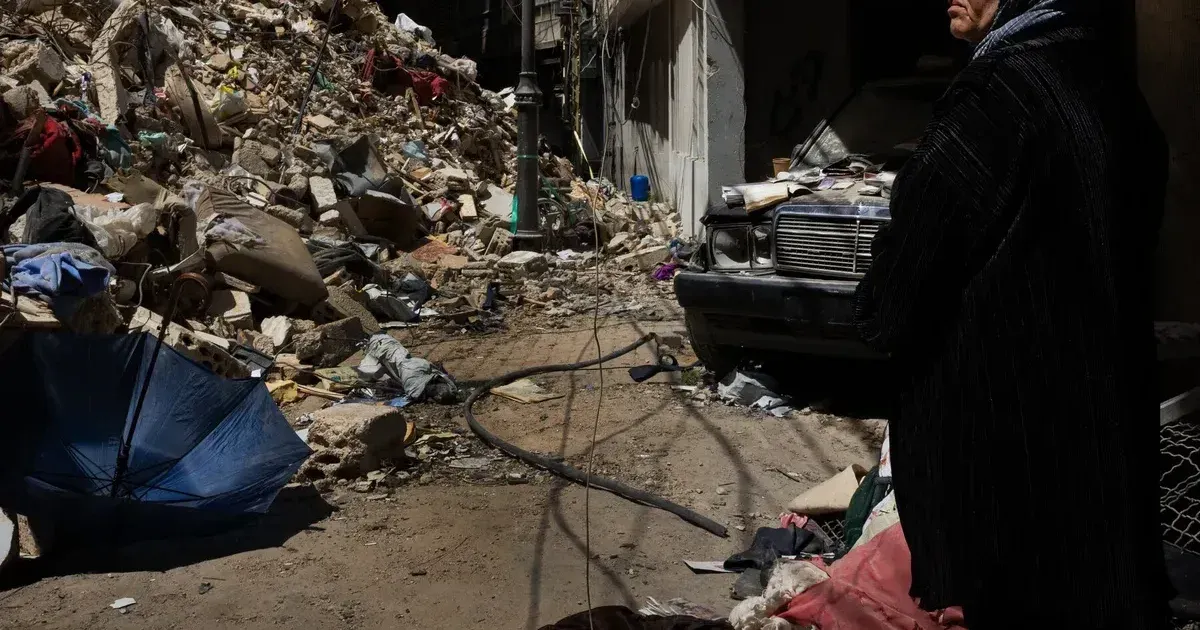
The Israel-Lebanon track moved back into public diplomacy after Trump’s claim. President Donald Trump announced on April 16, 2026, that leaders from Israel and Lebanon intend to speak regarding a potential cease-fire in the war against Hezbollah. Military operations in the Middle East have intensified since the White House ordered huge joint strikes with Israeli forces on February 28, 2026, to initiate major combat operations against Iran. White House officials have promoted the potential dialogue as a step toward regional stability, though representatives in Jerusalem and Beirut have not officially confirmed the high-level meeting. This blockade restricts Iranian maritime trade while the American military maintains a heavy presence in the Persian Gulf.
Defense Secretary Pete Hegseth prepared to offer public remarks regarding the current U.S. naval blockade and the progress of the campaign. Pentagon strategists contend that the ongoing maritime restrictions have successfully limited the ability of Tehran to supply its regional proxies. Recent reports indicate that the Fifth Fleet has intercepted multiple shipments intended for Hezbollah strongholds. The administration persists in its narrative that economic pressure will force Iranian leadership to the negotiating table.
Hegseth Outlines Iran Naval Blockade
Tactical success on the water has not shielded the administration from mounting domestic criticism. Beyond the naval maneuvers, the president has faced scrutiny for his escalating rhetorical attacks on a diverse array of figures including political opponents, international allies, and the Pope. Digital communications from the executive office have frequently featured provocative imagery and memes that some analysts argue serve to distract from economic pressures at home. These distractions make it harder for Republican candidates to keep voter attention on domestic policy ahead of the midterm elections.
Internal party polling suggests that the focus on Middle Eastern conflict is draining resources from battleground state campaigns. Republican strategists have expressed concern that the president's erratic social media presence complicates the unified messaging required for the upcoming electoral cycle. Critics highlight that the use of religious imagery and attacks on the Vatican has alienated certain segments of the conservative base. These outbursts often coincide with periods of heightened military tension in the Gulf region.
Georgia Swing Voters Express Skepticism
Voters in critical swing states appear increasingly skeptical of the military strategy currently deployed across the Middle East. Focus groups conducted with 13 participants in Georgia, all of whom supported the president in 2024, revealed that none believe the military action in Iran is proceeding effectively. This sentiment among the base indicates a potential fissure in the coalition that secured the previous election. Participants cited the lack of a clear exit strategy and the impact of the conflict on global energy prices as primary concerns. Ongoing Hezbollah cease-fire negotiations are currently complicated by shifts in regional messaging from the White House.
"None of the 13 focus group participants, who all voted for President Trump in 2024, said they would describe the military action in Iran as going well so far," according to NPR News.
Public dissatisfaction in the American South mirrors broader national trends regarding prolonged foreign entanglements. Feedback from these Georgia sessions suggests that even loyal supporters are questioning the utility of a naval blockade that has driven domestic gas prices higher. This lack of confidence persists despite repeated assertions from the Department of Defense that the operation is achieving its primary objectives. Security analysts note that the longer the blockade continues, the more difficult it becomes to maintain public support for the mission.
Hezbollah Cease-fire Negotiations Emerge
In the Levant, the possibility of a cessation of hostilities between Israel and Hezbollah has gained traction in diplomatic circles. Lebanese officials have stated that a cease-fire is under serious consideration, provided that Israeli air strikes in the south cease. Israeli representatives have countered that any agreement must include a buffer zone that prevents Hezbollah militants from reaching the border. The $40 billion in military aid provided to Israel over the last cycle has allowed for a sustained air campaign that has sharply degraded the group's infrastructure.
Regional mediators from France and Egypt have been working to enable a dialogue that could end the cross-border shelling. Conflict in the region has displaced hundreds of thousands of civilians on both sides of the Blue Line. While the White House claims a meeting will occur on Thursday, the lack of confirmation from the Israeli Prime Minister's office suggests that serious hurdles persist. Military planners continue to prepare for further escalations if the diplomatic track fails to produce a signed agreement.
White House Pressure and Religious Rhetoric
Presidential pressure on the international stage has been accompanied by a sharp turn toward populist religious rhetoric in domestic messaging. Analysts from the New York Times observe that the administration has increasingly used Jesus memes and biblical references to frame the conflict as a moral crusade. The strategy aims to solidify support among evangelical voters who prioritize the security of Israel as a theological necessity. Such framing, however, has triggered pushback from more traditional religious institutions and moderate voters.
Economic data indicates that the naval blockade has contributed to a volatile global oil market. Crude prices have fluctuated wildly as the U.S. and Iran engage in a standoff over the Strait of Hormuz. Domestic inflation continues to be a primary concern for the American electorate, and the connection between the war and rising costs is becoming impossible to ignore. Strategic analysts argue that the administration may be forced to choose between its military goals in Iran and its political survival in the midterms.
Lebanon Diplomacy Faces a Credibility Gap
Trump’s announcement creates diplomatic momentum only if Israeli and Lebanese leaders confirm the contact and agree on the terms to be discussed. A cease-fire would still require arrangements for Israeli strikes, Hezbollah’s position near the border and monitoring along the Blue Line.
The administration is also trying to defend the Iran blockade to voters who are concerned about its duration, cost and effect on fuel prices. The Georgia focus group is limited in size, but it illustrates the political risk of presenting progress without a clear end state.
The next measure of credibility will be whether the claimed meeting occurs and produces a defined negotiating channel. Until then, the White House’s public optimism remains ahead of confirmation from the parties whose forces are directly involved.