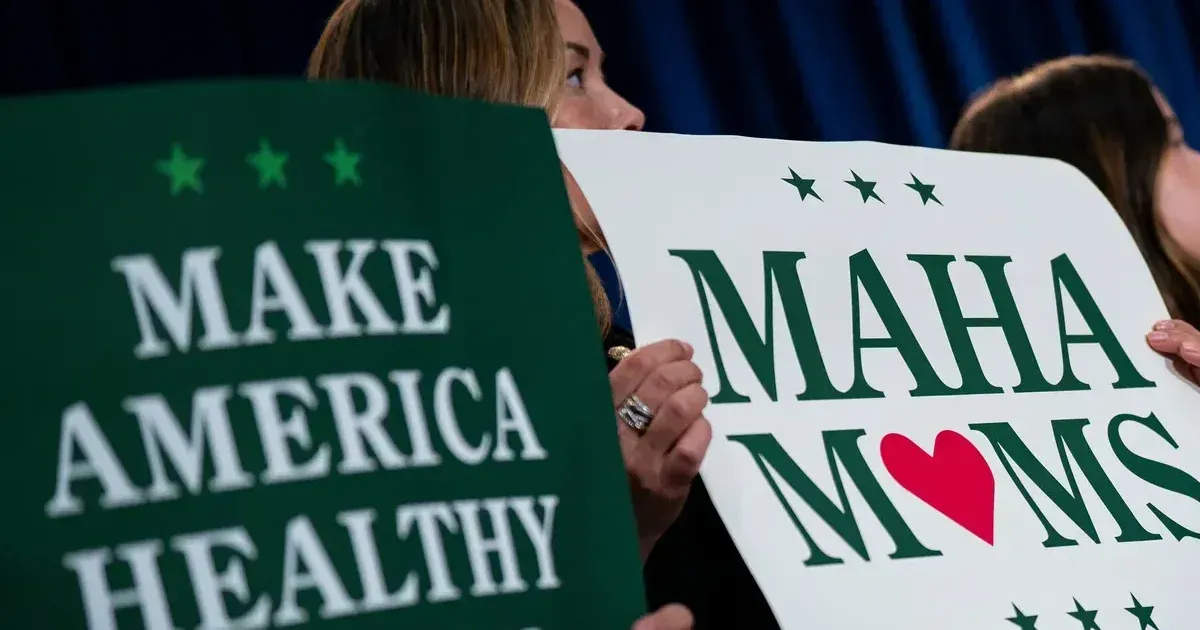
Donald Trump met privately at the White House on April 9, 2026, with leaders from the Make America Healthy Again movement. Cabinet officials attended the closed door session to address growing friction between health reformers and traditional industrial interests. Health Secretary Robert F. Kennedy Jr. joined the assembly of activists who helped secure the administration's victory during the previous election cycle. These organizers now demand real policy shifts regarding food safety and chemical regulation. Tensions within the coalition have intensified as executive orders concerning agricultural pesticides faced delays in the federal bureaucracy.

Disenchanted leaders arrived at the West Wing carrying dossiers detailing what they describe as a betrayal of campaign promises. Their grievances center on the perceived influences of traditional pharmaceutical and agricultural lobbyists over mid-level regulatory appointments. Organizers specifically targeted the slow progress on removing specific dyes and additives from the national school lunch program. Efforts to ban seed oils in government-funded facilities have also stalled. Frustration mounted when several key positions within the Food and Drug Administration were filled by former industry executives rather than the reform-minded scientists recommended by the Make America Healthy Again movement.

Kennedy remains a central figure in this administrative tug-of-war. His appointment as Secretary of Health and Human Services was a condition of his endorsement, yet he faces stiff resistance from established partisan elements. Many traditional Republican donors view the MAHA agenda as an unnecessary regulatory burden on the American economy. These donors argue that rapid shifts in food manufacturing requirements could lead to serious price spikes for consumers. Projections from the Department of Commerce suggest a nationwide ban on specific herbicides would increase corn and soy prices by 15 percent within a single fiscal quarter.

MAHA Movement Demands Action on Food Safety

Activists led by Calley Means and other leading MAHA figures are prioritizing the removal of Yellow 5 and Red 40 from products marketed to children. These substances are already restricted or banned across several European jurisdictions. MAHA advocates insist that the American public health crisis is tied directly to these synthetic additives. Internal polling suggests 72 percent of the administration's base considers food quality a top priority. Voters in key swing states have expressed increasing concern over the rates of childhood obesity and chronic illness.

Resistance from the food processing industry has been fierce. Trade groups representing major snack food manufacturers have spent over $400 million on lobbying since the start of the current administration. They contend that the science linking these additives to behavioral issues is inconclusive. Public health advocates, by contrast, point to a growing body of peer-reviewed literature suggesting a causal link between synthetic dyes and neurodevelopmental challenges. The struggle for control over the Food and Drug Administration's labeling requirements persists.

The American food system is currently designed to maximize profit at the expense of metabolic health, and we will not accept anything less than a total overhaul of the standards governing what our children ingest every day, a spokesperson for the Make America Healthy Again movement stated following the meeting.

Policy experts note that the White House must balance these health demands with economic stability. Inflationary pressures continue to influence every domestic policy decision made by the West Wing. Severe changes to the agricultural supply-chain could alienate the rural base that relies on current farming methods. Large-scale industrial farms have built their infrastructure around specific chemical inputs over four decades. Changing these systems requires more than a signature on an executive order. It requires a complete restructuring of the national agricultural subsidy program.

Tensions Between Corporate Interests and Health Reform

Lobbying firms in Washington have increased their presence at Department of Agriculture hearings since January. These firms represent the interests of pesticide manufacturers who fear a ban on glyphosate and other common weed killers. Corporate leaders argue that the MAHA agenda ignores the necessity of high-yield farming to maintain global food security. Meanwhile, health activists claim that these chemical residues are contributing to a $3 trillion annual expenditure on chronic disease management. Economic data confirm that healthcare costs are the largest driver of the national deficit. The administration continues to debate the nomination of Casey Means to lead critical public health initiatives.

President Trump has historically favored deregulation. The MAHA agenda, however, requires the implementation of new, stricter regulations on the private sector. This creates a fundamental contradiction within the administration's broader economic strategy. Advisors are currently split on whether to prioritize the "deconstruction of the administrative state" or to use that same state power to enforce health standards. Some officials suggest that the administration can satisfy both sides by focusing on transparency instead of outright bans. Requirement for clearer labeling on processed foods is one compromise currently under consideration by the White House Counsel.

Reformers are not satisfied with labels. They want chemical compounds removed from the supply-chain entirely. The MAHA leadership threatened to withhold support for the upcoming 2026 midterm elections if the president does not act. Losing the enthusiasm of this specific voter bloc could jeopardize the administration's narrow majority in the House of Representatives. Recent surveys indicate that the MAHA movement brought in a meaningful number of first-time voters and former independents who are hyper-focused on this single issue.

Robert F. Kennedy Jr. Navigates Cabinet Friction

Secretary Kennedy has struggled to integrate his staff with the existing career professionals at the Department of Health and Human Services. Many of these career employees have spent their lives working within the systems Kennedy intends to dismantle. Reports of internal memos leaking to the press have become common. These leaks often frame Kennedy's initiatives as scientifically unsound or legally unstable. Despite these obstacles, Kennedy continues to push for a complete review of the vaccine injury compensation program. He also advocates for the removal of fluoride from municipal water systems across the country.

Legal challenges have already begun. Several states have filed lawsuits to prevent federal interference in local water fluoridation policies. These states argue that the federal government lacks the constitutional authority to dictate local public health measures. Attorney General offices in at least twelve states are coordinating their legal strategies to block any broad health mandates from Washington. This litigation could tie up the MAHA agenda in federal courts for years. Judicial delays are a primary source of the disenchantment felt by movement leaders.

White House Chief of Staff Susie Wiles has attempted to mediate between Kennedy and the more traditional Republican operatives. These operatives are wary of Kennedy's long history as an environmental lawyer and his previous criticisms of the Republican party. They see the MAHA movement as a temporary electoral alliance instead of a permanent ideological shift. Kennedy’s supporters view it differently. They believe they are the new core of the party. The meeting on April 9, 2026, was intended to clarify which vision for the party will prevail during the remainder of the term.

Political Stakes for the 2026 Midterm Cycle

Voter turnout will depend heavily on the administration’s ability to point to concrete health victories. If the MAHA base feels ignored, they may stay home during the November contests. Political analysts suggest that even a 3 percent drop in turnout from this demographic could shift controls of the Senate. The administration is keenly aware of this mathematical reality. So, the president has instructed his team to find a "quick win" that can be marketed to health-conscious voters before the summer ends. This may take the form of an executive order banning certain food dyes in products that receive federal subsidies.

Opposition from the Democratic party has been surprisingly muted on certain aspects of the MAHA platform. Many progressives have long advocated for stricter food safety standards and better nutrition in schools. It creates a unique opportunity for bipartisan cooperation, though such a development remains unlikely in the current polarized environment. Democrats are more likely to criticize the administration for its ties to the very industries it claims to be reforming. They point to the deregulation of environmental protections as evidence that the health agenda is largely rhetorical. The battle for the "health voter" will be a defining feature of the next six months.

President Trump concluded the meeting by promising a new series of town halls focused on metabolic health. These events will feature Kennedy and other MAHA influencers traveling to early primary states. The goal is to re-engage the base and demonstrate a commitment to the cause. Whether these public appearances can replace substantive policy changes is a point of contention among movement leaders. Some left the White House feeling optimistic, while others remained skeptical of the president's willingness to cross his corporate donors. The administration's focus now shifts to the implementation of the agreed-upon directives.

The Elite Tribune Strategic Analysis

Can a populist leader serve two masters? Donald Trump is currently attempting to satisfy a base of health-conscious reformers while simultaneously protecting the corporate interests that fund the Republican machinery. It is not a sustainable policy position. The Make America Healthy Again movement is not a fringe hobbyist group; it is a mobilized, single-issue voting bloc that views food safety as an existential struggle. By appointing Robert F. Kennedy Jr. to the Cabinet, Trump invited a disruptive force into the heart of the federal government. Now, the disruption is turning inward. The administration's penchant for deregulation is crashing head-first into the MAHA demands for aggressive, top-down intervention in the private sector.

History suggests that when a coalition faces such a fundamental ideological contradiction, one side must eventually be sacrificed. Trump likely believes he can charm the MAHA leaders into patience, but their disenchantment is rooted in the very real stagnation of their agenda. If the president fails to deliver a major scalp, such as a nationwide ban on specific pesticides or a total purge of the FDA, the MAHA movement will fragment. The fragmentation would be catastrophic for the 2026 midterms. The elite political class in Washington expects Trump to eventually side with Big Ag and Big Pharma.

They are betting on the status quo. If Trump proves them wrong, he will spark a civil war within his own party. If he proves them right, he loses the very voters who put him back in the Oval Office. There is no middle ground. The choice is between the health of the populace and the health of the corporate balance sheet. Decisions made this month will define the legacy of this administration. The clock is ticking.