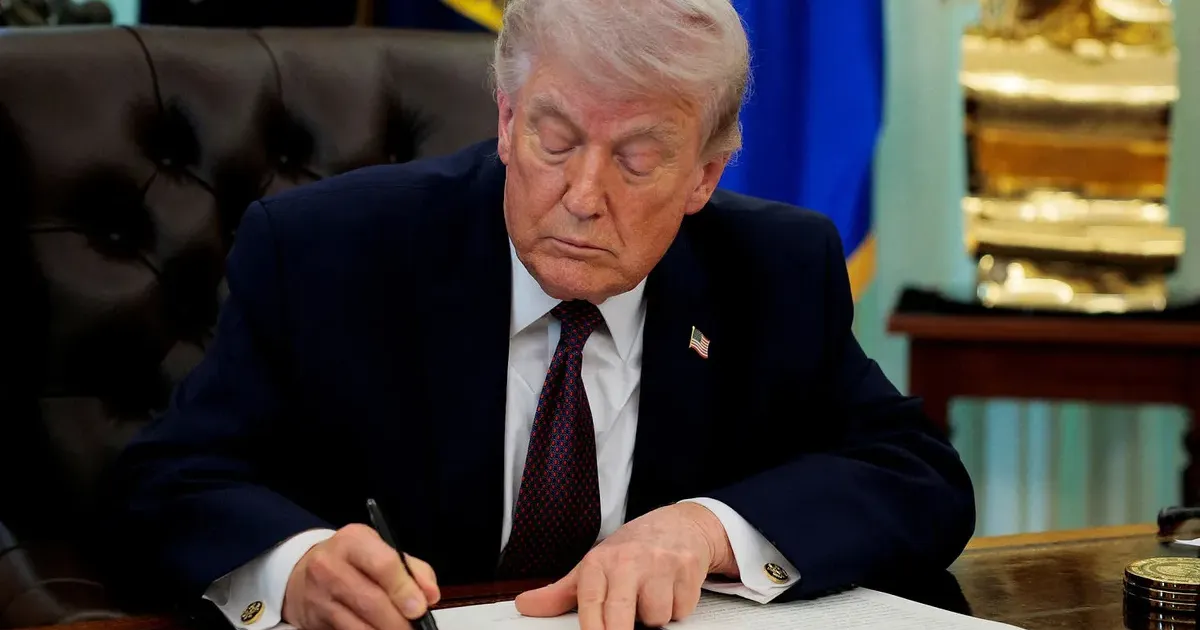
Donald Trump issued an expansive executive directive on April 4, 2026, ordering the Department of Homeland Security to ignore standard shutdown constraints and pay its entire workforce. Official correspondence titled Liberating the Department of Homeland Security From the Democrat-Caused Shutdown surfaced Saturday morning, detailing a plan to bypass traditional congressional appropriations. Instructional language in the document requires Russell Vought, the Director of the Office of Management and Budget, to coordinate with department leadership to identify existing funds. Federal paychecks will now flow through an untested legal channel. The memo turned shutdown pay into a direct legal and administrative confrontation.
The action mirrors a similar memo signed last week that directed immediate compensation for the TSA. President Trump instructed Mullin to ensure each and every employee receives back pay and current salary despite the ongoing funding lapse. Administrative officials intend to use funds that have a reasonable and logical nexus to the core functions of the Department of Homeland Security. Budgetary shifts of this scale usually require explicit legislative approval under the Antideficiency Act of 1884. This directive attempts to redefine the limits of executive spending power during a national security deadlock.
Strategic Funding Tactics at DHS
Identifying liquid assets within the federal bureaucracy is the primary task assigned to Russell Vought. The memo indicates that the administration is looking toward fee-based accounts and carryover balances that do not technically expire at the end of the fiscal year. User fees collected by U.S. Citizenship and Immigration Services often sit in accounts that stay accessible when general fund appropriations vanish. Diverting these specific pools of money to cover salaries for Border Patrol agents and ICE officers provides a temporary solution to the payroll crisis. Financial analysts at the White House believe these funds satisfy the nexus requirement cited in the president's order.
Internal accounting at the department remains under heavy scrutiny as teams attempt to move billions of dollars without a clear congressional mandate. Mullin received specific orders to work alongside the Treasury Department to ensure the technical infrastructure for direct deposits stays functional. Recent reports from the Office of Management and Budget suggest that up to 240,000 employees could see their pay restored by the end of the next pay cycle. Labor unions representing federal workers expressed cautious optimism while questioning the long-term stability of such a patchwork funding model. Specific agencies like the Secret Service and the Coast Guard fall under the umbrella of this directive.
"I am instructing you to identify and use funds that have a reasonable and logical nexus to the functions of DHS to provide compensation to department workers."
This directive followed a previous executive order that provided retroactive compensation for the TSA workforce.
Legal Friction and the Antideficiency Act
Constitutional experts point to the Antideficiency Act as a potential hurdle for the administration's new strategy. Legal frameworks established in the late 19th century prohibit federal agencies from spending money that has not been specifically allocated by Congress. Bypassing these rules generally triggers investigations by the Government Accountability Office and can lead to administrative or criminal penalties for certifying officers. Donald Trump appears to be betting that the essential nature of homeland security work outweighs the risk of technical violations. Previous administrations typically furloughed non-essential staff to comply with these fiscal restraints.
Attorneys within the Department of Justice have reportedly authored a nonpublic opinion supporting the president's move. The argument in that document likely rests on the commander in chief's inherent authority to maintain national safety during an emergency. If the courts intervene, the administration may argue that a shutdown caused by legislative inaction cannot legally compromise the security of the borders. Congressional leaders have already signaled their intent to challenge the move in federal court. Critics suggest the redirected funds were intended for technology upgrades and infrastructure rather than personnel costs. Treasury officials declined to comment on the legality of the specific account transfers.
Congressional Power Versus Executive Mandates
Legislative reaction to the memo was swift as members of the House Appropriations Committee called for an emergency hearing. Opponents of the president argue that the power of the purse is the most fundamental check on the executive branch. Reallocation of funds without a vote effectively renders the budget process obsolete. Russell Vought has countered these claims by stating that the administration is simply prioritizing the welfare of workers over political gamesmanship. TSA agents who worked without pay for several days last week will be the first to receive retroactive compensation under the new plan. Political pressure on both sides has intensified as the shutdown enters its second month.
Public polling shows a divide over whether the president should have the authority to unilaterally pay federal employees. Some voters view the move as a common-sense solution to a bureaucratic stalemate, while others see a dangerous expansion of presidential reach. Mullin stated that the morale of the workforce is his highest priority and that agents could not perform their duties effectively while facing personal financial ruin. Homeland security operations at major ports of entry have continued without meaningful interruption since the memo was signed. Documentation provided to the press confirms that the directive covers both civilian and law enforcement roles within the department. Administrative power is being leveraged to insulate the executive branch from the consequences of a legislative freeze.
DHS Pay Memo Challenges Shutdown Limits
The DHS memo turns shutdown pay into a practical test of executive power. Workers may welcome immediate relief, but the legal question is whether the administration can create payment authority where Congress has not provided it.