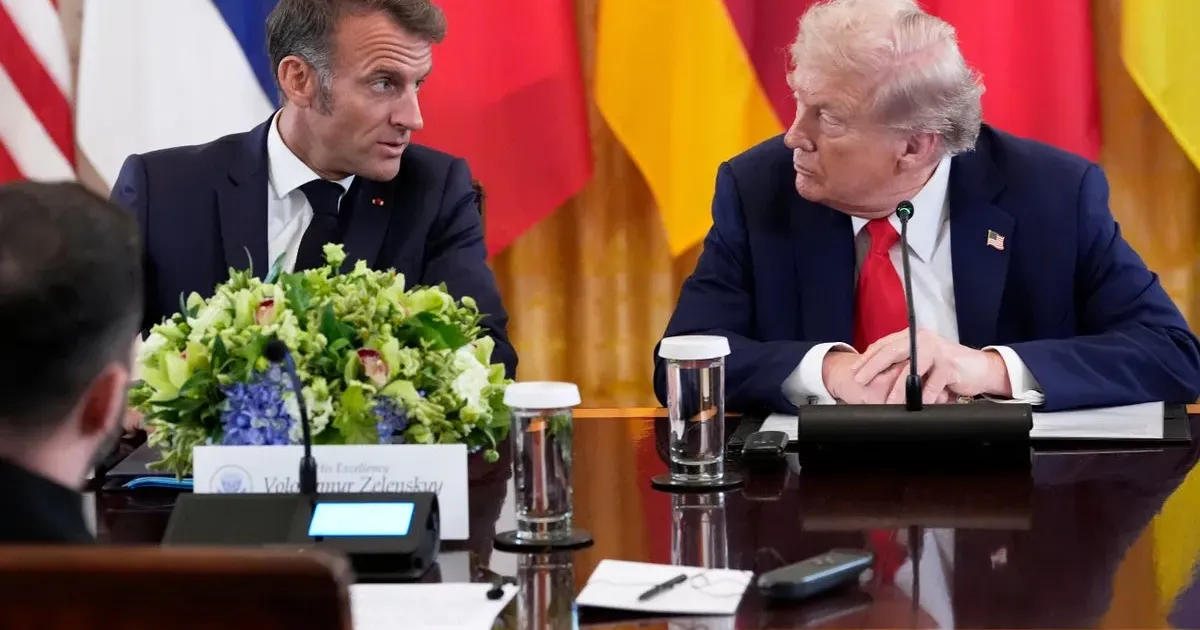
Emmanuel Macron's response to Donald Trump's comments about his marriage was sharper than silence but smaller than a diplomatic rupture. Trump had mocked a viral clip involving Brigitte Macron and suggested that the French president was being treated badly by his wife. Macron said the remarks were neither elegant nor up to the standard expected in public life, then declined to make the insult the center of France-U.S. relations.
Macron's restraint mattered. The comment was personal, but the relationship between Paris and Washington was already carrying heavier business: Ukraine, Iran, defense spending, trade, maritime security and European strategic autonomy. Macron's task was to mark a boundary without letting Trump turn a marriage jab into the main event.
France Treated the Presidency as the Target
French political reaction went beyond sympathy for Macron as a person. Even critics of the French president had little reason to welcome an American leader turning the presidential couple into a punchline. The presidency is an institution, and foreign ridicule can trigger a national reflex even when domestic politics remain divided.
The response did not give Macron unity on pensions, budgets, security or Europe; the insult instead landed in a space where personal mockery becomes a question of national dignity. French rivals can oppose Macron while still rejecting the idea that his marriage is fair material for foreign political theatre.
The Viral Clip Was Not the Policy Issue
The underlying video had already been treated by the Macrons as a private, lighthearted exchange that online commentary inflated. Trump revived it for a joke, turning the episode into a diplomacy story. The problem was not that the public had never seen the clip. The problem was a head of state using it to score a personal point against another head of state.
The distinction matters for coverage. Repeating every detail of a spouse-related viral moment does not improve public understanding. The relevant issue is how leaders use private material once it becomes part of public politics.
Private Mockery Becomes Public Work
Modern diplomacy has almost no clean wall between private performance and public record. A lunch comment, a donor-room joke or a camera-side aside can become an international headline before aides have time to contain it. Once a private remark becomes an international headline, ambassadors and advisers have to spend time answering questions they did not create.
The diplomatic cleanup is the hidden cost of this kind of insult. It does not automatically stop intelligence sharing, military coordination or trade talks. It does consume attention and goodwill. Officials still do the work, but the room becomes colder.
Policy Machinery Kept Moving
The later Macron-Trump diplomacy showed that the relationship did not collapse. Macron hosted Trump at Versailles in June for talks focused on Ukraine and wider security issues, and French officials portrayed the meeting as productive. The follow-up does not erase the earlier insult. It shows how allied diplomacy often continues even after public disrespect.
For France, the balance is familiar. Macron has often tried to manage Trump through ceremony, direct engagement and strategic flattery when useful. The marriage-jibe episode made that approach harder to sell at home, but not impossible to continue abroad.
Trump's Style Carries a Diplomatic Cost
Trump uses personal mockery because it works with some audiences. It dominates attention, forces a response and signals dominance to supporters who like politics as confrontation. The problem is that allied diplomacy is not a rally stage.
France is a nuclear power, a NATO ally, a permanent member of the UN Security Council and a central actor in European security. Treating its leader's marriage as disposable joke material may seem small compared with war and trade, but small acts of disrespect accumulate. Allies notice when dignity is treated as a negotiating prop.
Macron Chose Boundary Over Escalation
Macron's response was calibrated: reject the comment, refuse to dignify it further, and move back toward policy. The calibrated response was the disciplined choice. Overreaction would have rewarded the insult by making it the week's main bilateral issue. Silence would have let the standard slide.
The episode therefore says less about the Macron marriage than about the maintenance cost of alliance politics under personal-performance leadership. Countries can keep working together after an ugly remark. They should not pretend the remark has no cost. It leaves other people to repair seriousness after a leader has spent it for a joke.