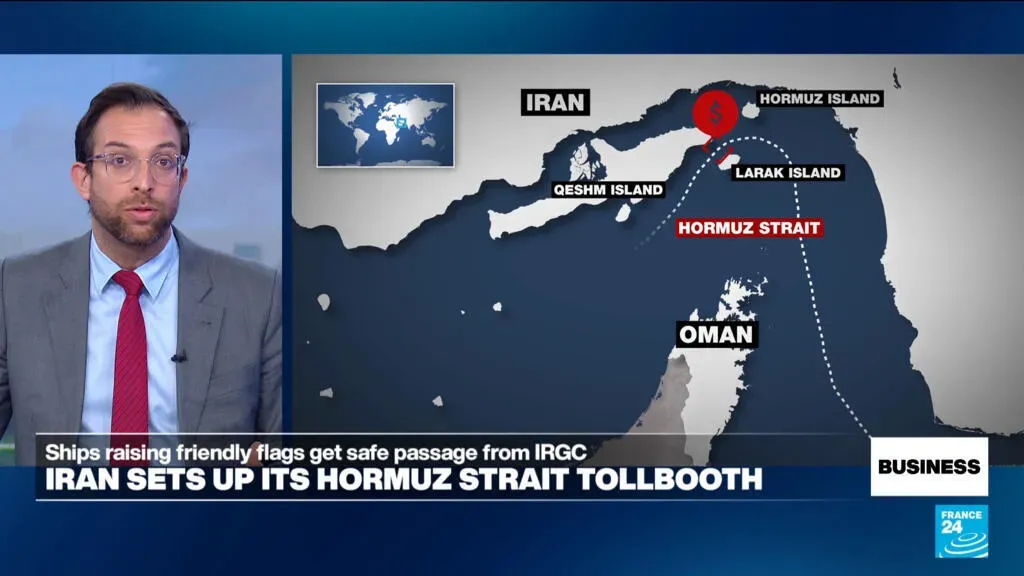
The fight over tolls, fees and shipping guarantees in the Strait of Hormuz shows how quickly maritime security can become an energy-price problem. President Donald Trump's talk of charging ships for protection, followed by a retreat from the proposed 20% toll, did not remove the market concern. It confirmed that the rules around one of the world's most important energy routes are being improvised under pressure.
The improvisation is the problem for oil traders, tanker operators and importing governments. Hormuz does not need to be fully closed for costs to rise. The market only needs to believe that passage is becoming conditional, contested or politically negotiated from week to week.
The Toll Idea Turned Security Into a Price Signal
A toll on cargo through Hormuz would not have been a normal port fee. It would have implied that a U.S.-led security guarantee had become a chargeable service around a chokepoint used by many countries, including allies, rivals and neutral buyers. Even if the policy never settled into law, the idea itself changed the conversation.
Shipping companies and insurers respond to uncertainty faster than diplomats resolve it. Once tolls, blockades and escort conditions enter the same debate, war-risk premiums, charter costs and route planning all become more cautious. Those costs can move long before a tanker is actually stopped.
Trump's Burden-Sharing Complaint Has a Real Audience
The White House argument is not baseless. Asian and European importers depend heavily on Gulf energy flows, and U.S. naval power has often carried a disproportionate share of the security burden. Asking beneficiaries to contribute more is a legitimate strategic debate.
The weakness is method. Maritime security requires legal authority, command structures, rules of engagement, insurance coordination and diplomacy with Gulf states. A public fee threat can pressure partners, but it cannot by itself create a stable convoy system. If allies hear burden sharing as unilateral billing, they may hesitate rather than mobilize.
Iran Gains When the Rules Look Unsettled
Iran does not need to close Hormuz completely to create leverage. Ambiguity can be enough. If tanker operators slow movements, insurers lift premiums and importers begin arguing over naval roles, Tehran has already increased the cost of pressure on itself and its adversaries.
Loose toll language can therefore help Iran indirectly. It blurs the distinction between security enforcement and political bargaining. A contested waterway becomes even harder to normalize when Washington and Tehran both appear to be changing the operating rules around passage.
Asian Importers Face the Hardest Balance
Japan, South Korea, India and China all have reasons to protect Gulf flows, but none wants to be pulled casually into a U.S.-Iran confrontation. Their exposure is economic first: crude, LNG, petrochemicals, manufacturing costs, shipping schedules and inflation. Their military response has to be calibrated carefully because every escort decision carries diplomatic meaning.
Importer caution is part of the market price. If importers delay decisions, shipowners assume protection will be uneven. If they join too visibly, Tehran may treat them as aligned participants. The security math is therefore political as well as naval.
Insurance Markets Punish Confusion
The hidden bill from Hormuz uncertainty often arrives through insurance and logistics rather than the crude benchmark alone. War-risk premiums can rise. Crews may need extra compensation. Cargo owners may demand more documentation. Vessels may wait, reroute or sail with stricter security protocols. Each adjustment adds cost.
Insurance and logistics costs then move outward into fuel bills, airline expenses, food distribution and industrial input prices. A toll proposal can disappear from the official agenda and still leave behind a higher risk premium if private companies believe the policy environment remains unstable.
Energy Security Needs Rules Before the Next Shock
Hormuz cannot be managed as a running improvisation. Importers may need to contribute more to maritime security, but the arrangement has to be clear enough for shipping companies to plan around it. Shared command, transparent rules of passage, Gulf-state diplomacy and a defined role for non-U.S. importers matter more than dramatic fee language.
Otherwise burden sharing becomes burden shifting. Washington demands payment, allies hesitate, Iran exploits ambiguity and the market charges everyone through oil, freight and insurance. The waterway is too important for that. A chokepoint that carries a large share of global energy trade needs rules that are boring, public and durable. When the rules feel improvised, the bill spreads far beyond the ships in the strait.