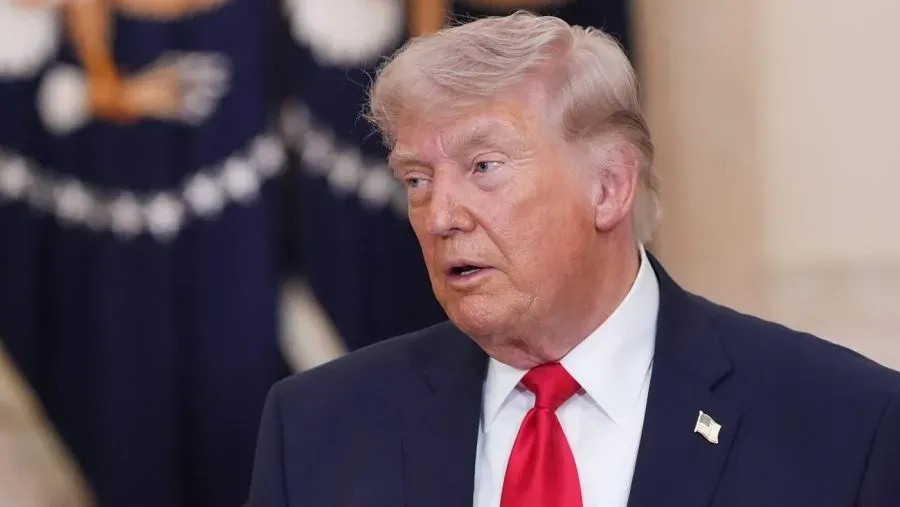
President Donald Trump declared on April 2, 2026, that his administration will launch a final phase of intensive strikes against Iran. Following a conflict that has lasted 32 days, the White House maintains that Iranian capabilities have diminished sharply. Military planners in Washington and Tel Aviv are now coordinating a three-week window of escalated aerial bombardment designed to eliminate remaining defensive infrastructure. Trump signaled that these operations aim to pressure Tehran into a diplomatic settlement that would allow the Iranian state to survive only under strict international oversight.

GOP leadership in both chambers of Congress confirmed full support for the funding required to sustain these expanded operations. Mike Johnson, serving as Speaker of the House, recently coordinated with Senate Majority Leader John Thune to ensure the Department of Homeland Security receives a large injection of capital. This funding replenishment is intended to secure domestic infrastructure against potential retaliatory cyberattacks or asymmetric threats while the military focuses on overseas objectives. Trump expressed gratitude for the legislative unity, noting that a consolidated Republican front is essential for the final push in the Middle East.

GOP Leadership Secures Funding for Iranian Conflict Operations

Legislative priorities have shifted rapidly to accommodate the financial demands of the 32-day-old war. The unified Republican stance on Department of Homeland Security funding marks a shift in internal party dynamics, where previous fiscal disagreements have been set aside. Thune and Johnson told reporters that the plan to reload funding is moving forward without delay. High-level meetings at the Capitol suggest that the administration views these funds as a requirement for the aggressive military schedule outlined by the president. Domestic security remains a high priority as the theater of war expands.

Military objectives are on track to be completed shortly, according to White House assessments. Trump used a late-evening address to inform the public that the next two to three weeks will see the most meaningful application of American power since the conflict began. The rhetoric coming from the Oval Office suggests a desire to return Iranian industrial and military capacity to a primitive state. While the president speaks of destruction, he simultaneously insists that discussions for a peaceful resolution are ongoing. Tehran faces a choice between total collapse and a conditional surrender.

Graham Outlines Parameters for Iranian Survival Under Trump

Senator Lindsey Graham offered a window into the administration’s long-term diplomatic strategy during a briefing on Wednesday. Graham stated that the president is willing to negotiate a deal that would permit the Iranian government to continue its existence. Such an arrangement would require Iran to adhere to rigorous conditions that essentially strip the nation of its regional influence. Graham emphasized that the goal is not necessarily the total erasure of the Iranian state but its complete neutralization as a global threat. The senator described the current situation as a final opportunity for the leadership in Tehran to avoid total annihilation.

International observers are closely monitoring the conditions Graham described. These terms likely include the permanent dismantling of nuclear research facilities and the cessation of support for regional proxy groups. Projections from the State Department indicate that the administration expects a diplomatic breakthrough only after the next wave of strikes. Trump believes that the threat of being sent back to the Stone Age provides the necessary leverage for a lasting agreement. Stability in the region hinges on whether the Iranian leadership accepts a subordinate role in the new Middle Eastern order.

Economic pressure accompanies the military buildup. Sanctions have already crippled the Iranian rial, and the forthcoming strikes target the few remaining oil processing plants that fuel the national economy. Lindsey Graham noted that the president’s willingness to do a deal is contingent on immediate and verifiable compliance. Success in this effort would allow the United States to declare a victory without a long-term occupation of Iranian territory. The administration is betting that extreme force will preclude the need for a decades-long presence.

Kent Warns of Divergent American and Israeli Strategic Goals

Internal dissent within the national security apparatus surfaced when Joe Kent, the former director of the National Counterterrorism Center, resigned his post. Kent argues that the United States must restrain Israel if it hopes to successfully exit the conflict. He suggests that while Washington seeks a quick conclusion to the war, Israel appears committed to an indefinite military engagement. Kent’s departure highlights a mounting concern among some intelligence officials that American and Israeli interests are no longer perfectly aligned. He believes a victory declaration is impossible if the U.S. remains tethered to the broader regional ambitions of its primary ally.

"We do not honor our fallen by getting more of our best men & women killed in the Middle East. We honor our fallen by learning from our past & only shedding American blood in defense of our nation," Kent wrote.

The former counterterrorism chief warned that wars of choice often become traps for American resources and lives. Kent advocated for an immediate withdrawal, suggesting that the best time to exit a conflict is before the costs become unsustainable. His critique focuses on the risk of being dragged into a wider regional fire that serves foreign interests over American domestic safety. Trump, however, has dismissed these concerns, choosing instead to focus on the immediate impact of his 32-day campaign. The president maintains that the U.S. is close to ending a sinister threat forever.

Israeli military officials have not commented directly on Kent’s assertions. Cooperation between the Pentagon and the Israeli Defense Forces stays strong for the time being. Tactical coordination for the upcoming three-week strike window is already complete. Military analysts suggest that the divergence in goals may only become a crisis after the initial bombardment ends. If Israel demands further incursions that the U.S. is unwilling to support, the current unity could fracture. For now, the administration continues to promote a narrative of shared objectives and mutual success.

Pentagon officials are preparing for the logistical challenges of a high-intensity aerial campaign. Carriers in the Persian Gulf are at a heightened state of readiness. Air Force wings stationed in the region have received orders to maximize sortie rates over the coming fortnight. Trump insists that this displays American resolve to the rest of the world. He believes a show of overwhelming force will discourage other regional actors from intervening on behalf of Tehran. The global community is watching the clock as the three-week deadline approaches.

The Elite Tribune Strategic Analysis

History offers few examples of superpowers successfully executing a clean exit after initiating a war of choice against a regional power. The Trump administration is attempting a high-stakes gamble by combining total military devastation with a conditional diplomatic lifeline. While the rhetoric of returning a nation to the Stone Age appeals to a specific domestic base, it creates a vacuum that rarely stays empty for long. Trump’s insistence that Iran is no longer a threat after 32 days seems premature given the historical resilience of the Iranian revolutionary apparatus and its deep-rooted proxy networks.

The tension highlighted by Joe Kent is the most credible threat to the president’s exit strategy. Israel’s security calculus requires the total removal of the Iranian regime, whereas the White House is signaling a willingness to let that regime exist as a neutered shell. This fundamental misalignment suggests that the United States is being led into a tactical victory that masks a strategic mess. If Washington refuses to restrain Tel Aviv, the 32-day war will inevitably transform into a multi-year entanglement that drains the very treasury Mike Johnson and John Thune are currently trying to replenish. Peace through strength is a viable slogan, but strength without a clear, independent end-state is merely a precursor to exhaustion.

Victory requires not merely bombs. It requires a partner in Tehran willing to accept humiliation, a scenario that contradicts decades of Iranian political theology. Trump is essentially demanding that the Islamic Republic sign its own death warrant while calling it a deal. This approach will likely result in a prolonged insurgency rather than the clean victory the administration is currently advertising. The world is indeed watching, but it is watching for the inevitable moment when the strikes end and the reality of a fractured, angry region sets in.