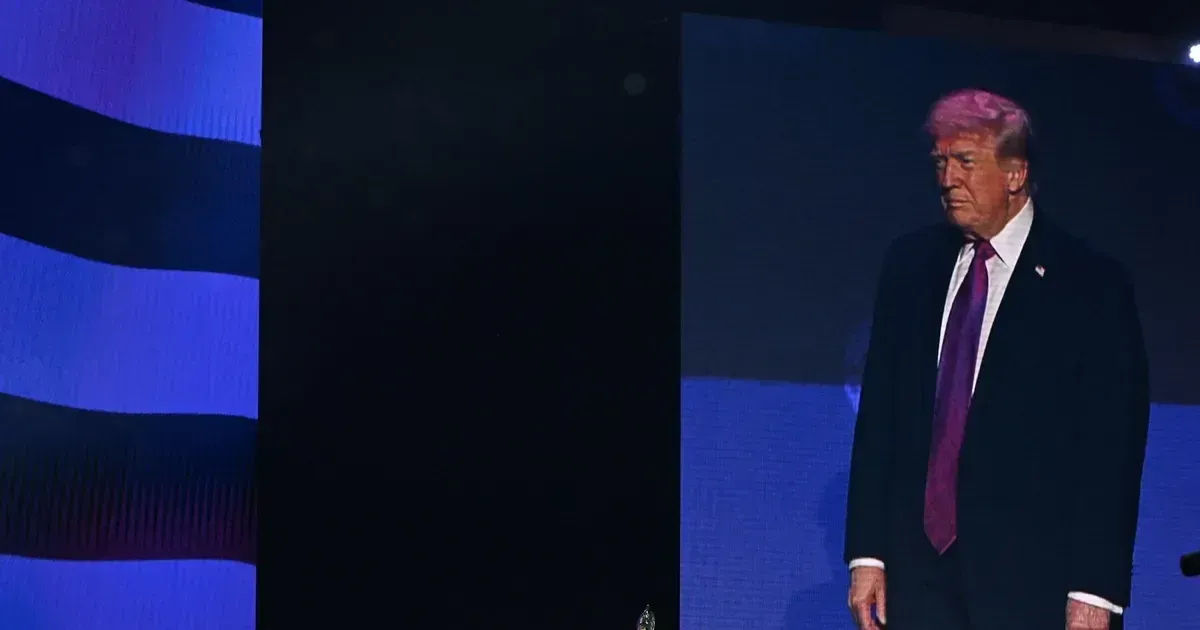
Donald Trump arrived in Phoenix on April 18, 2026, to promote his administration's energy goals during a rally at the state fairgrounds. Appearing before several thousand supporters, the president focused on the economic implications of the nearly two-month-long war in Iran. Voters in Arizona, a state often considered a barometer for national sentiment, listened as the president connected global military actions to domestic pocketbook issues. Energy costs have dominated the political conversation since the start of hostilities in late February. Recent fluctuations in global crude markets provided the backdrop for a speech that sought to reassure a nervous electorate before the upcoming November contests.
Arizona continues to hold a primary position in the Republican strategy for the 2026 midterms. Republicans currently face a difficult map as they defend seats in both the House and Senate. Economic indicators often dictate the success of an incumbent party, and energy prices are the most visible of these metrics. Republican strategists have identified fuel costs as the single most important factor for suburban voters in Maricopa County. Trump spoke for nearly ninety minutes, alternating between military updates and retail price projections. Crude oil prices showed a downward trend over the previous forty-eight hours.
Gasoline prices in the Phoenix metropolitan area peaked at $5.12 per gallon earlier this month. Supply-chain disruptions resulting from the conflict in the Persian Gulf initially sent prices soaring across the Western United States. West Coast refineries rely on a specific mix of imported and domestic crude, making them particularly sensitive to maritime security. Despite these pressures, the national average for a gallon of regular unleaded dropped to $3.45 this week.
This price correction offers a reprieve for an administration that has been on the defensive regarding the war's duration.
"The price of oil and gas was coming down," Trump stated during his address.
Energy Markets Shape the Phoenix Message
Global energy markets reacted to the deployment of additional naval assets to the Strait of Hormuz by pricing in a significant risk premium. Trading desks in London and New York initially feared a total blockage of energy exports. Traders now see a stalemate that allows for limited but consistent tanker traffic.
Iran maintains several coastal batteries that threaten shipping, yet international escorts have maintained the flow of crude. Markets have begun to discount the risk of a broader regional fire. Energy analysts at several major firms noted that global supply remained higher than expected due to increased production in the Permian Basin.
Domestic production reached 13.4 million barrels per day according to the latest figures from the Department of Energy. Republican officials argue that this increase in output is a direct result of deregulation policies enacted over the last year. Critics in the Democratic Party point to pre-existing lease agreements and a global slowdown in demand as the true drivers of the price drop. Political tension in Arizona remains high as both parties attempt to claim credit for the cooling of inflation. Voters in the state have seen a 4 percent decrease in utility costs over the last quarter. These savings are a cornerstone of the Trump reelection narrative.
Political Stakes of the 2026 Midterm Elections
Control of the legislative branch hangs in the balance as the 2026 campaign cycle enters its most aggressive phase. Republicans currently hold a narrow majority in the House of Representatives. Senate races in Arizona, Georgia, and Pennsylvania are expected to determine which party sets the agenda for the final two years of the term. Fundraising totals for the first quarter of 2026 show the Republican National Committee slightly ahead of its rivals. Trump has prioritized rallies in states with high-stakes Senate contests. His visit to Phoenix is the third such stop in the Southwest this month.
Incumbent candidates often struggle to maintain support during active military conflicts. The war in Iran has tested the patience of the American public as the eight-week mark approaches. Polls conducted by local media outlets in Arizona suggest that voters are split on the necessity of the intervention. Support for the war often mirrors perceptions of the economy. If gas prices continue to fall, the political risk associated with the conflict may diminish. Presidential advisers have urged a focus on domestic benefits to offset the costs of overseas operations. The strategy depends on the stability of the energy market.
War Pressure on Domestic Fuel Costs
Refineries along the Gulf Coast have adjusted their operations to account for the loss of specific heavy crude grades. Military action in Iran effectively removed 1.5 million barrels of daily production from the global market. Saudi Arabia and the United Arab Emirates have partially offset this loss by using their spare capacity. This coordinated effort helped prevent a global energy crisis during the initial weeks of the invasion. Logistics companies have seen insurance premiums for tankers rise by 300% since February. Higher shipping costs usually translate to higher prices at the pump for consumers in the United States.
Strategic Petroleum Reserve releases have also played a role in stabilizing the domestic market. The administration authorized the sale of 15 million barrels over a thirty-day period to combat price gouging. Some economists argue that these releases have a psychological impact that outweighs their physical volume. Markets respond to the signal that the government is willing to intervene. Domestic fuel inventories rose by 2.4 million barrels last week. This surplus provides a cushion against future supply shocks in the Middle East. Refiners in California and Arizona are now receiving higher volumes of crude via pipeline from the interior.
Arizona Voter Sentiment and Economic Pressure
Maricopa County remains the most contested territory in the American political geography. Independent voters make up nearly a third of the registration in Arizona. These individuals typically prioritize economic stability and national security over partisan loyalty. Trump addressed these concerns by highlighting the recent drop in the consumer price index. Inflation had been a persistent problem for his administration before the war began. The current downward trend in energy costs may provide the momentum needed to win over undecided voters. Campaign staff reported record-breaking attendance at the Phoenix event.
Local businesses in Phoenix have expressed concerns about the long-term impact of high interest rates. The Federal Reserve has maintained its current stance to prevent the war-driven energy spike from becoming embedded in the economy. Lower gas prices could allow the central bank to consider a rate cut before the midterms. Such a move would sharply boost the housing market in the Southwest. Construction remains a primary driver of the Arizona economy. Trump mentioned the possibility of rate relief during his closing remarks to the crowd. Prices at the pump dropped four cents on average over the last week.
Campaign Risk in Arizona
Electoral victory in the United States rarely hinges on foreign policy detail when the cost of a commute stays a daily grievance. Donald Trump understands that the war in Iran is a political liability unless it can be framed as a temporary hurdle on the path to energy independence. By focusing on falling gas prices in Phoenix, he is attempting to decouple the conflict from the economic pain it initially caused. It is a gamble that relies on the continued stability of global oil markets which are notoriously fickle during wartime. If a single tanker is sunk in the Strait of Hormuz tomorrow, the rosier picture painted in Arizona will evaporate instantly.
The administration is effectively using the Strategic Petroleum Reserve as a campaign tool. While the technical goal is market stability, the political goal is voter retention in swing states like Arizona. Republicans are desperate to avoid a midterm shellacking that would turn the president into a lame duck. They are betting that voters will forget the $5 gallon of gas if the price is $3.50 on election day. History suggests that the American electorate has a short memory for price spikes but an enduring grudge against sustained inflation. Trump is banking on the former to carry his party through November. Politics beats policy.