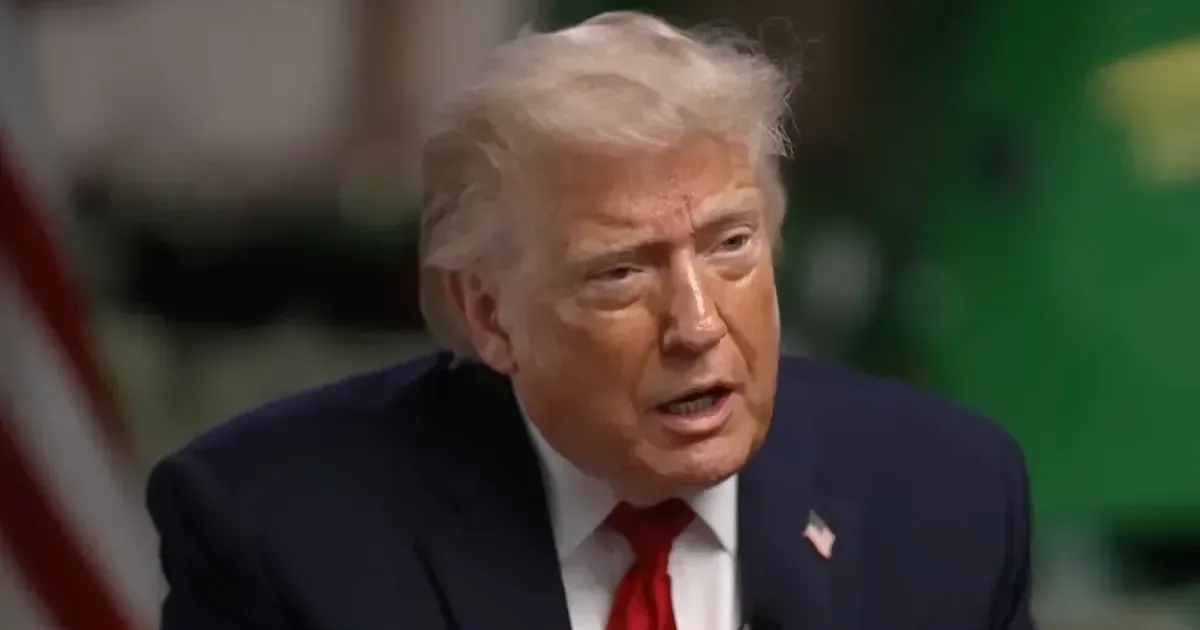
President Donald Trump combined a personal appraisal of Iran's new leadership with a threat of military intervention during a high-stakes television broadcast. The uranium dispute gives the White House a direct nuclear-access test. It also raises the risk that military threats replace inspection diplomacy. Speaking with Kristen Welker in an interview aired on Sunday, the president outlined a path toward a potential peace settlement while maintaining that the current conflict will not devolve into a forever war. The interview aired on June 7, 2026, as he described the new supreme leader of the Islamic Republic as more rational than his predecessor, citing the injuries the leader sustained as a sign of bravery. This assessment marks a sharp change in tone regarding the Iranian hierarchy, even as military tensions continue to rise across the region.
Welker pressed the president on his earlier promises to avoid engaging the United States in protracted foreign conflicts. Trump told Sunday TODAY that the current situation is not a mess and insisted his administration is not facing an endless engagement. He positioned the conflict as a transactional struggle for security and resource control, specifically targeting Iran's nuclear capabilities. Economic stability was also a central theme of the discussion, with the president linking the resolution of the war to domestic financial health and his broader political agenda.
Trump Labels New Supreme Leader More Rational
Trump provided a detailed perspective on the current Iranian supreme leader, whom he characterized as a younger and more logical figure compared to previous heads of state. Trump said the leader's injuries influenced his assessment of the man. Such personal commentary from a sitting president often serves to signal a willingness to engage in direct negotiations, provided the counterpart meets specific criteria for rationality. By framing the leader as someone capable of making sensible decisions, the administration appears to be leaving a narrow door open for a diplomatic exit from the conflict.
Intelligence reports and media outlets have closely monitored the shift in Iranian leadership, looking for signs of a policy reversal or a consolidation of power. Trump’s belief that the younger leader might be more amenable to a deal suggests the White House is betting on a change in the internal political dynamics of Tehran. The perspective contradicts some hawkish views in Washington that suggest Iranian leadership remains inherently resistant to Western compromise. If the supreme leader is indeed acting with more rationality, the logic of the administration suggests a deal could be reached before further military escalation becomes necessary.
Force is a primary lever in these negotiations.
Uranium Seizure Threatened Amid Failed Peace Talks
Military intervention remains a potent threat if the proposed peace deal fails to materialize in the coming weeks. Trump stated explicitly that he would blow the hell out of them if an agreement regarding nuclear assets is not secured. A core component of this ultimatum involves the direct seizure of Iran's uranium stocks by force. According to a report from Newsweek, any acceptable agreement must place strict limits on the ability of the Islamic Republic to develop or acquire nuclear weapons. The president’s focus on uranium reflects a hardline stance on non-proliferation that goes beyond the rhetoric of traditional diplomacy.
"He is pretty badly injured. So there is a certain bravery there."
Action against Iranian nuclear facilities has long been a point of debate among security analysts, but the threat to physically take the uranium suggests a more direct ground or specialized operation. Trump’s language implies that the window for a negotiated settlement is closing. He maintains that the United States will not allow the development of a nuclear-armed Iran, regardless of the military cost involved. The stance places the burden of proof on the Iranian leadership to demonstrate their commitment to a peaceful resolution before the administration pivots to full-scale military action.
Agreements require verifiable transparency to satisfy the current administration's red lines.
Forever War Rhetoric Meets Military Ultimatum
Assurances that the United States is not entering a forever war were a focal point of the president's interview with Welker. Trump dismissed the idea that the country is stuck in a mess, arguing that his approach is designed for a swift conclusion. He emphasized that his goal is to avoid the decades-long entanglements that characterized previous administrations. By setting clear objectives related to uranium and nuclear limits, the president is attempting to frame the conflict as a finite task rather than an open-ended occupation. Critics, however, have questioned whether such a bold military threat can truly result in a quick exit.
Economic impacts of the war also weighed heavily on the president’s messaging during the broadcast. He argued that ending the conflict on favorable terms would stabilize global markets and benefit the American worker. Trump’s insistence that the war is manageable and temporary is a defense against political rivals who claim the administration has overextended American resources. Every move in the region is now being viewed through the lens of this promise to avoid a permanent military presence.
Threats and Praise Form a Risky Nuclear Strategy
Traditional diplomacy often separates personal admiration from military threats, but the current administration blends the two into a transactional strategy. By praising the supreme leader's bravery while threatening to destroy his nuclear infrastructure, the president is using a carrot-and-stick approach that relies heavily on personal chemistry and overwhelming force. The strategy suggests that the White House views the Iranian leadership not as a monolith, but as a group of actors who can be influenced by a mix of respect and fear. The focus on uranium seizure specifically marks a shift toward resource-based warfare, where the physical removal of a threat is preferred over long-term containment.
National security advisors are likely preparing for a scenario where these threats must be executed if the rational leader fails to meet the nuclear demands. If the administration successfully avoids a mess while achieving its nuclear goals, it would validate the president's claim that limited, high-intensity actions are superior to permanent deployments. The risk remains that a failure to reach a deal could force the president’s hand, leading to the very type of extended conflict he has promised to avoid. Success depends entirely on the accuracy of the president's assessment of the supreme leader’s rationality. The next few months will determine if this gamble pays off or if the region faces a much larger escalation.