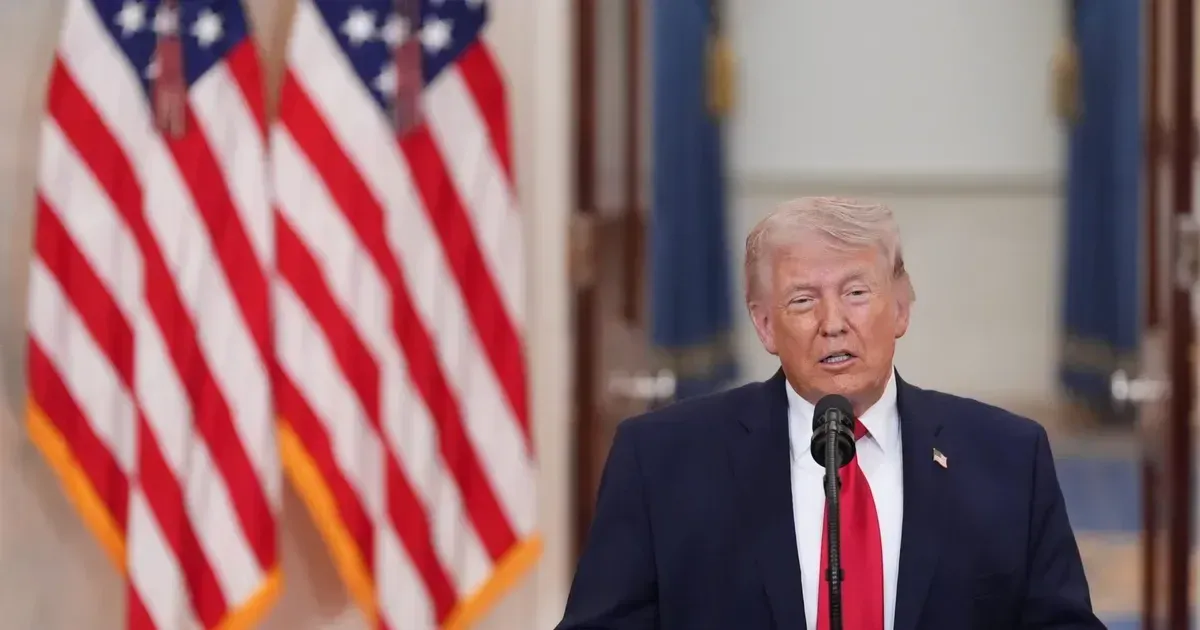
Trump threats against Iran rattled energy markets as investors weighed the risk of a wider Persian Gulf conflict. Shipping warnings, oil volatility and stock-market pressure followed the White House rhetoric. Traders were watching whether rhetoric would become a direct threat to maritime traffic. The market reaction unfolded on April 5, 2026, as traders considered whether military escalation could disrupt shipping, lift fuel costs and weaken confidence in American security leadership.
Traders anticipate that any intensification of hostilities will drive crude prices considerably higher. Brent crude futures rose in early trading hours, reflecting concerns over supply stability in the Middle East. Bond yields also experienced fluctuations as investors sought safe-haven assets in response to the aggressive rhetoric coming from Washington. This development marks a departure from more restrained diplomatic approaches, suggesting a preference for military use over traditional negotiation. Economic stability depends heavily on the regional status quo, which now appears increasingly fragile. Petroleum markets are pricing in a high probability of supply chain fractures.
Persian Gulf Shipping Traffic Collapses
Shipping traffic through the Strait of Hormuz has reached historic lows as the threat of open warfare looms over the region. Recent data indicates that daily transits have plummeted to a handful of vessels, down from an average of 135 ships per day prior to the onset of the current conflict. Iran currently allows passage mainly for its own exports, effectively creating a blockade for neutral international commerce. This constriction puts roughly one-fifth of global oil flows at risk, a volume that the global energy market cannot easily replace. Private insurance premiums for tankers attempting the crossing have reached levels that make most commercial voyages economically unfeasible.
“The free flow of commerce through the strait is a larger principle at stake in this conflict,” said retired Vice Admiral John W. Miller, former commander of US Fifth Fleet in Bahrain. “Failure to ensure freedom of navigation in Hormuz puts global freedom of navigation everywhere at risk.”
Maritime security in the Persian Gulf has been a foundation of global trade since the end of World War II. American naval forces traditionally provided the security guarantees necessary for the $35 trillion global goods trade to function with minimal friction. Withdrawal from this role or a failure to maintain security in the strait would represent a break with decades of established policy. Such a shift endangers the transport of oil, natural gas, and various commodities that pass through this critical chokepoint daily. Lloyd’s of London has already designated the entire region as a high-risk zone, further driving up the cost of logistics.
Economic Shocks Ripple Through Global Markets
Financial institutions are now recalculating risk models as the prospect of a prolonged maritime shutdown grows. The Strait of Hormuz is the primary artery for energy exports to both Europe and Asia. If the passage remains restricted, energy costs for manufacturers in these regions could double within a single fiscal quarter. Bloomberg sources suggest that the threat of reduced security in the Gulf is shaking confidence in the American role as the guardian of the high seas. Rising energy costs typically act as a tax on consumers, reducing discretionary spending and slowing overall economic growth. Inflationary pressures, which central banks have struggled to contain, could find new momentum in this environment.
Asian officials, speaking on the condition of anonymity, expressed grave concerns about energy security for their manufacturing hubs. Japan and South Korea depend almost entirely on imports that must navigate the Persian Gulf. Any long-term disruption would force these nations to seek alternative, more expensive suppliers or tap into strategic reserves. Recent intelligence suggests that China is already increasing its procurement of Russian energy to offset potential losses from Middle Eastern sources. Shifting security calculations around key chokepoints are forcing every major economy to rethink its reliance on US-led security frameworks. Dependency on a single maritime protector now looks like a strategic vulnerability.
Erosion of American Maritime Security Leadership
American wealth and power have long been tied to the ability of the Navy to deter attacks and counter piracy on the oceans that cover more than 70% of the Earth’s surface. By threatening to leave the Persian Gulf to secure itself, Donald Trump challenges the fundamental logic of the post-war international order. Critics argue that abdication of this responsibility will invite other powers to assert control over essential sea lanes. European diplomats have stated that the conflict has eroded faith in Washington’s ability to manage the consequences of the war.
Security in the Persian Gulf extends beyond the region; it is a global economic necessity. A permanent reduction in US presence could lead to a fragmented maritime landscape where different powers enforce their own rules of passage.
History suggests that maritime vacuums are rarely left unfilled. If the US Fifth Fleet reduces its operations, regional actors like Iran or external powers like China may step in to fill the role, albeit with different priorities. Such a transition would likely involve new tariffs, transit fees, or political conditions for safe passage. The Trump administration’s current path suggests a prioritization of short-term military objectives over the long-term maintenance of the global commons. International trade agreements are often secondary to the physical security of the routes they use.
Without the Navy’s guarantee, the very concept of free trade becomes a theoretical exercise rather than a practical reality. Iranian exports continue to flow while international tankers remain anchored in the Gulf of Oman.
Market Risk From Iran Escalation
Relinquishing control over the world’s most essential maritime chokepoints is a calculated gamble that threatens to bankrupt the logic of American global leadership. While the Trump administration frames this as a necessary pivot to force regional partners into greater self-reliance, the reality is a dangerous abdication of power. Washington is essentially handing a veto over the global economy to Tehran. By allowing the Strait of Hormuz to become an Iranian lake, the United States loses its most potent non-nuclear lever of influence. This is not a strategic realignment; it is a tactical retreat that invites economic catastrophe.
Economic historians will likely view this period as the moment the American security umbrella began to fold under its own weight. The $35 trillion in global trade that depends on open sea lanes cannot survive in a world of localized, predatory maritime enforcement. If the Navy stops patrolling, insurance companies will effectively shut down global shipping through sheer price inflation. Every dollar saved on naval deployments will be lost ten times over in domestic energy costs and supply chain delays. A retreat now ensures the US pays a higher price later to regain what it voluntarily discarded. A strategic disaster.