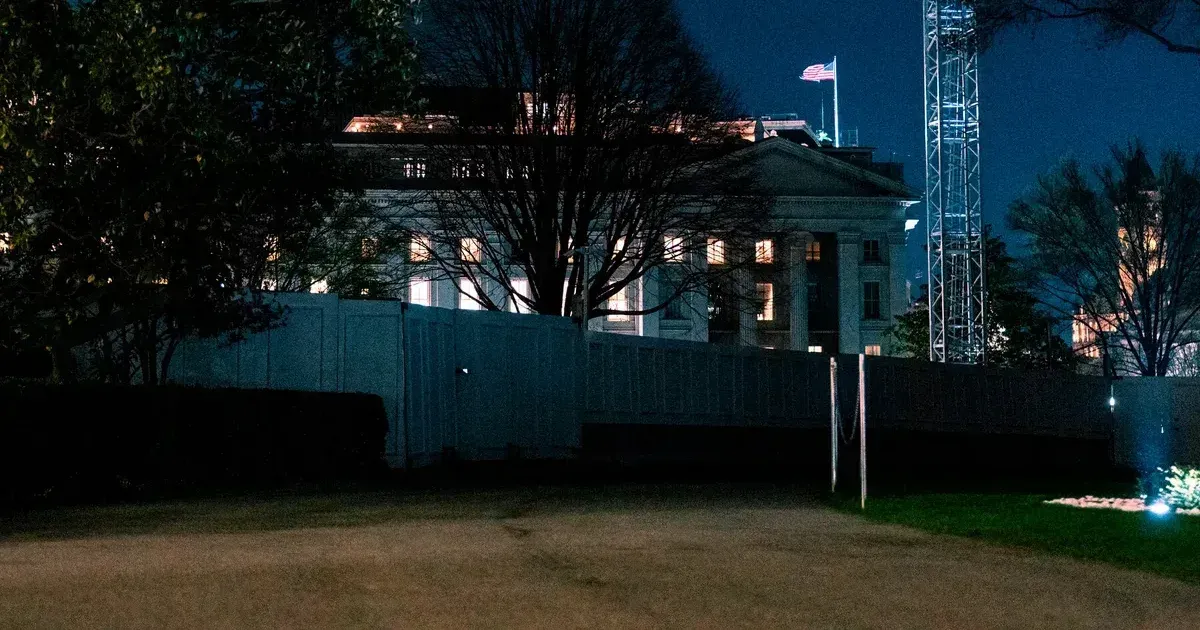
Donald J. Trump is using national security language to defend a widening suite of domestic policy objectives that critics say fall outside traditional defense boundaries. The April 15, 2026, push widened a fight over executive power. Administrative officials have increasingly relied on these designations to bypass standard regulatory hurdles and legislative oversight. Legal filings indicate that this classification now covers everything from internal structural renovations to the placement of renewable energy infrastructure on the Atlantic coast.
National security justifications historically focused on immediate threats from foreign adversaries or the protection of critical military assets. Recent executive maneuvers, however, suggest a broader interpretation that covers aesthetic preferences and commercial land use. Advocates for the administration argue that the President must have absolute discretion to determine what constitutes a threat to the republic. Opponents claim the tactic is a mechanism to evade the Administrative Procedure Act and other transparency laws.
Executive orders issued over the last year have frequently cited the need to protect the sovereign interests of the United States. These documents often lack specific details regarding the exact nature of the threat. Legal scholars from Harvard and Oxford have pointed to the rising use of Section 232 of the Trade Expansion Act as a template for this expansion. Use of such authorities allows the executive branch to impose tariffs or restrict projects without the usual public comment periods required for federal rule-making.
White House Ballroom Renovations Trigger Legal Reviews
Renovations within the White House became a focal point of this legal strategy when the administration classified the ballroom upgrades as a matter of classified defense infrastructure. Defense officials argued that the physical layout of the building is integral to the security of the commander in chief. This move effectively shielded the project from budgetary audits and public disclosure of vendor contracts. Congressional investigators attempted to obtain the cost breakdowns but were blocked by non-disclosure agreements tied to the security designation.
Security protocols for the executive mansion are traditionally handled by the Secret Service and the National Security Council. Previous administrations maintained a clear distinction between the maintenance of public spaces and the installation of secure communication facilities. By merging these categories, the current administration has created a legal firewall that prevents outside oversight of interior design spending. Budgetary estimates suggest the total cost for these specific upgrades could exceed $450 million.
An administration legal brief argued that disruption to the White House ballroom's structural integrity could compromise classified conversations in adjacent rooms.
Federal judges have expressed skepticism regarding the breadth of these claims. Judge Merrick Garland previously noted in related cases that the executive branch does not possess a blank check to label any domestic activity as a defense priority. Records show that the administration continues to resist requests for an itemized list of the materials used in the ballroom project. The lack of transparency has prompted a new wave of lawsuits from government watchdog groups.
Offshore Wind Projects Face National Security Obstacles
Offshore wind farms along the Eastern Seaboard represent the latest front in the conflict over executive authority and energy policy. The administration recently paused several multi-billion dollar projects, citing potential interference with military radar and maritime patrol routes. Developers argue these concerns were already addressed during the initial permitting phases. Documents from the Department of Defense suggest that the impacts on radar systems are manageable through existing mitigation technology.
Energy companies have invested billions in leases that are now in a state of indefinite suspension. These firms claim that the national security label is being used as a political tool to favor fossil fuel interests. Proponents of the wind projects cite the 2025 Energy Independence Act as a mandate that should override temporary security pauses. Litigation is currently pending in the Fourth Circuit Court of Appeals. The court scheduled oral arguments for the first week of June.
Military leaders have provided conflicting testimony regarding the actual risks posed by the turbines. Some naval commanders expressed concern about underwater acoustic sensors, while others stated that the turbines do not sharply degrade operational readiness. The administration persists in its stance that the president alone holds the authority to weigh these risks. Market analysts estimate that the uncertainty has stalled over $11 billion in private-sector investment. One developer canceled its contract entirely last week.
Judicial Scrutiny of Executive Branch Emergency Powers
Federal courts are beginning to push back against the frequent invocation of emergency authorities for routine governance. A recent ruling in the District of Columbia challenged the idea that the President can unilaterally redefine security to include economic or aesthetic concerns. Judge Tanya Chutkan wrote that the executive must provide at least a rational basis for such a classification. The ruling did not immediately overturn the policy but required the administration to produce a more detailed justification.
Legal precedents for executive power have shifted sharply over the last four decades. Cases like Youngstown Sheet & Tube Co. v. Sawyer established that presidential power is at its lowest ebb when it contradicts the expressed will of Congress. The administration argues that modern threats are more diffuse and require a more flexible definition of defense. This theory of the unitary executive suggests that the judiciary should defer to the President on all matters touching upon external or internal safety. The Supreme Court has yet to take up a case specifically addressing the ballroom or wind farm designations.
Public opinion on the matter is deeply divided along partisan lines. Surveys indicate that a majority of the electorate views the national security justification as a legitimate tool for a president facing a gridlocked legislature. A meaningful minority, however, sees it as a dangerous precedent that could be used by future administrations to justify even more radical actions. The Department of Justice has reinforced its legal team to handle the growing volume of challenges. Trial dates for three separate cases are set for the fall of 2026.
Security Rationale Faces Court Tests
National security has become the ultimate linguistic loophole for executive action. By branding mundane domestic issues with the nomenclature of defense, the Trump administration is effectively attempting to insulate itself from the constitutional requirement of transparency. It extends beyond a legal strategy to become a fundamental realignment of how the American presidency interacts with the other two branches of government. If a ballroom renovation can be classified as a defense priority, then literally any government expenditure can be shielded from the eyes of the taxpayer. Such a precedent is toxic to the democratic process because it removes the possibility of informed consent.
The judiciary remains the only credible check on this expansion of power. Judges must move past the tradition of extreme deference to the executive in matters of security when the justification is clearly being used to bypass the Administrative Procedure Act. Failure to do so will result in a permanent shadow government where the most basic functions of the state are hidden behind a veil of classification. The current strategy treats the law not as a set of rules to follow, but as an obstacle to be navigated through semantic games. Executive authority without accountability is not leadership.
It is a slow-motion dismantling of the checks and balances that define the American system. Courts will determine whether those security claims can coexist with statutory oversight and constitutional checks.