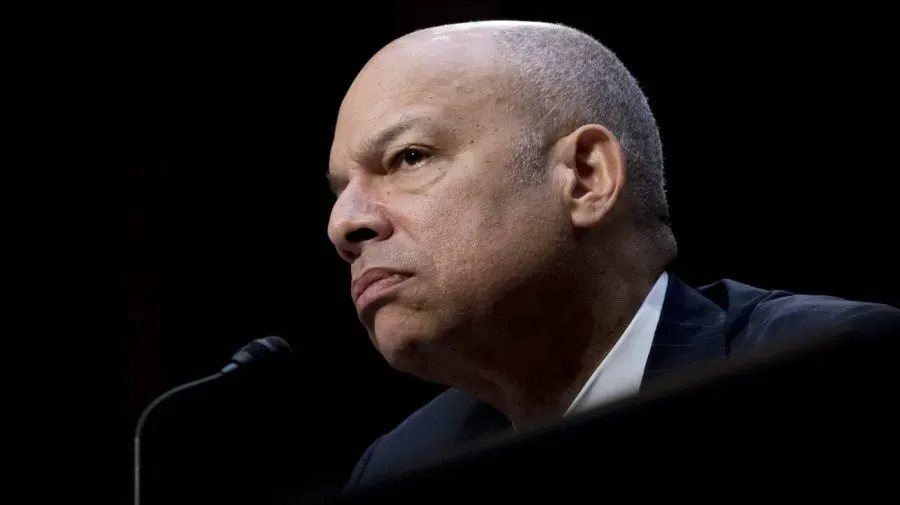
Jeh Johnson issued a sharp demand on March 22, 2026, for Donald Trump and the United States Congress to resolve the budget impasse paralyzing the Department of Homeland Security. Speaking on the radio show Cats Roundtable, the former cabinet official criticized the cyclic nature of federal funding battles that leave essential employees without paychecks. The 34th day of the shutdown has left thousands of federal workers in financial limbo while national security operations face unprecedented administrative strain. Johnson, who directed the agency under the Obama administration, told host John Catsimatidis that political maneuvers must not compromise the safety of the American public or the livelihoods of civil servants.

Speaking on WABC 770 AM, Johnson argued that the ongoing dispute creates systemic vulnerabilities that adversaries could exploit. He noted that the Department of Homeland Security performs functions far beyond border enforcement, including disaster response and cybersecurity. His comments highlight a growing frustration among national security veterans regarding the use of agency budgets as leverage in legislative negotiations. Congressional leadership has yet to provide a timeline for a vote on the latest funding resolution. The department remains without an active budget for the fifth consecutive week.

TSA Operations and Airport Security

But Republican leaders in the Senate indicated on Saturday that a resolution remains elusive as the White House maintains its hardline stance. Tom Homan, the administration's border czar, has engaged in quiet deliberations with centrist Democrats to find a legislative middle ground. These discussions focused on the immediate resumption of pay for Transportation Security Administration workers who have seen high rates of unscheduled absences. Aviation industry analysts predict that these staffing shortages will lead to significant delays at major hubs like Hartsfield-Jackson Atlanta International Airport. Travelers are already experiencing wait times exceeding three hours at security checkpoints.

Meanwhile, the White House shifted its strategy by introducing a new ultimatum involving ICE agents. Donald Trump utilized Truth Social on Saturday to threaten the deployment of immigration officers to commercial airports starting Monday morning. He stated that these agents would take over security duties if Democrats do not approve a funding package immediately. This proposed move would involve agents normally assigned to interior enforcement performing tasks typically handled by the TSA. The President pledged that the deployment would make airports safe again while enabling the arrest of undocumented individuals found in transit.

In fact, the proposed deployment targets specific immigrant communities with a firm hand. The President explicitly mentioned a focus on individuals from Somalia in his Saturday social media posts. This specific targeting has drawn immediate condemnation from civil rights groups and legal experts who question the authority of ICE to replace TSA screeners. Federal aviation laws require specific training for airport security personnel that differs from immigration enforcement protocols. The White House has not clarified whether these agents will receive expedited instruction before Monday.

Negotiating the ICE Masking Ban

Separately, the primary hurdle for a bipartisan agreement centers on a specific policy regarding agent identification. Senate Democrats have insisted on a permanent ban on ICE agents wearing masks during domestic enforcement actions in major cities. This demand follows several high-profile incidents where unidentified agents conducted arrests, leading to public confusion and safety concerns. Republican negotiators have resisted this provision, arguing that masks are necessary to protect the identities of agents involved in dangerous operations. The disagreement over this single clause has stalled the entire $11 billion funding package.

Still, the White House has shown a willingness to concede on other minor immigration enforcement policies in a proposal shared with the Senate on Friday. These concessions involve the prioritization of funding for detention bed space rather than the construction of new physical barriers. Democratic leaders acknowledged the receipt of the proposal but maintained that the masking ban is a non-negotiable requirement for their support. Neither side has scheduled a formal floor debate for the upcoming legislative week. The government has not updated its contingency plan for a sixth week of closure.

Yet the President remains focused on the Monday deadline for airport intervention. He ordered ICE leadership to prepare for immediate relocation to high-traffic aviation centers. Internal memos suggest that agents from field offices in Texas and Arizona are being redirected to metropolitan airports in the Northeast. The redistribution of resources could leave gaps in existing border enforcement operations. The agency is currently operating with a skeleton crew of essential personnel who are working without current pay.

Legislative Stalemate and Border Policy

For instance, internal payroll data indicates that over 200,000 employees within the Department of Homeland Security are currently designated as essential but unpaid. The group includes Coast Guard personnel, Border Patrol agents, and Federal Emergency Management Agency coordinators. Financial institutions have reported an uptick in short-term loan applications from federal workers struggling to meet mortgage obligations. Some states have considered extending unemployment benefits to these workers despite their active duty status. The legal framework for such state-level intervention remains untested in federal court.

In turn, the aviation sector has warned that a deployment of armed ICE agents into terminals could disrupt commercial operations and deter international tourism. Major carriers have already begun adjusting flight schedules to account for the anticipated Monday morning shift in security protocols. Industry leaders expressed concern that the presence of tactical immigration teams in public concourses will create a hostile environment for legitimate travelers. A coalition of airline CEOs issued a joint statement requesting a pause on the deployment until a legal review is completed. The White House has ignored these requests.

Even so, the administration appears committed to its tactical pivot toward airport enforcement. Donald Trump assured his supporters that the move would resolve the security failures he attributes to Democratic obstruction. The President characterized the plan as a necessary step to bypass what he called radical left legislative games. Enforcement teams in the Pacific Northwest have reportedly begun loading equipment for transport to Seattle-Tacoma International Airport. Flight trackers show an increase in federal transport planes moving between regional hubs.

Geopolitical Strategy and Military Readiness

According to reports from the Pentagon, the domestic funding crisis is occurring alongside a complex shift in Middle Eastern military operations. Donald Trump announced on Friday that the United States is winding down its conflict with Iran. He cited the destruction of Iranian defense responses and the degradation of their missile capacity as evidence that primary military objectives have been met. The administration argues that this success allows for a renewed focus on domestic security and border integrity. Military analysts suggest the timing of this announcement is intended to project strength during the budget deadlock.

“If the Radical Left Democrats don’t immediately sign an agreement to let our Country, in particular, our Airports, be FREE and SAFE again, I will move our brilliant and patriotic ICE Agents to the Airports where they will do Security like no one has ever seen before.”

To that end, the President remains adamant that the nuclear ambitions of Tehran have been neutralized. He asserted that the U.S.-Israeli coalition has achieved more in recent weeks than previous administrations achieved in decades. The geopolitical victory is being leveraged as a domestic political tool to demand compliance from the Senate on Department of Homeland Security funding. Defense officials have started drafting plans for the withdrawal of carrier strike groups from the Persian Gulf. The transition of focus from foreign battlefields to domestic airports appears to be a coordinated executive strategy.

By contrast, Democratic critics argue that the President is attempting to distract from the failure of his administration to manage basic government functions. They point to the chaos within the TSA and the plummeting morale of the Border Patrol as evidence of a failing domestic policy. The use of immigration agents as a paramilitary security force for airports is described by opposition leaders as an overreach of executive authority. Legal challenges to the Monday deployment are expected to be filed in multiple federal districts by Sunday evening. A federal judge in Maryland has already scheduled an emergency hearing.

And the impact on the Somali community is still a central point of contention in these legal filings. Community leaders in Minneapolis and Columbus have reported an atmosphere of fear following the President's Truth Social posts. They argue that the explicit targeting of a specific ethnic group for airport scrutiny violates constitutional protections against discriminatory enforcement. Civil rights attorneys are seeking a temporary restraining order to prevent agents from using ethnicity as a primary criterion for detention. The Department of Justice has not released its legal justification for the specific focus on Somali nationals.

So the nation enters Monday with two conflicting visions of national security at its gates. One side views the deployment of ICE as a necessary measure to break a legislative logjam and secure the interior. The other side sees it as a dangerous expansion of police power that threatens the stability of the global travel network. Aviation workers have indicated they will not cooperate with the new security directives if they conflict with established safety laws. The deadline for a funding deal remains midnight on Sunday. The Department of Homeland Security continues to function on fumes.

The Elite Tribune Perspective

Constitutional crises rarely announce themselves with a fanfare, yet the plan to weaponize the Department of Homeland Security against the aviation industry is an unmistakable klaxon. Donald Trump is not merely seeking budget authority; he is attempting to redefine the very nature of domestic policing by replacing specialized screening with tactical enforcement. The move is a theatrical gambit designed to distract from a legislative failure that has left 200,000 federal employees working for nothing but promises.

The threat to target the Somali community at airports is a particularly cynical return to the divisive rhetoric of the first term, aimed at a base that values perceived strength over procedural law. By conflating the winding down of the Iran conflict with domestic airport security, the administration is treating the American public as a demographic to be managed rather than a citizenry to be served. Congressional Democrats are equally at fault for allowing a masking ban to become the hill upon which the entire agency dies.

It is not governance, it is a game of high-stakes chicken where the passengers at terminal gates are the ones who will ultimately suffer the impact. We are watching the slow-motion dismantling of institutional norms in real time.