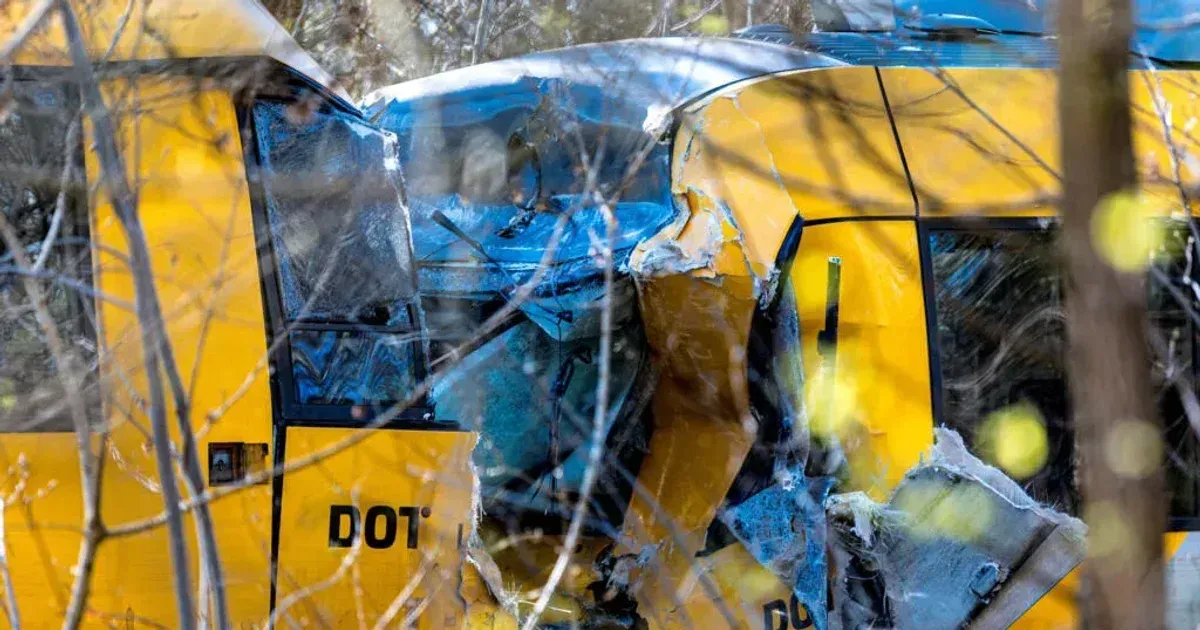
Copenhagen emergency crews responded on April 23, 2026, to a head-on collision between two local passenger trains north of the Danish capital. Seventeen people required immediate hospitalization while several carriages crumpled from the force of the impact in a densely wooded area. Investigators are now examining how two services managed to occupy the same track simultaneously. Local authorities confirmed that four individuals in Denmark remain in critical condition after being airlifted to specialized trauma centers.
Emergency response teams arrived at the scene near the capital city to find two yellow and grey trains facing each other on a single line. Visual evidence broadcast by DR showed extensive damage to the lead cabs of both trains. Heavy debris littered the tracks where the impact occurred. Rescue workers used hydraulic equipment to reach passengers trapped within the mangled metal structures of the forward cars.
Health authorities provided updates throughout the afternoon regarding the casualties. Total injury counts reached 17 victims by midday. Four of those individuals sustained life-threatening trauma during the crash. Direct accounts from the site indicated that several victims were flown by helicopter to Rigshospitalet, the primary trauma center in Copenhagen, as health officials told reporters at the scene.
Rail Systems Fail Near Copenhagen
Signaling failure represents the most likely cause of such a direct confrontation between moving rail vehicles. Modern rail safety systems theoretically prevent two trains from occupying the same block of track. Experts suggest that software malfunction or a manual override may have led to this specific breach of protocol. Danish rail officials have not yet identified the exact technical breakdown that permitted the northbound and southbound services to meet.
Automatic braking systems should have engaged once the two trains entered the same proximity. Scandinavia historically maintains some of the highest safety ratings in global transit. This collision challenges the assumption that digital safeguards provide absolute protection against human or technical error. Banedanmark, the agency responsible for rail maintenance, started a full audit of the signaling logs immediately following the extraction of the victims.
Redundancy protocols within the Danish rail network are designed to stop all traffic in the event of a ghost signal. Technical teams are currently retrieving data from the black box recorders located in each locomotive cab. These devices will reveal whether the drivers received warning signals prior to the collision. Engineers expect the preliminary findings to take several days to process.
Emergency Response and Critical Injuries
Large-scale mobilization characterized the rescue effort in the hours following the 06:40 GMT incident. Police cordoned off the wooded area to allow medical helicopters landing space near the wreckage. Ground ambulances from across the Zealand region converged on the site to triage the 13 passengers who sustained non-life-threatening injuries. Local residents described hearing a loud metallic boom that echoed through the trees at the time of the crash.
Every available emergency unit in northern Copenhagen assisted in the operation. Police spokesperson units reported that the extraction process was complicated by the remote location of the tracks. Crews had to carry medical equipment through dense brush to reach the collision point. Stabilization of the critically injured passengers took priority over the initial investigation of the wreckage.
Hospitals in the capital remained on high alert as the injured arrived in waves. Medical staff focused on treating blunt force trauma and internal injuries caused by the sudden deceleration of the trains. Social workers were deployed to assist the families of the four passengers who are in intensive care. Public updates on their status are expected in the coming hours.
Investigation Into Local Train Services
Local train services across the northern suburbs faced immediate suspension as Banedanmark technicians secured the site. DSB, the national rail operator, announced substantial delays for all commuters traveling between the capital and northern municipalities. Busing services were established to reduce the disruption for thousands of stranded passengers. Travel across the regional network is unlikely to return to normal before the weekend.
Maintenance records for the specific stretch of track involved in the accident are now under subpoena. Forensic rail investigators are checking for physical track defects that could have misdirected a train onto a collision course. While Denmark recently upgraded several sections of its rail infrastructure, older segments of the signaling system remain in use. Budget allocations for rail modernization have been a subject of political debate in the Danish parliament for several years.
Witnesses aboard the trains described a moment of intense vibration before the final impact. Many passengers were thrown from their seats as the yellow and grey carriages buckled. Recovery of the damaged trains will require heavy cranes capable of operating in restricted forest environments. Environmental teams are also monitoring the site for any fuel or hydraulic fluid leaks. Four passengers fought for their lives in intensive care units as the sun set over the capital. Health authorities say 17 people were injured when the two trains collided head-on.
Copenhagen Collision Exposes Rail Safety Risks
Obsolescence is the silent predator of European public transit systems that project an image of effortless modernity. This collision in the wooded outskirts of Copenhagen exposes the structural rot beneath the glossy veneer of Scandinavian efficiency. When two trains meet head-on in 2026, the failure is both mechanical and administrative. It indicates a collapse of the digital redundancies that are supposed to make such an event mathematically impossible. The Danish government will likely attempt to frame this as an isolated technical glitch or a tragic instance of human error. We should reject such simplistic narratives. Infrastructure throughout Northern Europe is buckling under the weight of decades-old signaling systems being forced to interface with modern high-speed demands. If Banedanmark cannot ensure the basic segregation of two local services, the entire regional expansion plan for Danish rail becomes a liability rather than an asset. Bureaucrats often prioritize aesthetic upgrades like new station kiosks and sleek carriage designs over the invisible, expensive work of signal modernization. This catastrophe proves that the most critical components of a nation are those that the public never sees until they fail spectacularly. Relying on luck in a system designed for precision is a recipe for body counts. Denmark must now choose between radical infrastructure investment or the inevitable decline of its rail safety reputation. A systemic overhaul is required.