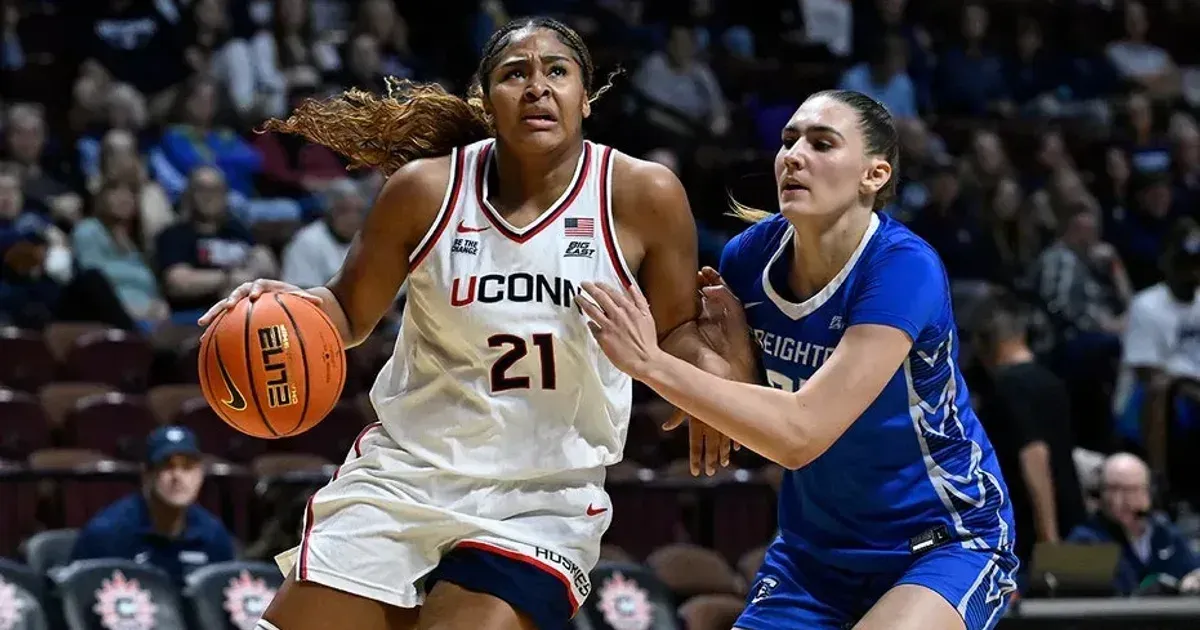
Geno Auriemma watched the digital screen in Storrs as the selection committee finalized a bracket that surprised few in the basketball world. The UConn Huskies officially secured the top overall seed for the 2026 NCAA Women's Basketball Tournament on Sunday night, positioning the program for a run at its 13th national championship. Undefeated through 33 games, the Huskies entered the selection process with a mathematical certainty that their unblemished record would outweigh the strength of schedule arguments from the SEC. Sarah Strong and Azzi Fudd lead a roster that has dismantled opponents by an average margin of 22 points this season. Strong now averages 18.5 points per game while Fudd contributes 17.7 points, creating a dual-threat perimeter game that few defenses have managed to contain. But the announcement left some fans in Columbia questioning the committee's hierarchy. South Carolina earned the number one seed in Region 4 despite a dominant regular season in the most competitive conference in the country. Dawn Staley's program finished the year with a 31-3 record, a mark that reflects their resilience in a schedule packed with top-25 opponents.
According to Fox Sports, the Huskies are the only undefeated team remaining in Division I college basketball.
Joyce Edwards carries the scoring load for the Gamecocks with 19.6 points per game. Supporting her in the paint, Madina Okot provides a physical presence that results in 13.4 points and 10.9 rebounds per contest.
UConn Takes Top Overall Seed
Connecticut opens its tournament run against 16-seed UTSA, a team that finished the season with an 18-15 record. Analysts expect the Huskies to advance easily, but the potential second-round matchup against either Iowa State or Syracuse presents a tougher tactical challenge. Syracuse brings a 23-8 record into the tournament, relying on high-tempo transition play to disrupt traditional defensive sets. Sarah Strong acts as the tactical anchor for this Connecticut squad. Her ability to shoot from deep while maintaining a post presence forces opposing centers away from the rim. This creates driving lanes for Fudd, whose mid-range efficiency remains among the highest in the nation. Meanwhile, the bench depth in Storrs has allowed Auriemma to maintain a high defensive intensity for the full 40 minutes. Depth will be a critical factor as the tournament progresses toward the second weekend. The lower half of the UConn bracket features a dangerous Maryland team. The Terrapins hold a 23-8 record and earned a 5-seed, though their offensive efficiency ratings suggest they could compete with higher-seeded programs.
SEC Rivals Fill the Chase Pack
Texas secured the final number one seed after a late-season surge that culminated in an SEC tournament championship. Madison Booker leads the Longhorns with 18.9 points and 6.5 assists per game, working as the primary facilitator for an offense that ranks second in the country in scoring. Texas finished just behind the Gamecocks in the regular season standings. Their victory in the conference tournament provided the necessary leverage to leapfrog other contenders for the top-line designation. South Carolina remains the favorite in Region 4. Staley has relied on a 31-3 record to justify her team's standing as a legitimate threat to UConn's dominance. The Gamecocks' only losses came against top-ten opponents, and their point differential against ranked teams remains a high-water mark for the selection committee. The battle for SEC supremacy has prepared both Texas and South Carolina for the physical toll of the postseason. Edwards has logged more minutes against future WNBA talent than any other freshman in the nation. The inclusion of Oklahoma and Notre Dame in the middle seeds of these regions suggests a difficult path for any underdog looking to make a deep run. Notre Dame enters the field with a 22-10 record and a 6-seed, despite several injuries that hampered their mid-season consistency.
Bracket Path Runs Through Star Power
Lauren Betts stands as the primary obstacle for any team hoping to handle the West region. The UCLA center led her team to a 31-1 record, with the Bruins' only loss coming in an overtime thriller. Betts leads the Bruins in scoring with 16.4 points, rebounds with 8.6, and blocks with 1.6 per game. Her defensive presence changes the geometry of the court, forcing opponents to settle for low-percentage perimeter shots rather than challenging the rim. UCLA earned a number one seed by blending this interior dominance with a disciplined backcourt. The Bruins are widely viewed as the most balanced team in the field outside of Connecticut. The pressure on Betts to stay out of foul trouble will be immense. UCLA's defensive efficiency drops sharply when she is on the bench, a trend that opponents will undoubtedly look to exploit. The Bruins have shown they can win in multiple ways. They possess three different players who have recorded 20-point games this season, providing a safety net if Betts faces double-teams. Missouri and Stephen F. Austin will battle for a 16-seed on Wednesday, marking the start of the tournament's preliminary round. This game features two programs with vastly different offensive philosophies, as Missouri favors a slow, methodical half-court set while Stephen F. Austin prefers a full-court press.
Southern and Samford represent the other 16-seed play-in game. According to committee members, these seeds were among the most difficult to place due to the parity among mid-major conference champions this year.
Nebraska takes on Richmond for an 11-seed, a matchup that features two of the most improved defensive units in the country. Nebraska's ability to force turnovers will be tested by a Richmond squad that averages the fewest giveaways per game in their conference.
Virginia and Arizona State square off for a 10-seed in what many expect to be the most competitive game of the First Four. Both programs finished the season with identical records against common opponents, making this a true toss-up for bettors and bracketologists alike.
The tournament begins in earnest on Friday and Saturday. Final Four festivities are scheduled for April 3, with the national championship game set for April 5.
Selection Sunday Rewarded Perfection
Do we really expect the selection committee to favor merit over brand name when the UConn Huskies are involved? While the 31-3 record of South Carolina reflects a grueling journey through the SEC, the committee chose the safety of an undefeated record in a weaker Big East. This decision effectively shields Connecticut from the highest-caliber competition until the later rounds, a luxury not afforded to Dawn Staley.
The story of Sarah Strong and her quest for a title is clearly lucrative for television ratings, but it ignores the statistical reality that the Bruins and Gamecocks played more top-10 opponents. Lauren Betts is a physical challenge that UConn has not faced in months, yet the Huskies remain the darlings of the bracket. We should be skeptical of any system that rewards a lack of schedule difficulty with the easiest path to the Final Four. Parity in the women's game is at an all-time high, but the bracket architecture continues to favor the blue-bloods of the sport.
If the tournament results in another UConn coronation, it will be because the path was paved long before the first whistle blew in March.