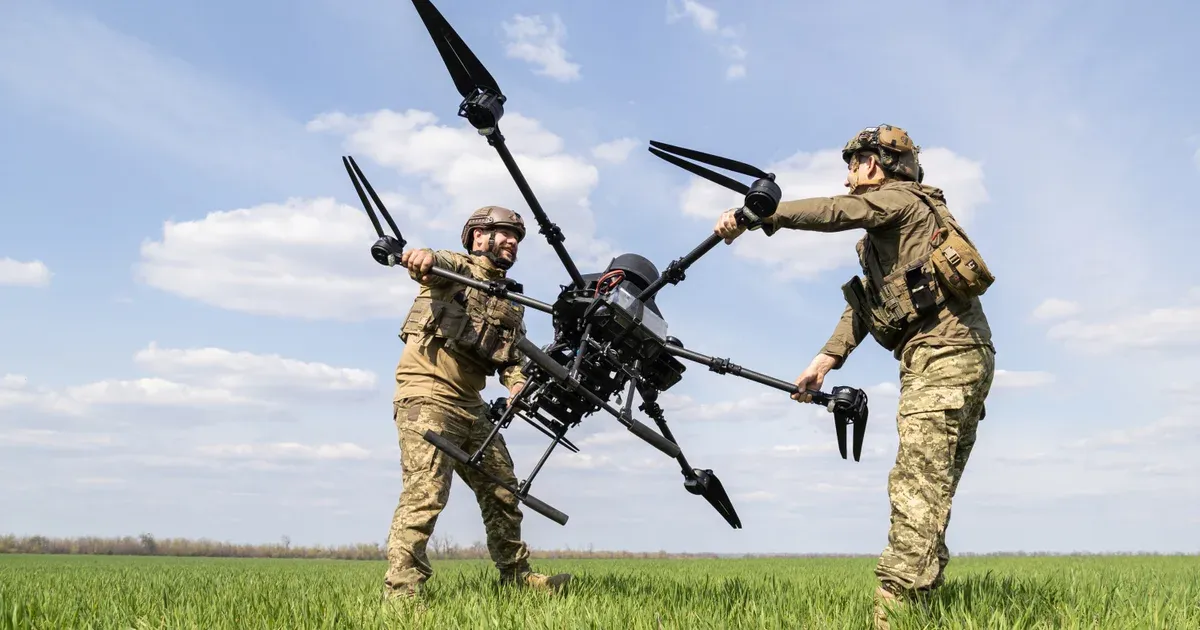
Moscow residents woke to the rhythmic thrum of anti-aircraft batteries Saturday morning as a coordinated aerial offensive began against the Russian heartland. Preliminary data from city officials indicated that specialized air defense units intercepted fifteen drones on their approach to the capital. Fragments from the neutralized aircraft fell across several districts, necessitating an immediate deployment of emergency response teams. Russian regions came under large-scale attack as emergency services prioritized containment of small fires ignited by falling lithium-ion batteries and unspent fuel. No immediate casualties were reported in the capital, according to the mayor's office. Saturday's aerial campaign marked a major expansion in the scope of cross-border operations. Military sources reported a total of 280 drones were destroyed or disabled across various regions during a ten-hour window. This intensive barrage strained regional defense networks from the border zones to the outskirts of the federal capital. Intercepted units primarily consisted of fixed-wing models, which carry larger payloads and travel longer distances than standard quadcopters. Defense officials noted that the sheer volume of incoming targets required the simultaneous activation of kinetic missiles and electronic jamming systems.
Governor Alexander Bogomaz confirmed that the frontier territories faced the brunt of the Saturday morning assault. Air defense batteries and mobile interception groups in the Bryansk Region worked without pause as wave after wave of unmanned vehicles crossed the border. Bogomaz stated that local units destroyed 128 UAVs over his jurisdiction alone. He credited the success to a tiered defense strategy involving the National Guard and the newly formed BARS-Bryansk brigade. These units used a combination of heavy machine guns and short-range surface-to-air missiles to clear the skies.
The involvement of the BARS-Bryansk brigade highlights a shift toward localized, volunteer-led military response in border provinces. These regional units provide a rapid-reaction capability that supplements regular army formations. Traditional military doctrine often favors centralized command, but the speed of drone warfare necessitates decentralized decision-making. The scale of the 128-drone swarm over a single province suggests a high level of logistical coordination by the operators. Recovery teams spent the afternoon documenting the serial numbers and motor types of the downed units for intelligence analysis.
Drone Volume Tests Russian Defenses
Mayor Sergey Sobyanin reported that the fifteen drones targeting Moscow were neutralized before reaching the city center. Air defense crews positioned in the suburban belts surrounding the capital successfully engaged the targets at varying altitudes. For instance, several interceptions occurred over the Odintsovo and Ramenskoye districts, which have frequently been on the flight paths of incoming drones. First responders arrived at debris sites within minutes to secure the area and prevent civilian interference with sensitive components. Many of these drones are rigged with secondary explosive charges designed to detonate upon impact with the ground.
Over the Bryansk Region alone, air defenses, Russia's National Guard and the BARS-Bryansk brigade destroyed as many as 128 enemy fixed-wing UAVs.
But the persistent nature of these strikes creates ongoing challenges for urban planning and civilian safety. Municipal authorities have reinforced critical infrastructure sites, including power substations and water treatment plants, with anti-drone netting and localized jamming pods. At the same time, the disruption to commercial aviation continues as airports like Vnukovo and Domodedovo periodically suspend operations during active alerts. These pauses in air traffic cause cascading delays across the domestic transport network. Aviation officials must balance the need for safety with the economic cost of grounding hundreds of flights.
Fixed-wing drones used in these operations represent a departure from the smaller, hobbyist-derived models seen earlier in the conflict. These aircraft possess a wider wingspan and efficient gasoline or electric engines, allowing them to bypass traditional radar by flying at extremely low altitudes. Many use pre-programmed GPS coordinates combined with inertial navigation systems to remain operational even when electronic jamming severs their satellite links. In particular, the carbon-fiber and plywood construction of many recent models makes them difficult for older radar systems to track reliably. Engineers at Russian defense research facilities are now examining several intact airframes recovered from the Bryansk fields.
Yet the cost-to-kill ratio remains a primary concern for the Ministry of Defense. Launching a high-precision missile to down a drone that costs less than five thousand dollars creates a financial imbalance over time. The military has increased the deployment of anti-drone cannons and electronic warfare vehicles like the Krasukha-4. These systems aim to disrupt the control signals of the UAVs, causing them to crash or veer off course without the need for expensive kinetic ammunition. The saturation of the airspace with 280 units in ten hours tests the limits of any electronic barrier. Success depends on the ability to detect targets before they enter the final terminal phase of their flight.
Bryansk and Moscow Face Pressure
The decentralized nature of drone launches makes it nearly impossible to eliminate the threat through traditional counter-battery fire. Launch sites are mobile and can be hidden in dense forests or residential areas, allowing operators to vanish quickly after a mission. The intelligence gathered from the March 14 strikes indicates that the attackers are using more complex path-finding algorithms to avoid known air defense locations. The defense must remain fluid, shifting assets based on real-time radar signatures and acoustic sensor data. Units in Bryansk remain on high alert as the weekend continues.
Russian industrial sectors are responding by accelerating the development of domestic interceptor drones. These smaller, faster UAVs are designed to ram or ensnare incoming threats, providing a cheaper alternative to missile-based defense. The evolution of the aerial battlefield is moving toward a clash of autonomous systems where human intervention is minimized. The conflict has become a competition of industrial output and software optimization. The wreckage now being cleared from the streets of Moscow and the fields of Bryansk is merely the physical manifestation of that competition. Final tallies of the damage and debris locations are expected by Sunday morning.
Attrition Moves Into the Air
The scale of the drone offensive points to an attrition problem rather than a single tactical episode. Russia can report high interception totals, but each wave forces expensive responses, airport pauses and repeated emergency deployments. For Ukraine, volume can create pressure even when most drones are stopped. The strategic question is whether repeated low-cost launches can keep stretching air defenses faster than Moscow can adapt its sensors, interceptors and local response units.