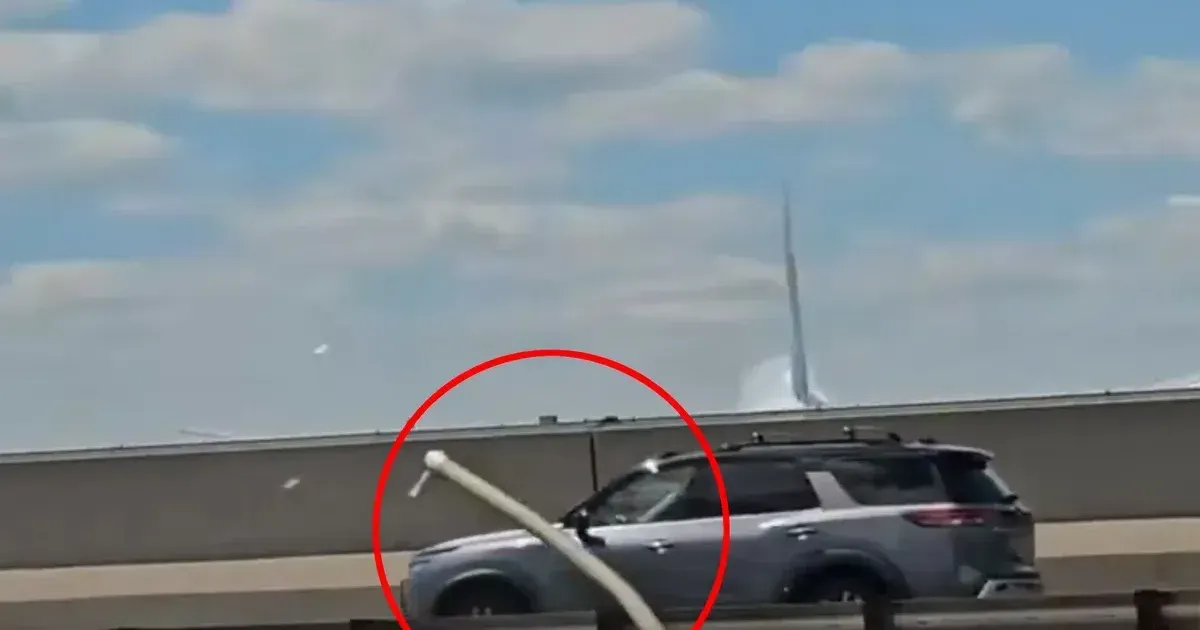
The Newark incident is an aviation-safety case with unusually visible witnesses. Drivers on the New Jersey Turnpike saw the aircraft descend low enough to strike ground infrastructure. That public setting will make the investigation harder to separate from passenger and commuter accounts. United Airlines flight crews and federal investigators began reviewing data from a commercial jet that struck ground infrastructure while descending toward Newark Liberty International Airport. The incident occurred on May 3, 2026, as the aircraft approached a runway located directly adjacent to the New Jersey Turnpike. Motorists traveling along the highway reported seeing the aircraft gliding at an unusually low altitude before it clipped a utility structure and a moving vehicle.
Collision evidence on the roadway included debris from a light pole that obstructed lanes of traffic during the Sunday afternoon commute. Impact with the tractor-trailer occurred as the driver was navigating the stretch of highway that runs parallel to the airport perimeter. Witness accounts and early reports described the aircraft passing unusually low over highway traffic before the strike.
United Airlines confirmed the aircraft was on a standard approach when the strike took place. Aviation experts noted that the proximity of the turnpike to the runways at Newark creates a unique set of geographic challenges for incoming pilots. Newark Liberty remains one of the busiest hubs in the Northeast, handling hundreds of flights daily that must clear the heavy industrial and transit infrastructure surrounding the airfield.
Maintenance crews arrived at the scene shortly after the strike to remove the sheared metal from the highway. Federal officials from the Federal Aviation Administration opened an inquiry while local and airport authorities documented damage to the aircraft and ground infrastructure. Preliminary reports indicate the truck driver was not seriously injured, though the vehicle sustained substantial damage to the upper portion of the trailer. Pilots on the flight managed to stabilize the aircraft and complete the landing despite the collision.
Collision Impact on the New Jersey Turnpike
The strike on the New Jersey Turnpike caused immediate disruption for travelers heading toward New York City and local destinations. Police officers from the New Jersey State Police cordoned off the area surrounding the downed light pole to prevent further accidents. Traffic backlogs extended for several miles as investigators searched for any additional aircraft parts that might have detached during the contact. Officials said the landing tire and underside of the plane hit the truck, while the light pole later struck another vehicle on the highway.
Although the plane landed safely at the terminal, ground crews immediately grounded the aircraft for a full structural assessment. United Airlines technicians are working with safety inspectors to determine the extent of the wing or fuselage damage caused by the metal pole and the truck. Safety protocols for the airport require a mandatory stand-down for any flight involved in a ground-contact incident outside of designated landing zones. The duration of this grounding will depend on the findings of the internal technical review.
Ground witnesses described a scene of confusion as the roar of the engines coincided with the sound of snapping metal. Structural damage to the highway lighting system will require specialized repairs that could last several days. Authorities have not yet released the name of the trucking company involved in the collision. Official statements from the airport authority emphasized that normal operations resumed quickly after staff inspected the runway for debris.
Safety Protocols and Proximity Challenges at Newark
Aviation safety relies on strict adherence to a specific descent path known as the glide slope. Flight operations at Newark Liberty International Airport are complicated by the dense urbanization of the surrounding New Jersey landscape. The approach path to one of Newark's main runways crosses low over public roads, leaving little visual margin between aircraft and traffic below. Operations at these runways require precise altitude management to ensure clearance over the high-speed traffic on the turnpike.
Standard procedures for low-altitude strikes involve an immediate notification to the National Transportation Safety Board and the FAA. Commercial aircraft must stay on a certified approach path that keeps them clear of public roads and airport perimeter infrastructure. The investigation, however, will focus on whether environmental factors or mechanical issues caused the aircraft to dip below its prescribed path. Analysis of wind conditions and visibility at the time of the approach will be central to the final report.
"One light pole appeared to have snapped in half," according to a report from local officials who arrived at the New Jersey Turnpike.
Commercial aviation history in the Newark corridor includes several previous discussions regarding the height of light poles and signage near the airfield. While the airport has implemented various safety buffers over the decades, the rapid growth of transit volume on the turnpike increases the statistical probability of a close encounter. Any future infrastructure review would have to balance driver visibility, airport operations and the low approach path near the runway threshold.
Federal Investigation and Technical Review
Investigators are now examining the flight data recorder and the cockpit voice recorder to understand the final moments of the descent. These devices, often called black boxes, will provide telemetry on the aircraft's speed, altitude, and engine performance leading up to the impact. United Airlines said it would cooperate with investigators as they review whether flight path, aircraft condition, weather or other factors contributed to the contact. Investigators may also review maintenance records for the specific jet as they assess aircraft condition and approach data.
Aviation safety analysts suggest that even a minor deviation in altitude can be catastrophic in a high-density area like the Newark-Jersey City corridor. Future safety recommendations could address airport perimeter infrastructure, approach monitoring or operational procedures if investigators identify a correctable risk. The current inquiry is expected to take several months to reach a definitive conclusion regarding the primary cause. Investigators have already interviewed the flight crew to gather their initial accounts of the landing sequence and any alerts that may have triggered in the cockpit.
Federal investigators are now examining the flight data recorder.
Airport Safety Implications
Ensuring the physical separation of commercial air traffic from high-density ground transport is a foundational requirement for urban aviation security. This incident highlights the persistent safety challenge where public highways and critical landing paths intersect. Modern airports like Newark Liberty were designed during a period of lower air traffic volume, and the encroachment of urban development has squeezed the safety buffers that once existed. Road infrastructure that juts into the approach path, even by a few dozen feet, creates a collision hazard that compromises both aviation safety and highway security.
Proximity risks are more than technical; they are structural realities of the East Coast transport grid. Urban planning around major airports must prioritize the relocation of non-essential high-profile infrastructure like oversized light poles and overhead signage. If investigators identify a structural clearance problem, the case could lead to renewed scrutiny of highway equipment, signage and approach-path monitoring. Effective mitigation requires a coordinated effort between the FAA and state DOT agencies to implement height-restricted zones. Physical barriers and automated low-altitude warning systems at the perimeter could provide pilots with a final margin of error.
Future airport planning may have to account more directly for these proximity risks through engineering reviews and clearer land-use coordination.