United Airlines executives revealed a series of cabin upgrades intended to transform the standard economy experience for millions of international travelers. Management at the Chicago-based carrier confirmed a multi-year initiative to install lie-flat seating options in the coach section. Modernization efforts center on the Relax Row, a product that allows travelers to convert three adjacent seats into a continuous sleeping surface on long-haul routes. The March 29, 2026 announcement indicates a shift in how major US airlines compete for price-conscious passengers.
Competition for the economy traveler has intensified as ultra-low-cost carriers and premium international airlines squeeze domestic majors from both ends of the market. United Airlines intends to differentiate itself by bridging the gap between cramped standard seating and the prohibitively expensive Polaris business class. This initiative forms a core component of the broader United Next program, which has already seen thousands of narrow-body aircraft receive updated interiors and larger overhead bins. Implementation of these changes on wide-body jets marks a new phase of capital expenditure for the company.
United Airlines expects to complete the retrofitting of 200 planes within the next four years. Commercial aviation experts note that the Relax Row concept mirrors the Skycouch product pioneered by Air New Zealand over a decade ago. By licensing or adapting this design, United Airlines becomes the first major US carrier to offer a dedicated bed-like experience in the back of the aircraft. Engineering teams have spent months certifying the seat belts and cushioning systems to ensure safety compliance during turbulence while the seats are in their bed configuration.
Relax Row Transformation of Boeing Dreamliner Cabins
Engineering specifications for the Boeing 787 Dreamliner and Boeing 777 fleets require meaningful modifications to existing row spacing. Relax Rows feature specialized footrests that flip up 90 degrees to fill the gap between the seat edge and the seatback in front. Sturdy mechanisms lock the three seats together to provide a stable 5-foot-8-inch platform. While the length may be restrictive for taller adults, the airline is marketing the space specifically toward parents with small children or couples looking for more horizontal room during transoceanic crossings.
Financial models suggest that United Airlines will sell these rows as a premium adds-on rather than a separate cabin class. Passengers booking a block of three seats will pay a dynamic surcharge based on demand and route length. Groups of three traveling together will likely see the most competitive pricing for the upgrade. Families often struggle with the logistics of sleeping on long-haul flights, and this hardware solution addresses a specific problem that standard reclining seats cannot solve. United Airlines remains focused on providing travelers with the most modern and connected experience in the sky by investing billions into our fleet and technology.
Bedding packages included with the Relax Row purchase will consist of a specialized mattress pad, a heavier duvet, and pillows designed for the expanded surface. Children will also receive a custom stuffed toy as part of the promotional rollout. Cabin crew training for the 2026 season has already begun to include the setup and breakdown procedures for these converted rows. Efficiency is paramount, as flight attendants must manage these transitions without obstructing the aisles during meal services. These cabin upgrades are part of the broader United Next program, which also dictates recent adjustments to United Airlines flight attendant pay.
Starlink Integration and High-speed Inflight Connectivity
Connectivity represents the second major foundation of the coach cabin overhaul. United Airlines is currently in the late stages of installing Starlink satellite internet across its entire mainline fleet. Low-earth orbit satellites operated by SpaceX provide far lower latency and higher bandwidth than traditional geostationary systems. Passengers in the back of the plane will soon have the ability to stream high-definition video, play online games, and participate in video calls without the lag that has plagued inflight Wi-Fi for decades.
SpaceX technology utilizes thousands of small satellites to maintain a constant signals even over remote oceanic regions. Reliability has historically been the primary complaint regarding airline internet services. By bypassing older satellite providers, United Airlines gains hardware advantage that could last several years. Bandwidth will be sufficient to allow every passenger on a 300-seat aircraft to stream content simultaneously. System testing on domestic test flights has shown speeds exceeding 200 Mbps at 35,000 feet. Free access to high-speed internet is expected to become the new industry standard. Delta Air Lines previously set the bar by offering free Wi-Fi through T-Mobile, but United Airlines aims to surpass that performance with the Starlink partnership. Removing the friction of payment walls and slow speeds turns the seatback into a functional office or entertainment hub. Data consumption on flights is projected to triple once the full fleet is equipped with the new rectangular antennas.
Fleet Expansion and Long-term Modernization Strategy
Strategic planners at United Airlines have allocated billions for this wide-body refresh. Most jets will feature nine Relax Rows, typically located in the forward section of the economy cabin. Some of the high-density Boeing 777-300ER aircraft may see up to twelve rows converted to the lie-flat configuration. These modifications are being performed at maintenance hubs in San Francisco and Hong Kong during scheduled heavy-check intervals. Each aircraft takes approximately ten days to receive the full interior treatment.
Revenue management teams are tasked with balancing the inventory of these seats against standard economy sales. If a Relax Row remains unbooked 24 hours before departure, the airline can release the seats individually to maximize load factors. This flexibility allows United Airlines to protect its margins while offering a premium product. Software updates to the United app will enable last-minute upgrades for passengers who decide they need the extra space after they have arrived at the airport.
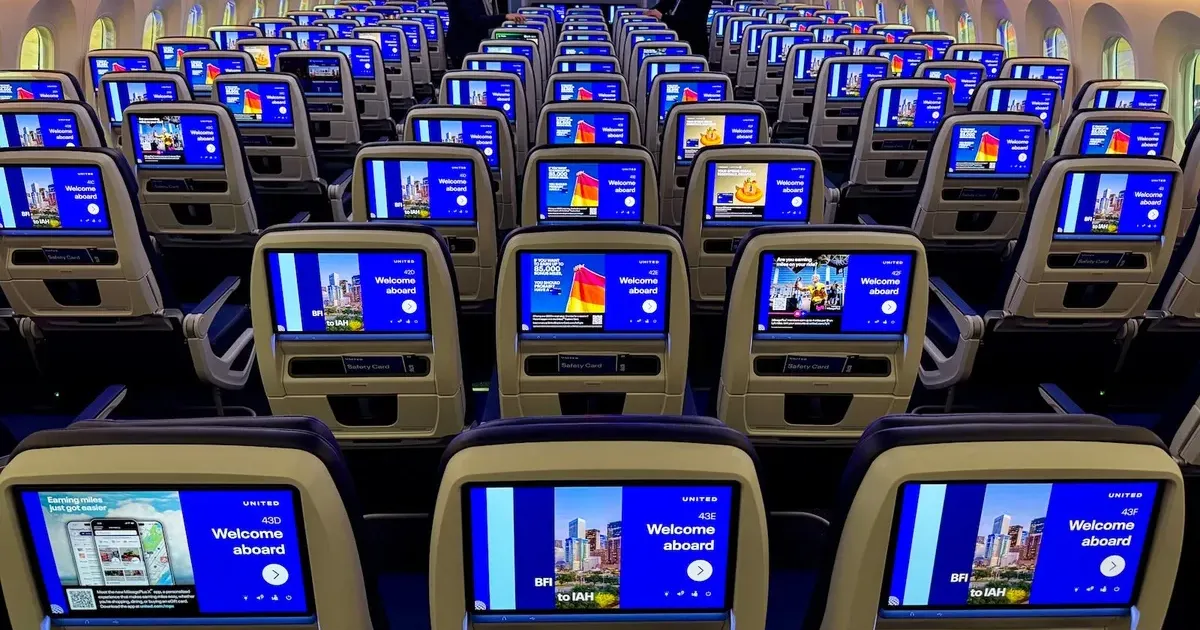
Beyond the seats and Wi-Fi, the airline is introducing 4K seatback screens and Bluetooth audio connectivity in coach. Modern travelers expect to use their own wireless headphones instead of the flimsy plastic sets distributed by cabin crews. Power outlets are also being upgraded to 60W USB-C ports to handle the charging needs of modern laptops and tablets. These small hardware improvements contribute to a more premium feel in a cabin that has often been overlooked in favor of business class innovations.
International carriers like Qatar Airways and Singapore Airlines have long set the gold standard for economy service. United Airlines is now attempting to match that reputation through sheer hardware investment. The $11 billion multi-year capital plan is one of the most aggressive in the company's history. Success depends on whether passengers are willing to pay the premium for a lie-flat row over a standard seat on a ten-hour flight. Early booking data from initial routes suggests strong interest among leisure travelers. Domestic rivals American Airlines and Delta are watching the rollout closely. While Delta has focused on its Delta One suites and free Wi-Fi, it has yet to announce a comparable lie-flat product for economy. American Airlines has prioritized fleet simplification and premium economy expansion. United Airlines is effectively betting that the demands for horizontal comfort exists even among those who cannot afford a $5,000 business class ticket. Market share on competitive routes like New York to London will be the ultimate metric for this strategy.
Operational challenges persist, particularly regarding weight and balance. The specialized footrests and additional bedding add several hundred pounds to each aircraft. Fuel efficiency remains a priority, and engineers have used carbon fiber components to offset the weight of the new seat mechanisms. Every pound matters when a jet is flying against 100-knot headwinds over the Pacific. United Airlines is banking on the idea that the increased revenue from Relax Row surcharges will more than cover the additional fuel burn.
What Economy Comfort Now Means
Legacy carriers are finally admitting that the traditional economy experience is no longer a viable product for long-haul competition. United Airlines is not acting out of a sudden sense of altruism for the coach passenger. Instead, this pivot toward the Relax Row and Starlink is a calculated defensive maneuver against the creeping dominance of Gulf carriers and the rising quality of low-cost long-haul competitors. By offering a bed in economy, United is effectively creating a new sub-class that cannibalizes its own premium economy revenue while attempting to prevent total passenger defection to more luxurious foreign rivals.
Skepticism remains regarding the actual comfort of these rows for anyone over six feet tall. Marketing images always feature small children or perfectly posed models, yet the reality of a five-foot-eight platform will likely lead to cramped legs and customer complaints. However, the connectivity aspect of this overhaul is a genuine breakthrough. By partnering with SpaceX, United is leapfrogging the antiquated hardware of Viasat and Gogo, creating a digital environment that makes the physical discomfort of coach easier to ignore. The airline is betting that a 100 Mbps connection can distract a passenger from a 31-inch seat pitch. This gamble on coach-class lie-flats will either redefine the industry or become a niche gimmick that vanishes during the next economic downturn. If the surcharge for a Relax Row is too high, families will simply suffer in standard seats. If it is too low, it devalues the business class cabin. United is walking a razor-thin line between innovation and desperation. The outcome is binary.