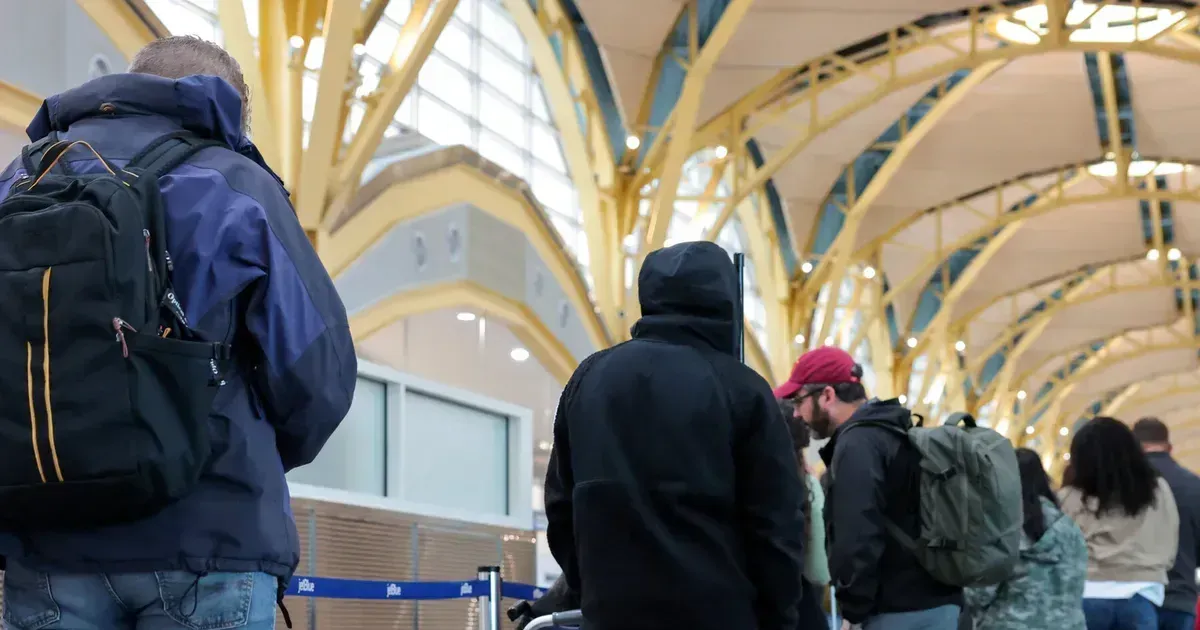
Hartsfield-Jackson Atlanta International Airport saw security queues snake through baggage claim on Monday morning as thousands of federal employees reported for duty without a paycheck. Major hubs including Chicago O’Hare and Los Angeles International reported similar congestion following the start of a partial government shutdown that has left the Transportation Security Administration without funding. Federal agents must remain at their posts under the Anti-Deficiency Act, yet the financial pressure of missed payroll cycles is beginning to manifest in increased unscheduled absences.

Aviation experts now warn that the domestic travel infrastructure faces a looming crisis if the budget impasse in Washington continues into a second week. Travelers at several Category X airports are being advised by airline carriers to arrive at least three hours before their scheduled departures to account for the staffing volatility. Current screening times have nearly tripled in certain terminals where only half of the available security lanes remain operational.

But the logistical burden on passengers is only one facet of a deepening labor dispute. This financial strain forces many officers to choose between commuting to work and paying for basic necessities like fuel or childcare. Internal data from the Department of Homeland Security indicates that call-out rates began to climb as soon as the first missed pay period was confirmed by the Treasury Department. High-traffic regions are seeing the sharpest declines in available personnel as the cost of living in those metropolitan areas outpaces the meager savings of the average federal worker.

TSA Staffing Shortages and Travel Delays

Wait times at Newark Liberty International Airport reached eighty-five minutes during the Monday morning rush. Such delays often trigger a cascade of missed connections and ground stops that disrupt the entire National Airspace System. When security checkpoints cannot process passengers at a rate that matches boarding schedules, airlines are forced to delay pushback times to avoid flying with half-empty cabins. The resulting congestion creates secondary safety hazards in crowded terminal gate areas.

Meanwhile, local airport authorities are attempting to supplement federal efforts with private security contractors where legally permissible. These contractors can manage peripheral tasks like queue management or document checking, but they lack the federal certification required to operate X-ray machinery or conduct physical pat-downs. Only 50,000 federal officers possess the specific legal authority to perform these core security functions at over 440 airports nationwide.

Essential workers in the aviation sector operate under a unique set of federal labor laws that restrict their ability to negotiate during a shutdown. Federal law strictly prohibits these workers from striking or engaging in organized work stoppages. Because they are deemed essential for national security, they must continue to perform their duties regardless of the government’s ability to compensate them in real-time. This legal structure has effectively trapped thousands of low-wage federal employees in a cycle of indentured labor until a new appropriations bill is signed into law.

Federal Budget Impasse Impacts Transportation Safety

For instance, the 2018-2019 partial government shutdown saw TSA unscheduled absences peak at 10 percent nationwide. Analysts at the American Federation of Government Employees note that current trends suggest the 2026 shutdown could exceed those figures if a resolution is not reached by the end of the month. Financial anxiety often leads to diminished focus among officers who are tasked with identifying concealed weapons and explosive devices. The mental fatigue of working under extreme financial stress creates a vulnerability in the layers of defense that protect the traveling public.

Still, the federal government maintains that security standards have not been compromised despite the lengthening queues. Officials from the Department of Homeland Security released a statement claiming that screening protocols remain as rigorous as they were before the funding lapse. But veteran security analysts argue that the pressure to move lines quickly during staffing shortages inevitably creates friction between speed and thoroughness. Screening efficiency often drops when supervisors are forced to rotate tired staff through high-intensity positions for longer durations without adequate relief.

Personnel at the Miami International Airport reported that morale has hit a ten year low. Many officers are now seeking temporary employment in the gig economy during their off-hours to bridge the income gap. This exhaustion further complicates the staffing rosters as agents struggle to balance their federal mandates with the immediate need to secure liquid capital for household expenses. Several food pantries in major metropolitan areas have reported a surge in visits from federal employees wearing their official uniforms.

Financial Strain on Essential Aviation Workers

In fact, the average TSA officer earns an annual salary that is sharply lower than their counterparts in other federal law enforcement agencies. The pay disparity makes them particularly vulnerable to even a single missed paycheck. Many agents live paycheck to paycheck and lack the credit facilities necessary to weather a prolonged period of non-payment. When the government fails to meet its payroll obligations, the impact is felt almost immediately in the grocery aisles and utility bills of these frontline workers.

There’s going to be a breaking point sooner or later.

Security experts emphasize that the long-term health of the aviation industry depends on a stable and well-compensated workforce. Persistent shutdowns encourage experienced officers to leave the agency for the private sector where pay is higher and paychecks are guaranteed. The brain drain forces the agency to spend more on training new recruits who lack the institutional knowledge of their predecessors. The cost of recruiting and training a single officer is estimated to exceed $20,000 according to agency budget documents.

Yet the political gridlock shows no signs of easing as both parties remain entrenched in their respective budgetary positions. Negotiations over the $3.5 billion requested for border security enhancements have stalled the entire Department of Homeland Security funding bill. Aviation is being used as a high-visibility use point in a broader ideological battle that has little to do with the day-to-day operations of an airport checkpoint. The travelers standing in three-hour lines are the unintended casualties of this legislative paralysis.

Operational Risks at Major Aviation Hubs

Aviation industry groups are lobbying for an emergency carve-out that would allow TSA and Air Traffic Control to be funded separately from the rest of the department. The proposal has gained little traction among congressional leaders who prefer to keep the larger spending packages intact to maintain bargaining power. As the lines grow longer, the pressure from the business community may eventually force a temporary resolution. Domestic air travel accounts for a significant portion of the national GDP and any prolonged disruption threatens broader economic growth.

Separately, some airports have begun offering free meals and parking to unpaid federal workers as a gesture of support. While these local initiatives provide minor relief, they do not address the core problem of missing mortgage payments or medical insurance premiums. The psychological toll of being forced to work without pay while the public complains about wait times has led to a sharp increase in early retirements. Losing the most senior members of the security force during a period of high alert is a scenario that worries many aviation safety consultants.

Union leaders continue to hold rallies outside major terminals to draw attention to the plight of their members. These demonstrations serve as a vocal reminder that the people behind the X-ray machines are citizens with financial obligations. The American Federation of Government Employees has filed a lawsuit alleging that the government is violating the Fair Labor Standards Act by requiring work without timely compensation. Previous legal challenges of this nature have resulted in back pay and damages, but those payouts often arrive years after the shutdown has ended.

According to union data, nearly 20 percent of the workforce at some West Coast airports has explored alternative career paths since the shutdown began. The instability of federal employment is becoming a significant deterrent for new applicants who are looking for long-term career security. By contrast, private sector security firms are seeing a record number of applications from disgruntled federal agents. If this trend continues, the TSA may face a permanent staffing deficit that lasts long after the current budget crisis is resolved.

Domestic travel demand remains high despite the warnings of long wait times. Families and business travelers are still arriving at airports in record numbers, seemingly undeterred by the logistical hurdles. The persistent demand puts even more pressure on the thinning ranks of unpaid officers who must process thousands of people per hour. The system is operating at near-maximum capacity with no margin for error or further staffing reductions.

The Elite Tribune Perspective

Treating the nation's aviation security apparatus as a political bargaining chip is a reckless exercise in governance that borders on national sabotage. We have reached a point where the facade of essential service is being used to justify the state sanctioned exploitation of a workforce that keeps the economy moving. If these officers are truly essential to the safety of our borders and skies, then their compensation must be deemed equally essential and insulated from the theater of budget negotiations.

The current system relies on the patriotism and desperation of low-wage workers to mask the utter incompetence of a legislature that cannot perform its most basic function. We are effectively telling the people who protect our planes that their labor is worth everything but their paycheck is worth nothing. The hypocrisy is not just a failure of policy but a failure of basic moral logic. If the government cannot afford to pay the people who secure the terminals, it has no business claiming it can secure the nation.

We should stop pretending that this is a temporary inconvenience and recognize it as the systemic collapse of the federal employment contract. Either we privatize the security function entirely to ensure market-rate reliability or we pass permanent appropriations that prevent this shameful charade from ever repeating.